 Mandarin Mosaic
Free on iPhone, iPad and Android.
Download on theApp Store Get it onGoogle PlayYour first month of Premium is free.
Chinese Relatives Calculator: What to Call Each Relative
Chinese has a separate word for almost every relative. Your father’s older brother and your mother’s younger brother are both “uncle” in English, but 伯伯 (bóbo) and 舅舅 (jiùjiu) in Chinese. Build the relationship one step at a time below, and the calculator gives you the Chinese term with pinyin and audio, the formal word where there is one, and what to call the person to their face.
You
Tap a relative below to start.
How Chinese Family Terms Work
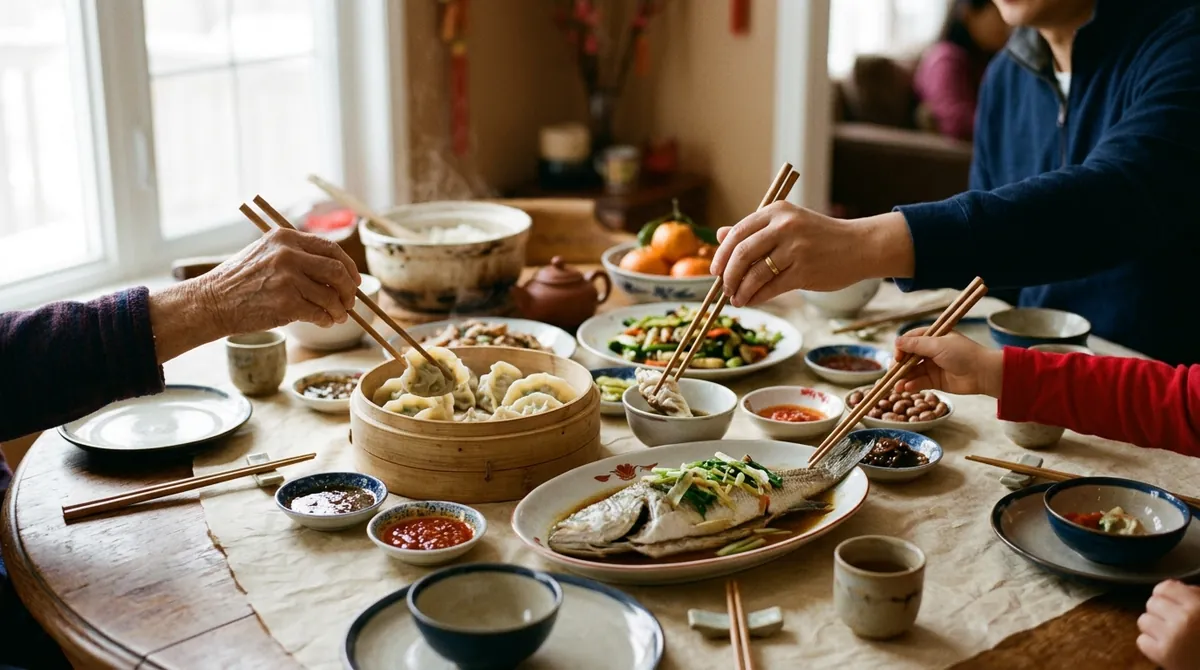
The terms look like a lot to learn, but they follow a few rules. Once you know them, most terms explain themselves.
- Your father’s side or your mother’s side. Traditionally, a family was traced through the father, so your mother’s relatives are marked with 外 (wài), “outside”. Your father’s parents are 爷爷 (yéye) and 奶奶 (nǎinai), and your mother’s are 外公 (wàigōng) and 外婆 (wàipó). The same goes for grandchildren: your son’s son is 孙子 (sūnzi), and your daughter’s son is 外孙 (wàisūn).
- Older or younger. Brothers and sisters are never just “brother” or “sister”: 哥哥 (gēge) is an older brother and 弟弟 (dìdi) a younger one. On your father’s side, this carries up a generation: his older brothers are 伯伯 (bóbo) and his younger brothers 叔叔 (shūshu). Your mother’s brothers are all 舅舅 (jiùjiu), whatever their age.
- 堂 or 表 for cousins. Children of your father’s brothers share your surname, and they’re 堂 (táng) cousins: 堂哥, 堂姐, 堂弟, 堂妹. Every other cousin, on your father’s sister’s side or anywhere on your mother’s side, is a 表 (biǎo) cousin. Add 哥, 姐, 弟 or 妹 for whether they’re older or younger than you, and male or female.
- Birth order. When there are several aunts or uncles of the same kind, families number them: 大伯 (dàbó) is the eldest of your father’s older brothers, then 二伯 (èrbó), and the youngest of your mother’s brothers is 小舅 (xiǎojiù).
- Talking about someone, or talking to them. Some words are only for talking about a person. A woman calls her husband’s mother 婆婆 (pópo) when she talks about her, but to her face she usually says 妈 (mā), mum. The calculator shows both where they differ.
Formal words such as 父亲 (fùqin, father) and 伯父 (bófù, uncle) are for writing and formal speech. You’d write 父亲 in a form or a speech, but call him 爸爸 at home.
Chinese Family Tree: Every Term in One Place
These tables list every relative in the calculator. Where two terms are given, both are common; where the north and south differ, the note in the calculator says so.
Your own family
| Relative | Chinese | Pinyin | Also |
|---|---|---|---|
| Father | 爸爸 | bàba | formal 父亲 fùqin |
| Mother | 妈妈 | māma | formal 母亲 mǔqin |
| Older brother | 哥哥 | gēge | |
| Younger brother | 弟弟 | dìdi | |
| Older sister | 姐姐 | jiějie | |
| Younger sister | 妹妹 | mèimei | |
| Husband | 老公 | lǎogōng | 爱人 àiren; formal 丈夫 zhàngfu |
| Wife | 老婆 | lǎopo | 爱人 àiren; formal 妻子 qīzi |
| Son | 儿子 | érzi | |
| Daughter | 女儿 | nǚ’ér |
Grandparents and great-grandparents
| Relative | Chinese | Pinyin | Also |
|---|---|---|---|
| Father’s father | 爷爷 | yéye | formal 祖父 zǔfù |
| Father’s mother | 奶奶 | nǎinai | formal 祖母 zǔmǔ |
| Mother’s father | 外公 | wàigōng | 姥爷 lǎoye; formal 外祖父 wàizǔfù |
| Mother’s mother | 外婆 | wàipó | 姥姥 lǎolao; formal 外祖母 wàizǔmǔ |
| Father’s father’s father | 太爷爷 | tàiyéye | formal 曾祖父 zēngzǔfù |
| Father’s father’s mother | 太奶奶 | tàinǎinai | formal 曾祖母 zēngzǔmǔ |
| Mother’s father’s father | 太姥爷 | tàilǎoye | 太外公 tàiwàigōng; formal 外曾祖父 wàizēngzǔfù |
| Mother’s father’s mother | 太姥姥 | tàilǎolao | 太外婆 tàiwàipó; formal 外曾祖母 wàizēngzǔmǔ |
| Father’s mother’s father | 太姥爷 | tàilǎoye | 太外公 tàiwàigōng |
| Father’s mother’s mother | 太姥姥 | tàilǎolao | 太外婆 tàiwàipó |
| Mother’s mother’s father | 太姥爷 | tàilǎoye | 太外公 tàiwàigōng |
| Mother’s mother’s mother | 太姥姥 | tàilǎolao | 太外婆 tàiwàipó |
Your father’s brothers and sisters
| Relative | Chinese | Pinyin | Also |
|---|---|---|---|
| Father’s older brother | 伯伯 | bóbo | 大伯 dàbó; formal 伯父 bófù |
| Father’s younger brother | 叔叔 | shūshu | formal 叔父 shūfù |
| Father’s older sister | 姑姑 | gūgu | 姑妈 gūmā; formal 姑母 gūmǔ |
| Father’s younger sister | 姑姑 | gūgu | 姑妈 gūmā; formal 姑母 gūmǔ |
| Father’s older brother’s wife | 伯母 | bómǔ | 大妈 dàmā; 大娘 dàniáng |
| Father’s younger brother’s wife | 婶婶 | shěnshen | 婶子 shěnzi; formal 婶母 shěnmǔ |
| Father’s sister’s husband | 姑父 | gūfu | 姑丈 gūzhàng |
Your mother’s brothers and sisters
| Relative | Chinese | Pinyin | Also |
|---|---|---|---|
| Mother’s older brother | 舅舅 | jiùjiu | formal 舅父 jiùfù |
| Mother’s younger brother | 舅舅 | jiùjiu | formal 舅父 jiùfù |
| Mother’s older sister | 姨妈 | yímā | 大姨 dàyí; formal 姨母 yímǔ |
| Mother’s younger sister | 阿姨 | āyí | 小姨 xiǎoyí; 姨妈 yímā; formal 姨母 yímǔ |
| Mother’s brother’s wife | 舅妈 | jiùmā | formal 舅母 jiùmǔ |
| Mother’s sister’s husband | 姨父 | yífu | 姨丈 yízhàng |
Cousins
| Relative | Chinese | Pinyin | Also |
|---|---|---|---|
| Father’s brother’s son | 堂哥 (older) / 堂弟 (younger) | tánggē / tángdì | |
| Father’s brother’s daughter | 堂姐 (older) / 堂妹 (younger) | tángjiě / tángmèi | |
| Father’s sister’s son | 表哥 (older) / 表弟 (younger) | biǎogē / biǎodì | |
| Father’s sister’s daughter | 表姐 (older) / 表妹 (younger) | biǎojiě / biǎomèi | |
| Mother’s brother’s son | 表哥 (older) / 表弟 (younger) | biǎogē / biǎodì | |
| Mother’s brother’s daughter | 表姐 (older) / 表妹 (younger) | biǎojiě / biǎomèi | |
| Mother’s sister’s son | 表哥 (older) / 表弟 (younger) | biǎogē / biǎodì | |
| Mother’s sister’s daughter | 表姐 (older) / 表妹 (younger) | biǎojiě / biǎomèi |
Great-aunts and great-uncles
| Relative | Chinese | Pinyin | Also |
|---|---|---|---|
| Grandfather’s older brother | 大爷爷 | dàyéye | 伯公 bógōng; formal 伯祖父 bózǔfù |
| Grandfather’s younger brother | 叔爷爷 | shūyéye | 小爷爷 xiǎoyéye; 叔公 shūgōng; formal 叔祖父 shūzǔfù |
| Grandfather’s sister | 姑奶奶 | gūnǎinai | 姑婆 gūpó; formal 姑祖母 gūzǔmǔ |
| Grandmother’s brother | 舅爷爷 | jiùyéye | 舅公 jiùgōng; formal 舅祖父 jiùzǔfù |
| Grandmother’s sister | 姨奶奶 | yínǎinai | 姨婆 yípó; formal 姨祖母 yízǔmǔ |
| Mother’s mother’s brother | 舅姥爷 | jiùlǎoye | 舅公 jiùgōng |
| Mother’s mother’s sister | 姨姥姥 | yílǎolao | 姨婆 yípó |
| Mother’s father’s sister | 姑姥姥 | gūlǎolao |
Your brothers’ and sisters’ families
| Relative | Chinese | Pinyin | Also |
|---|---|---|---|
| Older brother’s wife | 嫂子 | sǎozi | 嫂嫂 sǎosao |
| Younger brother’s wife | 弟妹 | dìmèi | 弟媳 dìxí |
| Older sister’s husband | 姐夫 | jiěfu | |
| Younger sister’s husband | 妹夫 | mèifu | |
| Brother’s son | 侄子 | zhízi | |
| Brother’s daughter | 侄女 | zhínǚ | |
| Sister’s son | 外甥 | wàisheng | |
| Sister’s daughter | 外甥女 | wàishengnǚ |
Your children’s families
| Relative | Chinese | Pinyin | Also |
|---|---|---|---|
| Daughter-in-law | 儿媳妇 | érxífu | 儿媳 érxí |
| Son-in-law | 女婿 | nǚxu | |
| Your child’s father-in-law | 亲家公 | qìngjiagōng | to their face 亲家 qìngjia |
| Your child’s mother-in-law | 亲家母 | qìngjiamǔ | to their face 亲家 qìngjia |
| Son’s son | 孙子 | sūnzi | |
| Son’s daughter | 孙女 | sūnnǚ | |
| Daughter’s son | 外孙 | wàisūn | |
| Daughter’s daughter | 外孙女 | wàisūnnǚ | |
| Son’s son’s son | 曾孙 | zēngsūn | |
| Son’s son’s daughter | 曾孙女 | zēngsūnnǚ |
Your husband’s family
| Relative | Chinese | Pinyin | Also |
|---|---|---|---|
| Husband’s father | 公公 | gōnggong | to their face 爸 bà |
| Husband’s mother | 婆婆 | pópo | to their face 妈 mā |
| Husband’s older brother | 大伯子 | dàbǎizi | to their face 哥 gē |
| Husband’s younger brother | 小叔子 | xiǎoshūzi | |
| Husband’s older sister | 大姑子 | dàgūzi | to their face 姐 jiě |
| Husband’s younger sister | 小姑子 | xiǎogūzi | |
| Husband’s brother’s wife | 妯娌 | zhóuli | to their face 嫂子 sǎozi |
Your wife’s family
| Relative | Chinese | Pinyin | Also |
|---|---|---|---|
| Wife’s father | 岳父 | yuèfù | 老丈人 lǎozhàngren; to their face 爸 bà |
| Wife’s mother | 岳母 | yuèmǔ | 丈母娘 zhàngmuniáng; to their face 妈 mā |
| Wife’s older brother | 大舅子 | dàjiùzi | to their face 哥 gē |
| Wife’s younger brother | 小舅子 | xiǎojiùzi | |
| Wife’s older sister | 大姨子 | dàyízi | to their face 姐 jiě |
| Wife’s younger sister | 小姨子 | xiǎoyízi | |
| Wife’s sister’s husband | 连襟 | liánjīn | to their face 姐夫 jiěfu |
In-Laws: Your Husband’s or Wife’s Family

In-law terms depend on whether the link is through a husband or a wife, so a woman and a man use different words for their spouse’s parents. A woman’s father-in-law is 公公 (gōnggong), and a man’s is 岳父 (yuèfù), or 老丈人 (lǎozhàngren) in everyday speech.
These are words for talking about your in-laws. Face to face, most people call their spouse’s parents 爸 and 妈, just as they call their own, and call their spouse’s older brothers and sisters 哥 and 姐. Younger brothers- and sisters-in-law are usually called by name.
Two terms describe the in-laws’ link to each other. The wives of brothers are 妯娌 (zhóuli) to each other, and the husbands of sisters are 连襟 (liánjīn). The parents of a married couple are 亲家 (qìngjia) to each other, with 亲 read qìng here rather than the usual qīn: 亲家公 is the other family’s father, and 亲家母 the mother.
Learning the Family Words
Start with the words in the first table: parents, brothers and sisters, husband, wife and children. They’re in the first two levels of the HSK, and you’ll use them in your first conversations. Our post on family in Chinese has them with example sentences, and the HSK 1 vocabulary list covers 爸爸, 妈妈, 儿子 and 女儿.
The rest are easier to remember when you can picture the person. Try the calculator on your own family: work out what you’d call each of your aunts, uncles and cousins, and say the words out loud. A word you’ve said about someone you know sticks far better than a line in a table.
Words also stick best when you meet them in sentences. That’s how Mandarin Mosaic works: it shows you sentences with one new word in each, with audio, and brings each word back with spaced repetition before you forget it. It’s on iOS and Android, with Simplified and Traditional characters.
Frequently Asked Questions
What do you call your father’s younger brother in Chinese?
叔叔 (shūshu). His wife is 婶婶 (shěnshen). Your father’s older brother is 伯伯 (bóbo), and his wife is 伯母 (bómǔ).
What’s the difference between 舅舅 and 叔叔?
Both mean uncle. 舅舅 (jiùjiu) is your mother’s brother, and 叔叔 (shūshu) is your father’s younger brother. Children also call any man about their parents’ age 叔叔, so it’s the word you’ll hear most.
What’s the difference between 堂 and 表 cousins?
堂 (táng) cousins are the children of your father’s brothers, who share your family name. 表 (biǎo) cousins are all the others: the children of your father’s sisters and of your mother’s brothers and sisters.
Why does Chinese have so many words for relatives?
The terms come from a traditional family system that cared about three things: which side of the family someone is on, which generation they belong to, and whether they’re older or younger. Each term encodes all three, so the word alone tells you exactly where someone sits in the family.
Do I have to say the full term?
To your relatives’ faces, yes: calling an older relative by their name is rude in Chinese. Use the term, or a numbered form such as 二姨 (èryí) for your mother’s second sister. With younger relatives, such as younger cousins, nephews and nieces, using their name is normal.