 Mandarin Mosaic
Free on iPhone, iPad and Android.
Download on theApp Store Get it onGoogle PlayYour first month of Premium is free.
What Not to Do on Chinese New Year: 8 Taboos to Know
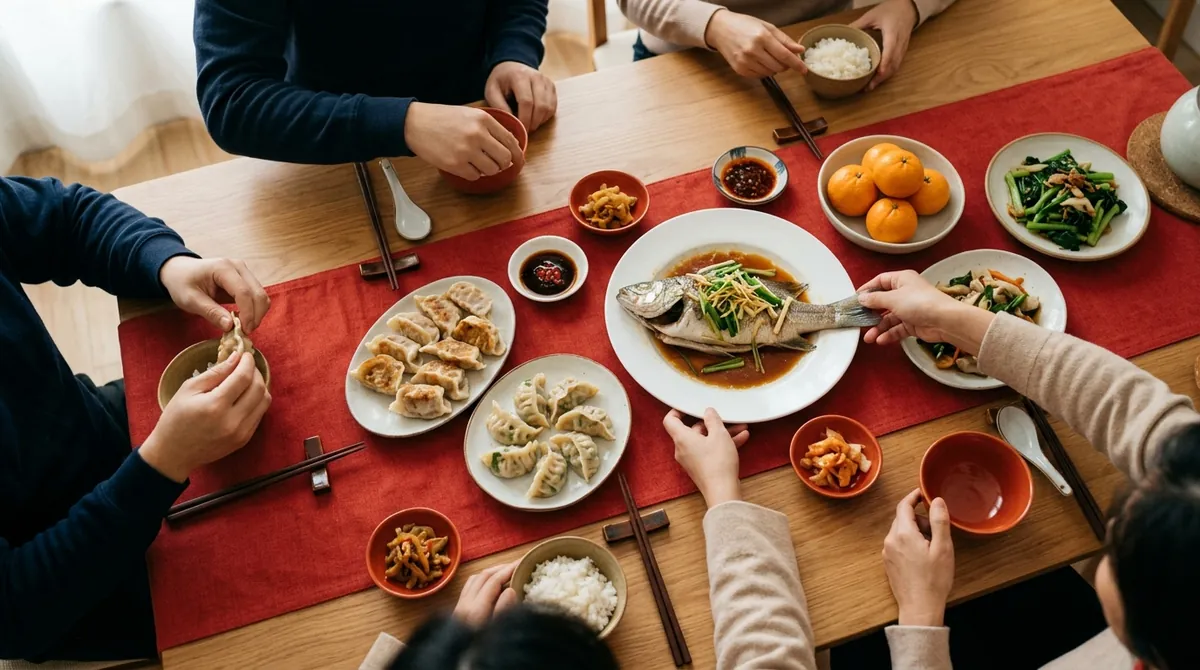
Most guides to Chinese New Year tell you what to eat and how to say "happy new year". This one covers the other side: the things many families avoid doing over the festival, and why. For Mandarin learners, the "why" is the interesting part, because a lot of these taboos come down to word-play: an object or action sounds like something unlucky.
Chinese New Year, or Spring Festival (春节, chūnjié), follows the lunar calendar, so it falls on a different date each year, between 21 January and 20 February. The next one is on 6 February 2027, the start of the Year of the Goat. Most taboos apply to New Year's Eve (除夕, chúxī) and the first few days of the new year, especially the first day (初一, chūyī). A few last for the whole first lunar month (正月, zhēngyuè), and the festival ends with the Lantern Festival (元宵节, yuánxiāo jié) on the fifteenth day.
These are traditions and superstitions, not rules. Customs vary by region and by family, and many younger people, especially in cities, follow few of them or treat them as a bit of fun. Others, often grandparents, take them seriously. If you're a guest, the safest approach is to notice what your hosts do and follow their lead, and the eight taboos below will help you understand what you're seeing.
1. Avoid Giving Clocks as Gifts
A clock might look like a smart, generous present. In Chinese culture it's one of the best-known gifts to avoid, at New Year and the rest of the year too.
The reason is a pun. "To give a clock" is 送钟 (sòng zhōng), which sounds exactly like 送终 (sòngzhōng), to attend a dying relative in their last moments, or to see someone off to their grave. Giving a clock can sound like wishing someone dead. A wristwatch (手表, shǒubiǎo) doesn't share the pun, but some people avoid giving any kind of timepiece just to be safe.
What works better
If you're bringing something to a host, a teacher or a business contact, choose something festive and easy to share: good tea, a box of fruit, sweets or biscuits. Mandarin oranges are a classic, because 橘 (jú) sounds a little like 吉 (jí, lucky). Give and receive gifts with both hands.
Practical rule: If you have to guess, skip anything symbolic and choose simple, festive, shareable gifts.
Turn the taboo into Mandarin practice
A few sentences cover the whole situation:
- 过年不能送钟。 (guònián bù néng sòng zhōng.) You can't give a clock at New Year.
- 我可以送茶叶或者水果。 (wǒ kěyǐ sòng cháyè huòzhě shuǐguǒ.) I could give tea or fruit.
- 这个礼物合适吗? (zhège lǐwù héshì ma?) Is this gift appropriate?
- 送钟听起来像"送终",不太吉利。 (sòng zhōng tīng qǐlái xiàng "sòngzhōng", bú tài jílì.) "Giving a clock" sounds like "seeing someone to their death", which isn't very lucky.
For more background on symbolic meanings, see our post on Chinese symbol meanings and cultural associations.
2. Don't Sweep or Take Out the Rubbish on New Year's Day
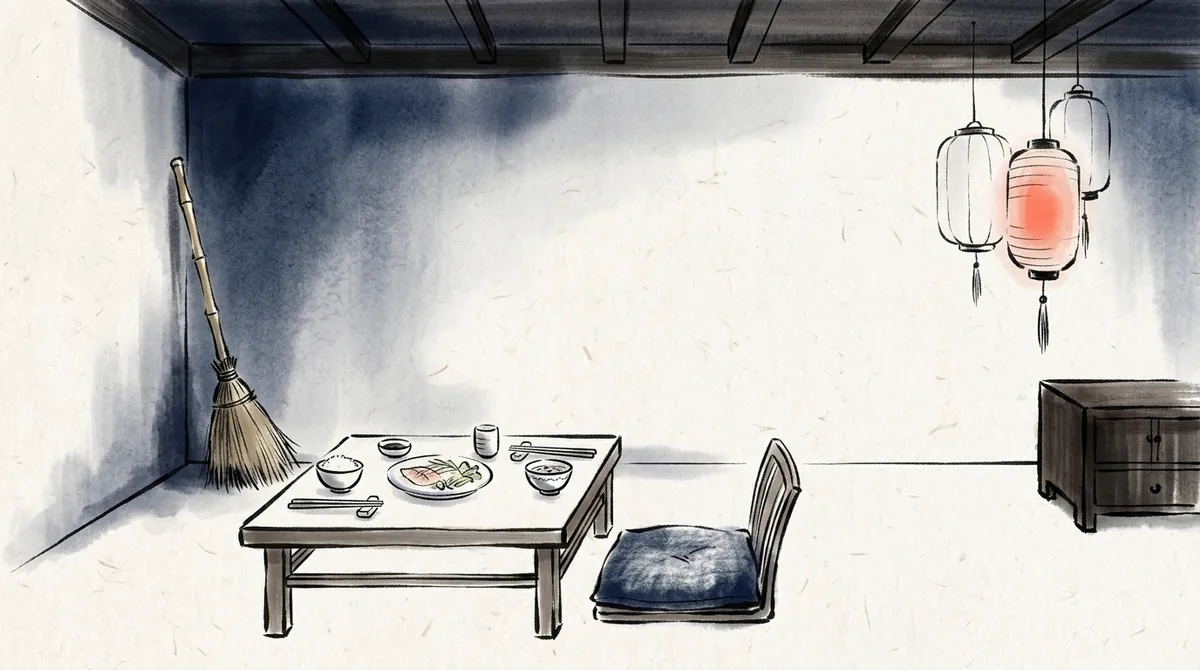
This is one of the most widely known customs. As the Royal Museums Greenwich guide to Chinese New Year explains, people traditionally don't sweep the floor on New Year's Day, or if they do, they don't throw the rubbish or water out of the house, because that would mean throwing away the family's wealth for the coming year. Some families who do sweep sweep inwards, towards the middle of the room, rather than out of the door.
The flip side is a big clean before the festival. Many families do a 大扫除 (dàsǎochú, thorough clean) in the last days of the old year, traditionally starting around the "little new year" (小年, xiǎonián) a week before, to sweep out the old year's bad luck. Then the brooms are put away.
The phrase worth memorising
初一不能扫地 (chūyī bù néng sǎodì, you can't sweep on the first day) is short, natural and packed with useful words:
- 初一 (chūyī): the first day of a lunar month, and especially of the new year
- 不能 (bù néng): can't, mustn't
- 扫地 (sǎodì): to sweep the floor
Questions to ask
Customs like this make great conversation starters. You could ask:
- 你们家初一扫地吗? (nǐmen jiā chūyī sǎodì ma?) Does your family sweep on the first day?
- 为什么初一不能倒垃圾? (wèishénme chūyī bù néng dào lājī?) Why can't you take the rubbish out on the first day?
- 这个风俗现在还有人遵守吗? (zhège fēngsú xiànzài hái yǒu rén zūnshǒu ma?) Do people still follow this custom?
If you're building festival vocabulary, compare these customs with those of other traditional festivals such as Mid-Autumn. The contrast helps you remember which customs belong to which holiday.
3. Try Not to Break Things or Use Knives and Scissors
Breaking a bowl or dropping a glass over the festival can feel like a bad omen, even in families that aren't strict about other customs. Broken things suggest broken luck or a broken family. In the same way, some families avoid knives and scissors on the first day, because cutting suggests cutting off good fortune, the opposite of the reunion spirit of the festival.
If something breaks, there's a phrase for it
If something does smash, someone will often say 碎碎平安 (suìsuì píng'ān) straight away. It's a pun: 碎 (suì) means "broken to pieces", but it sounds exactly like 岁 (suì, year), so the phrase echoes the New Year blessing 岁岁平安 (suìsuì píng'ān, "peace year after year"). The breakage is turned into a good-luck wish.
Even if you don't say it yourself, recognising it means you'll understand what's happening instead of freezing when everyone reacts to a broken cup.
Practical habits
- Use sturdy tableware: if you're hosting, this isn't the time for your most fragile dishes.
- Prepare food in advance: much of the chopping is traditionally done on New Year's Eve, ready for the next day.
- Take care in busy kitchens: festival meals are hectic, and crowded counters cause accidents.
Useful words here are 碗 (wǎn, bowl), 盘子 (pánzi, plate), 杯子 (bēizi, cup or glass), 刀 (dāo, knife) and 剪刀 (jiǎndāo, scissors). A complete sentence to learn: 如果不小心打碎了东西,要赶快说"碎碎平安"。(rúguǒ bù xiǎoxīn dǎsuì le dōngxi, yào gǎnkuài shuō "suìsuì píng'ān".) If you accidentally break something, quickly say "suìsuì píng'ān".
4. Don't Give Umbrellas, Shoes or Pears as Gifts
Some unlucky gifts are everyday objects that carry an unfortunate sound:
- Umbrellas: 伞 (sǎn) sounds like 散 (sàn, to break up or scatter), so an umbrella can suggest the end of a friendship or relationship.
- Shoes: 鞋 (xié) sounds the same as 邪 (xié, evil), and giving shoes can also hint that you want the person to walk away.
- Pears: 梨 (lí) sounds like 离 (lí, to leave or separate). Splitting a pear to share, 分梨 (fēn lí), sounds like 分离 (fēnlí, to be parted).
As with clocks, these are avoided all year by many people, but especially at New Year, when the focus is on family togetherness.
Why learners should care
Gift taboos are a quick way to show cultural awareness in conversation. If someone asks what to bring to a Spring Festival visit and you can explain why an umbrella is risky, you're already doing more than reciting greetings. They also train your ear: you start to notice which words sound alike, which matters in a language where tones and homophones do so much work.
A flexible sentence to learn: 过年最好别送伞和鞋。(guònián zuìhǎo bié sòng sǎn hé xié.) It's best not to give umbrellas or shoes at New Year. You can swap in other objects and keep the pattern.
Safer alternatives for New Year visits
- Tea: easy to present and easy for the family to share.
- Fruit: especially oranges or mandarins when visiting a family home.
- Chocolates, sweets or biscuits: a practical choice in mixed cultural settings.
- Red envelopes (红包, hóngbāo): usually given by married adults and older relatives to children and younger unmarried relatives, or by employers to staff. Use new notes, and avoid amounts containing 4, because 四 (sì) sounds like 死 (sǐ, death).
Say you've been invited to a New Year dinner by a Chinese friend's family in the UK. A useful household item might seem like a thoughtful present by British standards, but a box of fruit or good tea is the safer, more festive choice here. Words to learn: 伞 (sǎn, umbrella), 鞋 (xié, shoes), 红包 (hóngbāo, red envelope), 茶叶 (cháyè, tea leaves) and 水果 (shuǐguǒ, fruit).
5. Avoid Unlucky Words and Talk of Death or Illness
Some taboos are about objects; this one is about atmosphere. Over the New Year, many people avoid words linked to death, illness, poverty or loss, such as 死 (sǐ, to die), 病 (bìng, illness) and 穷 (qióng, poor), because the festival is meant to welcome a good start, not invite bad luck in. Arguing, crying and scolding children are traditionally avoided too; the Royal Museums Greenwich guide notes that older relatives would not scold children on New Year's Day even if they misbehaved.
That doesn't mean every family polices every sentence. It means positive framing matters more than usual. In the same spirit, people traditionally don't chase debts during the festival; it's better to settle them before the new year begins.
Replace negative wording with auspicious language
The trick isn't silence; it's substitution. Know what to say instead.
- Instead of complaints: use hopeful, forward-looking language.
- Instead of dwelling on setbacks: talk about health, peace and things going smoothly.
- Instead of dark jokes: offer greetings and blessings.
Useful phrases to study
- 新年快乐 (xīnnián kuàilè): Happy New Year
- 恭喜发财 (gōngxǐ fācái): wishing you prosperity
- 身体健康 (shēntǐ jiànkāng): (wishing you) good health
- 万事如意 (wànshì rúyì): may everything go as you wish
- 平安顺利 (píng'ān shùnlì): safe and smooth
Numbers carry the same kind of meaning: 4 is avoided, while 8 is lucky. See our guide to lucky and unlucky numbers in Chinese, and why the number 8 has positive associations in Chinese.
6. Don't Cut Your Hair at the Start of the Year
A haircut feels routine, but over Chinese New Year it can feel loaded. Many people avoid cutting their hair on the first day, or for the first few days, because cutting suggests cutting away good luck.
In parts of northern China the custom lasts the whole first lunar month, summed up in an old saying: 正月剃头死舅舅 (zhēngyuè tìtóu sǐ jiùjiu), "a haircut in the first month brings death to your maternal uncle". One popular explanation is that it started as 思旧 (sī jiù, missing the old days) and was misheard over time as 死舅 (sǐ jiù, uncle dies). Whatever its origin, the result is that barbers are packed in the weeks before New Year, and busy again on 二月二 (èryuè èr), the second day of the second month, known as 龙抬头 (lóng tái tóu, "the dragon raises its head"), a traditional day for a fresh haircut. (舅舅 is your mother's brother; see our guide to family words in Chinese for the rest of the family tree.)
The practical trade-off
You don't need to believe in it for it to matter. If you're spending the holiday with a Chinese family, it's easier to get your haircut beforehand than to find out how seriously someone takes the custom.
A natural sentence to learn: 很多人过年前就去理发。(hěn duō rén guònián qián jiù qù lǐfà.) Lots of people get a haircut before New Year.
Language to keep active
Study these words together:
- 剪 (jiǎn): to cut (with scissors)
- 头发 (tóufa): hair
- 理发 (lǐfà): to get a haircut
- 运气 (yùnqi): luck
- 禁忌 (jìnjì): taboo
Then use them. Ask whether someone follows the custom, when people usually get their hair cut instead, and whether they see it as tradition, superstition or both. Questions like these invite personal stories, which make for much richer practice than a quick "happy new year".
7. Avoid Washing Clothes or Hair on the First Days
This taboo is a cousin of the no-sweeping rule. Washing, like sweeping, can be seen as washing your luck away, and many families avoid laundry on the first day of the year.
Hair has its own pun. The 发 (fà) in 头发 (tóufa, hair) is written with the same character as the 发 (fā) in 发财 (fācái, to get rich), so washing your hair on the first day can sound like washing away your wealth. In some traditions, the first two days of the year are also the birthday of the water god, which is another reason to avoid laundry then.
What people actually do
In practice, households get the laundry done before the festival and keep the first day light and celebratory. Even families who don't believe the superstition often like the result: nobody spends the first morning of the year doing chores.
Learn the household verbs as a set: 洗衣服 (xǐ yīfu, to do the laundry), 洗头 (xǐ tóu, to wash your hair), 扫地 (sǎodì, to sweep), 倒垃圾 (dào lājī, to take out the rubbish). Words linked by a cultural pattern are easier to remember than isolated ones.
Sentences to learn
- 除夕前把衣服洗好。 (chúxī qián bǎ yīfu xǐ hǎo.) Get the laundry done before New Year's Eve.
- 初一不能洗衣服,所以要在前一天洗完。 (chūyī bù néng xǐ yīfu, suǒyǐ yào zài qián yì tiān xǐ wán.) You can't do laundry on the first day, so finish it the day before.
- 初一别洗头。 (chūyī bié xǐ tóu.) Don't wash your hair on the first day.
If you're staying with a Chinese family and want to help, it's worth asking before you start on the laundry or the floor over the first days. In many British homes, pitching in with chores is the polite thing to do; here, timing matters too.
8. Don't Make Gloomy Predictions About the Year Ahead
This is broader than avoiding a few unlucky words. It's about how you talk about the future.
At New Year, people tend to avoid pessimistic predictions and heavy complaints. Even after a hard year, the usual style is to acknowledge it lightly and turn towards hope, effort or a fresh start. That doesn't mean pretending everything is fine. It means choosing words that leave room for luck and progress: instead of dwelling on failure, talk about what you learned; instead of forecasting problems, wish people smooth work and good health.
Useful Mandarin patterns
These let you sound optimistic without sounding fake:
- 今年一定会更好。 (jīnnián yídìng huì gèng hǎo.) This year will definitely be better.
- 去年学到了很多,今年继续努力。 (qùnián xuédào le hěn duō, jīnnián jìxù nǔlì.) I learned a lot last year; this year I'll keep working hard.
- 祝你工作顺利。 (zhù nǐ gōngzuò shùnlì.) Wishing you success at work.
- 祝你前程似锦。 (zhù nǐ qiánchéng sì jǐn.) Wishing you a bright future.
Chinese New Year Taboos at a Glance
| Taboo | Why | Words to learn |
|---|---|---|
| Giving clocks | 送钟 (sòng zhōng) sounds like 送终 (sòngzhōng), attending a death | 钟 (zhōng, clock), 礼物 (lǐwù, gift) |
| Sweeping and taking out rubbish on the first day | Sweeps or throws the family's wealth out of the house | 扫地 (sǎodì), 倒垃圾 (dào lājī), 大扫除 (dàsǎochú) |
| Breaking things, using knives and scissors | Broken or cut luck; 碎碎平安 (suìsuì píng'ān) turns a breakage into a blessing | 碗 (wǎn), 刀 (dāo), 剪刀 (jiǎndāo) |
| Giving umbrellas, shoes or pears | 伞 (sǎn) ~ 散 (sàn, scatter); 鞋 (xié) ~ 邪 (xié, evil); 梨 (lí) ~ 离 (lí, leave) | 伞 (sǎn), 鞋 (xié), 梨 (lí) |
| Unlucky words, arguing, scolding children | The first days set the tone for the whole year | 恭喜发财 (gōngxǐ fācái), 身体健康 (shēntǐ jiànkāng) |
| Haircuts | Cutting away luck; in parts of the north, avoided for the whole first month | 头发 (tóufa), 理发 (lǐfà) |
| Washing clothes or hair on the first days | Washing luck away; 发 in 头发 is the 发 of 发财 | 洗衣服 (xǐ yīfu), 洗头 (xǐ tóu) |
| Gloomy predictions | Positive framing invites a good year | 顺利 (shùnlì), 努力 (nǔlì) |
Turn Cultural Knowledge Into Conversation
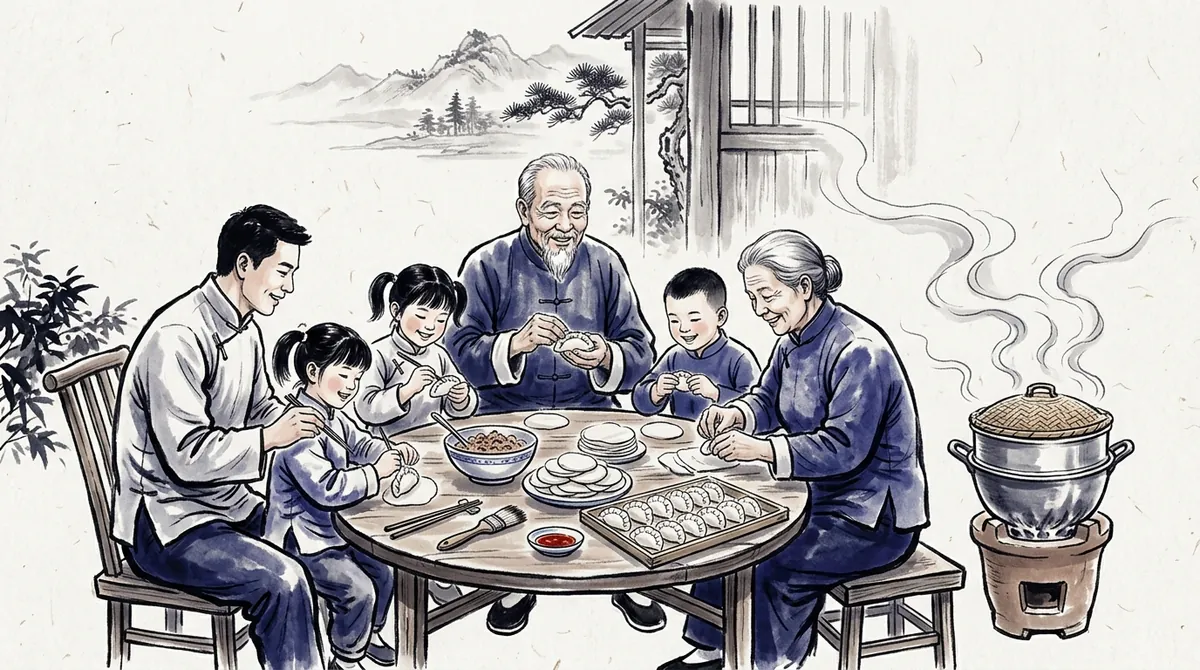
Each taboo teaches more than one thing. Gift taboos teach homophones and implied meaning. Household taboos teach everyday verbs in a memorable context. Speech taboos teach politeness and how to frame things for the occasion. Language sticks better when it's attached to a situation you can picture.
That's also why isolated words are easy to forget. 垃圾 (lājī, rubbish), 头发 (tóufa, hair) and 运气 (yùnqi, luck) on their own soon fade. Inside sentences such as 初一不能扫地 or 很多人过年前就去理发, they become usable, because you know when someone would actually say them. Learning from whole sentences like this is called sentence mining.
If you're a beginner, pick a few high-value phrases, such as the greetings in section 5 and one gift sentence, rather than trying to learn every custom. If you're intermediate, use the taboos as conversation topics: ask friends which customs their family still follows, whether they see them as tradition or superstition, and what's changing among younger people.
If you want to keep phrases like these, Mandarin Mosaic lets you add your own sentences to a custom pack and review them with spaced repetition, alongside its built-in lessons, which teach new words in sentences with one new word where possible. It's a simple way to turn festival vocabulary into words you actually remember.