Master Your Accent: 8 Tongue Twisters Chinese Learners Must Know in 2026
Struggling with the difference between 'sì' and 'shí'? You're not alone. Mastering Mandarin pronunciation is often the steepest climb for learners, but a fun, traditional method could accelerate your progress. This guide unlocks the power of tongue twisters Chinese teachers have used for generations to help students refine their accents and build muscle memory for difficult sounds. We move beyond simple translations to provide a strategic roadmap for genuine improvement.
This is more than just a list; it's a structured training programme. We will break down eight essential twisters, from beginner staples focusing on s/sh and z/zh distinctions to advanced challenges that test your tonal accuracy and fluency. For each example, you will receive a deep analysis of the phonetic hurdles, actionable practice tips, and clear guidance on integrating these powerful drills into a modern learning workflow, such as the sentence mining method used in our Mandarin Mosaic app.
Ultimately, these exercises are designed to make you a more precise and articulate speaker. To maximise the benefits of these drills, it’s helpful to also consider broader strategies on how to improve verbal communication skills, ensuring your efforts translate into confident and clear speech. Get ready to finally conquer those tricky sounds.
1. 四是四,十是十 (Sì shì sì, shí shì shí)
This is the quintessential Chinese tongue twister and the perfect starting point for any Mandarin learner. Its fame is well-deserved; it targets one of the most common phonetic hurdles: the distinction between the "s" and "sh" sounds. The full version, “四是四,十是十,十四是十四,四十是四十” (Sì shì sì, shí shì shí, shísì shì shísì, sìshí shì sìshí), translates to "Four is four, ten is ten, fourteen is fourteen, forty is forty." It forces your mouth to rapidly switch between the two challenging initial sounds.

The difficulty lies in tongue placement. For sì (四), the tip of your tongue is flat and rests just behind your top front teeth. For shí (十), you must curl your tongue tip upwards, pulling it back slightly so it doesn't touch the roof of your mouth. This tongue twister is a direct, focused drill on that specific motor skill.
Strategic Breakdown & Practice
- Phonetic Focus: Isolates the s- / sh- contrast. This is a foundational pair that, once mastered, unlocks clear pronunciation for hundreds of other words.
- Difficulty: Beginner. While difficult to say quickly, the vocabulary is simple and the concept is straightforward, making it highly accessible.
- Actionable Takeaway: Record yourself saying "sì" and "shí" slowly, then listen back. Compare your sounds to a native speaker's audio. You will likely notice a significant difference at first, which is the key to identifying what you need to adjust in your mouth. While tones are not the primary challenge here, ensuring your fourth tone on
sìis sharp and your second tone onshírises correctly is also crucial; you can discover more about mastering Chinese tones to complement your practice.
Integration into your Learning Workflow
To move beyond rote memorisation, integrate this exercise into your study routine. Use spaced repetition system (SRS) software like Anki or a streamlined platform like Mandarin Mosaic. Create a custom deck focused on minimal pairs: words that differ only by the s- and sh- sound, such as sì/shí, suān/shuāng (sour/pair), and sān/shān (three/mountain). This contextualises the practice, helping your brain to differentiate the sounds in real words, not just in a single tongue twister. This method turns a simple drill into a powerful, long-term pronunciation tool.
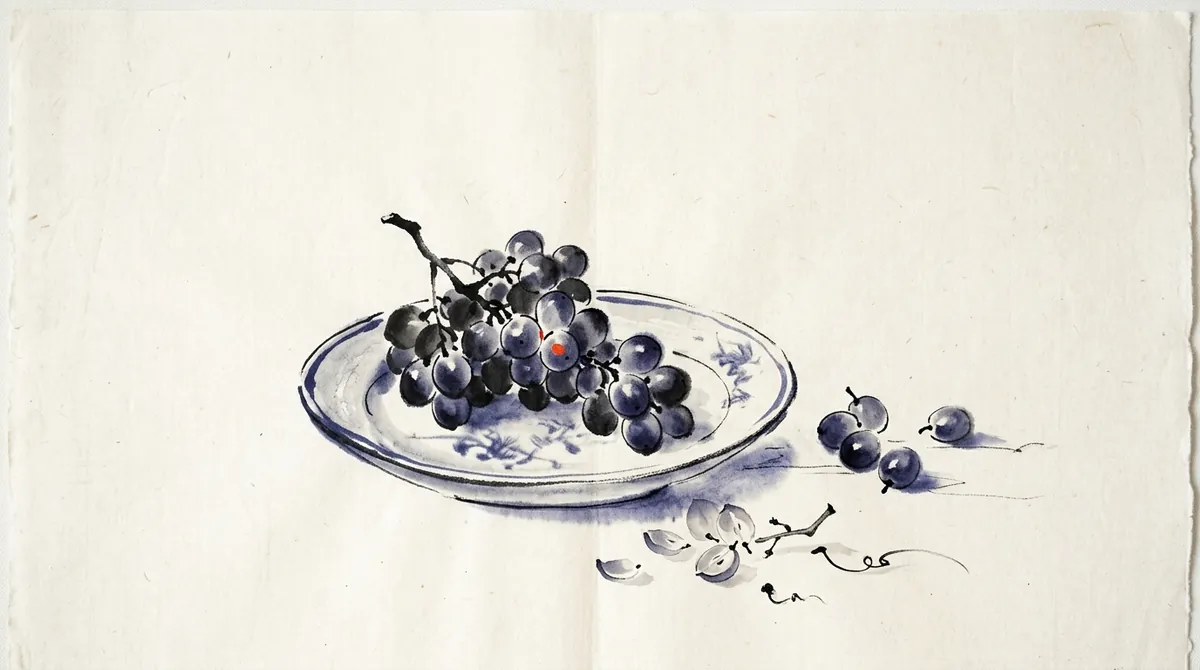
2. 吃葡萄 (Chī pútao - Eating Grapes)
Moving beyond single-sound isolation, this popular tongue twister introduces rhythm and a playful narrative, making it a favourite in Chinese classrooms. The full phrase, “吃葡萄不吐葡萄皮,不吃葡萄倒吐葡萄皮” (Chī pútao bù tǔ pútao pí, bù chī pútao dào tǔ pútao pí), translates to "Eating grapes, don't spit out the grape skin; not eating grapes, but spitting out the grape skin." It challenges learners to manage breath control and articulate a sequence of unaspirated and aspirated consonants.

The core difficulty lies in the rapid succession of different plosive and affricate sounds. You must switch cleanly between the retroflex chī (吃), the unaspirated pú (葡) and pí (皮), and the aspirated tǔ (吐). Unlike the previous example, which focuses on a single phonetic contrast, this twister trains your mouth’s agility across multiple, distinct consonant groups while maintaining a steady rhythm. It's a fantastic exercise for overall oral dexterity.
Strategic Breakdown & Practice
- Phonetic Focus: Differentiates between unaspirated
p-and aspiratedt-, as well as the affricatech-. It also drills the repetition of thepútao písyllable sequence. - Difficulty: Beginner to Intermediate. The vocabulary is simple, but the coordination required to articulate the different sounds quickly increases the challenge significantly.
- Actionable Takeaway: Break the phrase in half. Master "吃葡萄不吐葡萄皮" first, focusing on the crispness of each sound. Record yourself and listen for a clear puff of air on
tǔbut not onpúorpí. Once you can say the first half fluidly, practise the second half, then combine them.
Integration into your Learning Workflow
This tongue twister is perfect for contextual vocabulary building. In an SRS like Mandarin Mosaic, create a deck around food and actions. Include the core words: 葡萄 (pútao) - grape, 吃 (chī) - to eat, 吐 (tǔ) - to spit, and 皮 (pí) - skin. Add the full tongue twister as one card, and supplement it with related sentence cards like "我不喜欢吃葡萄皮" (I don't like to eat grape skins) or "把籽吐出来" (Spit the seeds out). This method connects the phonetic drill to practical, everyday language, ensuring the vocabulary and pronunciation skills stick.
3. 黑化肥会挥发 (Hēi huàféi huì huīfā)
This tongue twister is a notorious rite of passage for learners moving into advanced pronunciation. Its full version, "黑化肥会挥发,灰化肥会挥发" (Hēi huàféi huì huīfā, huī huàféi huì huīfā), translates to "Black fertiliser will volatilise; grey fertiliser will volatilise." The phrase is designed to create maximum phonetic confusion by rapidly alternating between the initials 'h' and 'f', which require distinct but subtle mouth movements.

The primary challenge is the muscular control needed to switch between the sounds. For huī (挥), the sound is generated from the back of the throat with a relaxed mouth. For fēi (肥), your top teeth must lightly touch your bottom lip, forcing the air through a narrow gap. Performing this switch at speed without blending the sounds is what makes this twister a significant hurdle even for some native speakers, solidifying its place among the most difficult Chinese tongue twisters.
Strategic Breakdown & Practice
- Phonetic Focus: Isolates the difficult h- / f- contrast, a common point of error for Chinese language learners.
- Difficulty: Advanced. The combination of difficult phonemes, technical vocabulary (化肥 - huàféi, 挥发 - huīfā), and speed requirements makes this unsuitable for beginners.
- Actionable Takeaway: Break the twister into its smallest phonetic components. Practise saying "hēi-huī" and "huà-féi" in isolation, focusing intensely on the different mouth and tongue positions for each syllable. Film yourself in slow motion to analyse your lip and teeth placement for the 'f' sound, comparing it to native speaker demonstrations.
Integration into your Learning Workflow
This is not a twister to memorise directly but one to conquer through foundational work. Before tackling it, ensure the core vocabulary is already secure in your long-term memory. Use a platform like Mandarin Mosaic to learn words such as 化肥 (fertiliser) and 挥发 (volatilise) through contextual sentence mining. Create a dedicated SRS deck with minimal pairs like hēi/fēi (black/fly) and huī/fēi (grey/fly). This targeted practice builds the muscle memory required to differentiate the sounds under pressure. Only attempt the full tongue twister once you can produce these core sound pairs accurately and automatically.
4. 粉红墙和花 (Fěnhóng qiáng hé huā)
This tongue twister tackles the subtle but crucial distinction between the Mandarin initials 'f' and 'h'. Unlike the physical gymnastics of s and sh, this pair tests your control over airflow. The full version is “粉红墙和花,花和粉红墙,粉红墙和花都粉红,花和粉红墙都是花红粉” (Fěnhóng qiáng hé huā, huā hé fěnhóng qiáng, fěnhóng qiáng hé huā dōu fěnhóng, huā hé fěnhóng qiáng dōu shì huā hóngfěn), meaning "Pink wall and flowers; flowers and pink wall; the pink wall and flowers are both pink; flowers and the pink wall are both pink-red flowers." It uses simple, colourful vocabulary to isolate a common phonetic tripwire.

The challenge is preventing the sounds from blending. For fěn (粉), your top teeth should lightly touch your bottom lip, forcing air through a narrow gap (a labiodental fricative). For huā (花), your mouth is more open, with the sound originating from the back of your throat as you exhale (a glottal fricative). This exercise drills the muscle memory needed to switch cleanly between these two production methods.
Strategic Breakdown & Practice
- Phonetic Focus: Isolates the f- / h- contrast. The sounds can easily blur together when spoken quickly, so this drill is especially useful.
- Difficulty: Intermediate. The vocabulary is straightforward, but achieving clean, rapid articulation of the f/h switch requires conscious practice and control.
- Actionable Takeaway: Say "fěn" and "huā" in front of a mirror. For "fěn," watch your teeth and lip make contact. For "huā," you should see no such contact; your mouth should simply open as you breathe the sound out. The visual feedback makes the physical distinction clear. Additionally, pay attention to the word 和 (hé), a fundamental character; you can explore the various ways to say 'and' in Chinese to build on this vocabulary.
Integration into your Learning Workflow
To make this practice stick, shift from isolated repetition to contextual application. Create a visual anchor by finding a picture of pink flowers against a pink wall and save it with the tongue twister. In your SRS platform like Mandarin Mosaic, build a sentence deck focused on colours and household objects. Include sentences that force you to use 'f' and 'h' sounds in close proximity, such as "我的房间里有粉红色的花" (Wǒ de fángjiān lǐ yǒu fěnhóng sè de huā - There are pink flowers in my room). This method embeds the phonetic drill within meaningful language, improving both your pronunciation and your practical vocabulary.
5. 红鲤鱼与绿鲤鱼与驴 (Hóng líyú yǔ lǜ líyú yǔ lǘ)
Often cited as a rite of passage for advanced learners, this legendary tongue twister targets the subtle yet crucial distinctions between the l- initial and the ü (yu) final. The name itself, meaning "Red carp and green carp and donkey," already presents a formidable challenge. Its nonsensical nature forces the speaker to rely purely on phonetic precision rather than contextual cues, making it a powerful tool for isolating difficult sound combinations.
The primary difficulty lies in the rapid succession of lǐ, lǜ, lǘ, and yǔ. The ü vowel requires precise lip rounding, a skill many learners find unnatural. This twister mercilessly exposes any weakness in producing this sound, especially when combined with the l- initial and shifting tones. Saying it quickly without muddling the sounds or tones is a true test of articulatory control, which is why it's a famous item among the more difficult tongue twisters chinese learners encounter.
Strategic Breakdown & Practice
- Phonetic Focus: Isolates the
l-initial combined with theüvowel (yu) across multiple tones. It also drills thehóng(h+ong) vs.lǜ(l+ü) distinction. - Difficulty: Advanced. The combination of similar sounds, difficult vowels, and rapid tonal shifts makes this extremely challenging to recite flawlessly at speed.
- Actionable Takeaway: Use a mirror to watch your lip shape. For
yǔ,lǜ, andlǘ, your lips should be tightly rounded and pushed forward, as if you were whistling. Record yourself saying each word slowly:hóng(red),lǜ(green),lǐyú(carp), andlǘ(donkey). Compare your pronunciation to a native speaker’s, paying close attention to the clarity of theüsound and the accuracy of each tone.
Integration into your Learning Workflow
To conquer this twister, build a foundation rather than just attempting brute-force repetition. In an SRS platform like Mandarin Mosaic or Anki, create a specific deck focused on words containing the ü vowel, particularly those with an l- initial. Include words like lǜsè (green colour), lǚxíng (to travel), and nǚlì (female slave). Practice these words in context until the sound becomes second nature. This method transforms the tongue twister from an intimidating obstacle into a final test of a skill you have systematically developed, making your practice more efficient and far less frustrating.
6. 初入职场小菜鸟 (Chū rù zhíchǎng xiǎo càiniǎo)
This modern tongue twister offers a refreshing departure from classical themes, grounding pronunciation practice in a highly relevant, contemporary context: the professional workplace. The full phrase, “初入职场小菜鸟,初心不忘心澄澈;初入职场小菜鸟,初心似锦心璀璨” (Chū rù zhíchǎng xiǎo càiniǎo, chūxīn bù wàng xīn chéngchè; chū rù zhíchǎng xiǎo càiniǎo, chūxīn sì jǐn xīn cuǐcàn), translates to "A rookie fresh to the workplace, initial intention unforgettable and heart pure; a rookie fresh to the workplace, initial intention like brocade and heart brilliant." It expertly targets the difficult distinction between the ch- and c- initial sounds.
The core challenge lies in differentiating the unaspirated, retroflex ch sound from the aspirated, dental c sound. For chū (初), your tongue tip is curled back (retroflex) and the sound is produced without a strong puff of air. Conversely, for càiniǎo (菜鸟) and cuǐcàn (璀璨), your tongue tip is flat and positioned behind your top front teeth, and you must release a distinct puff of air. This twister provides a practical drill for this crucial phonetic pair using vocabulary you might actually encounter in a modern business setting.
Strategic Breakdown & Practice
- Phonetic Focus: Isolates the ch- / c- contrast, a common point of confusion for learners that significantly impacts clarity. It also subtly reinforces the
ch- / x-distinction in words like chūxīn (初心). - Difficulty: Intermediate. The vocabulary is more specific than in beginner twisters, and the cultural concept of 初心 (chūxīn), or 'beginner's mind/original intention', adds a layer of depth.
- Actionable Takeaway: Break the twister into its two main clauses. First, master the repetition of "初入职场小菜鸟" (chū rù zhíchǎng xiǎo càiniǎo), focusing on the switch from the retroflex
chto the dentalc. Then, practise the second parts, paying close attention to the tones in "心澄澈" (xīn chéngchè) and "心璀璨" (xīn cuǐcàn), as incorrect tones can render these less-common words unrecognisable.
Integration into your Learning Workflow
This is one of the best tongue twisters in Chinese for learners with professional ambitions. To maximise its value, build a dedicated vocabulary deck in your SRS around workplace terminology. Platforms like Mandarin Mosaic allow you to create custom packs. Populate yours with words like 职场 (zhíchǎng - workplace), 菜鸟 (càiniǎo - rookie), and related concepts such as 同事 (tóngshì - colleague) and 老板 (lǎobǎn - boss). By pre-learning these terms in context, the tongue twister transforms from a mere phonetic drill into a memorable mnemonic for a whole semantic field, directly aiding your professional communication goals.
7. 老鼠 (Lǎo shǔ - Mouse/Rat)
This two-word tongue twister is deceptively simple and represents a core phonetic challenge for many learners. Its power lies in its minimalism, isolating the difficult distinction between the 'l' initial in lǎo (老) and the 'sh' initial in shǔ (鼠). Repeating “老鼠,老鼠,老鼠” (lǎo shǔ, lǎo shǔ, lǎo shǔ) quickly forces your tongue to perform gymnastic feats, moving from a forward to a retroflex position with precision.
The difficulty is purely mechanical. For lǎo (老), the tip of your tongue must firmly tap the alveolar ridge just behind your top front teeth. Immediately after, for shǔ (鼠), your tongue must retract and curl upwards, creating the hallmark retroflex sound of 'sh'. This rapid front-to-back movement is a common stumbling block, and this exercise targets it with surgical accuracy, making it one of the most efficient diagnostic tongue twisters chinese pronunciation teachers use.
Strategic Breakdown & Practice
- Phonetic Focus: Isolates the l- / sh- contrast. Mastering this pair is crucial for differentiating words like
lán(blue) andshān(mountain), orlì(strength) andshì(is). - Difficulty: Beginner-Intermediate. The words are basic, but the phonetic jump is athletically demanding, requiring significant oral dexterity to perform at speed.
- Actionable Takeaway: Use a mirror. Say "lǎo" and watch your tongue tip make clear contact near your front teeth. Then say "shǔ" and observe how your tongue pulls back and up without touching the roof of your mouth. This visual feedback is invaluable for correcting motor patterns and internalising the two distinct movements.
Integration into your Learning Workflow
This twister is an excellent warm-up exercise. Before starting a study session, especially one focused on vocabulary or speaking, repeat "lǎo shǔ" ten times slowly, then ten times quickly. This primes your mouth for Mandarin articulation. Within an SRS like Mandarin Mosaic, you can create a dedicated 'Pronunciation Drill' card with just this phrase. Place it at the beginning of your review queue so it appears daily, embedding this essential motor skill practice into your learning routine and ensuring consistent progress.
8. 舌头与舌尖 (Shé tou yǔ shé jiān)
This clever and self-referential tongue twister focuses on the very tool you're using to speak: the tongue. The full phrase is “我有一个舌头,舌头有舌尖,舌尖上有舌头,舌头绕舌尖,舌尖缠舌头” (Wǒ yǒu yí ge shé tou, shé tou yǒu shé jiān, shé jiān shàng yǒu shé tou, shé tou rào shé jiān, shé jiān chán shé tou). Its literal translation is "I have a tongue, the tongue has a tip, on the tongue tip is the tongue, the tongue wraps around the tip, the tip entwines the tongue."
This twister is a relentless drill of the shé sound, forcing you to maintain the correct retroflex tongue position while articulating different accompanying vowels and tones. By repeatedly using the word for "tongue" (舌), it creates a meta-linguistic challenge that is both amusing and highly effective for mastering the "sh" initial. The mental image of a tongue wrapping around its own tip adds a layer of humour that aids memorisation.
Strategic Breakdown & Practice
- Phonetic Focus: Sustained repetition of the
sh-initial (shé,shàng). This builds muscle memory for the curled tongue position required for retroflex consonants. It also subtly trains tone accuracy under pressure, specifically the rising second tone ofshé. - Difficulty: Intermediate. The vocabulary is simple, but the rapid, repetitive nature of the
shésound combined with the sentence's length makes it a significant articulation challenge. - Actionable Takeaway: Break the twister into its three logical parts: the statement ("I have a tongue, the tongue has a tip"), the position ("on the tip is the tongue"), and the action ("the tongue wraps... the tip entwines..."). Practise each segment slowly, focusing on a crisp and consistent "sh" sound. The real test is transitioning between segments without stumbling. A solid grasp of the pinyin system is essential here; you can get a better understanding of how to learn Chinese Pinyin to support this practice.
Integration into your Learning Workflow
To maximise this twister's value, use it as a foundation for a thematic vocabulary set. In an SRS platform like Mandarin Mosaic, create a custom deck called "Body Parts & Actions". Include not just 舌头 (tongue) and 舌尖 (tongue tip) but also the action verbs 绕 (wrap around) and 缠 (entwine). Create sample sentences for each, such as "围巾绕着我的脖子" (wéi jīn rào zhe wǒ de bó zi - the scarf is wrapped around my neck). This method connects the abstract practice of a tongue twister to practical vocabulary, making the learning process more holistic and memorable.
Comparison of 8 Chinese Tongue Twisters
| Twister | Implementation complexity | Resource requirements | Expected outcomes | Ideal use cases | Key advantages |
|---|---|---|---|---|---|
| 四是四,十是十 (Sì shì sì, shí shì shí) | Low — very short, repeatable drill | Minimal: audio model, mirror/recording | Clearer s vs sh distinction; faster articulation | Beginners, warm-ups, basic phonetics practice | Directly targets a common pronunciation error; quick repetition |
| 吃葡萄 (Chī pútao) | Moderate — longer phrase, rhythmic control needed | Audio, paced practice, breath-control exercises | Improved rhythm, intonation, multi-consonant clarity | Classroom practice, intermediate learners, memory anchors | Engaging narrative; builds breath control and natural pacing |
| 黑化肥会挥发 (Hēi huàhuà féi huì huīfā) | High — long and dense with similar consonants | Advanced audio, vocabulary scaffolding, slow-to-fast segmentation | Endurance speaking, advanced h vs f precision | Advanced learners, pronunciation challenges, competitions | Mastery-level challenge; motivates through difficulty and novelty |
| 粉红墙和花 (Fěnhóng qiáng hé huā) | Moderate — accessible vocabulary, moderate length | Visual aids, color vocabulary practice, audio | Refined f vs h distinction with useful vocabulary | Intermediate learners, visual/kinesthetic learners | Practical, everyday vocabulary; memorable visual associations |
| 红鲤鱼与绿鲤鱼与驴 (Hóng líyú yǔ lǜ líyú yǔ lǘ) | Very high — combines tones, ü vowel, complex sequencing | Native models, tone drills, mirror for lip rounding, segmented practice | Tone control, ü vowel accuracy, complex consonant handling | Advanced learners, challenge videos, competitions | Integrates multiple phonetic challenges; highly motivating social task |
| 初入职场小菜鸟 (Chū rù zhíchǎng xiǎo càiniǎo) | Moderate — poetic, uses ch vs c contrast with vocabulary | Vocabulary pre-teaching, cultural notes, audio | Improved ch vs c distinction plus workplace lexical gains | Adult learners, business Mandarin courses, professional contexts | Teaches practical workplace terms while practicing pronunciation |
| 老鼠 (Lǎo shǔ) | Very low — minimal pair, extremely short | None to minimal: recording, mirror for articulation | Precise l vs sh articulation; quick diagnostic feedback | Warm-ups, pronunciation diagnosis, speech therapy | Focused isolation of a single phonetic problem; time-efficient |
| 舌头与舌尖 (Shé tou yǔ shé jiān) | Moderate — repetitive, metalinguistic vocabulary | Anatomical vocabulary prep, audio, visualization prompts | Strong sh accuracy and articulatory awareness | Linguistics learners, pronunciation workshops, advanced classes | Memorable, teaches body-part vocabulary and articulatory positioning |
Beyond the Twister: Integrating Pronunciation Practice into Your Daily Study
You have now explored some of the most classic and challenging tongue twisters Chinese learners can use to sharpen their skills. From the fundamental sibilant drill of 四是四 (sì shì sì) to the complex vowel and consonant clusters in 红鲤鱼与绿鲤鱼与驴 (hóng líyú yǔ lǜ líyú yǔ lǘ), you have a powerful toolkit for pronunciation practice. The journey, however, doesn't end with simply reciting these phrases. The true goal is to internalise these phonetic distinctions and carry them seamlessly into your everyday spoken Mandarin.
The real value of these exercises lies in their function as a diagnostic tool. Each twister is designed to isolate a specific phonetic challenge. Mastering them is less about speed and more about developing the muscle memory and auditory discrimination required for clear, standard pronunciation. Think of them as a targeted workout for your mouth and ears.
From Drills to Daily Habits
The most effective learners bridge the gap between isolated drills and integrated practice. Here’s how to move beyond simple repetition and make these gains permanent:
- Become a Sound Hunter: After drilling a twister like
黑化肥会挥发 (hēi huàhuà féi huì huīfā), spend the rest of your study session actively listening for the 'h' and 'f' sounds. Notice them in your textbook dialogues, in podcasts, or while watching Chinese dramas. This active listening trains your brain to recognise the sounds in natural, unstressed contexts. - Create Targeted Micro-Drills: You don't need to recite the full twister every time. Isolate the challenging part, for instance, just repeating
hēi huàandhuì huīback-to-back. This creates a focused, high-impact exercise you can do in seconds. For those seeking effective ways to integrate this kind of practice into their daily study, exploring microlearning best practices can offer valuable strategies to boost retention and make learning less of a chore. - Contextualise with Sentence Mining: This is the most crucial step. A tongue twister gives you the sound, but a real sentence gives you the context and meaning. After practising, use a tool like Mandarin Mosaic to find real sentences that contain your target sounds. For example, after mastering
吃葡萄 (chī pútao), you could create a custom deck of sentences containing words with thechī,shī, andsīsounds to solidify your understanding in a meaningful way.
The Lasting Impact of Deliberate Practice
Ultimately, using Chinese tongue twisters is an act of deliberate practice. It’s about identifying a weakness, isolating it with a specific tool (the twister), and then reintegrating the improved skill back into your broader language ability. This focused effort is what separates learners who plateau from those who achieve a native-like cadence and clarity. By transforming these fun challenges into a cornerstone of your pronunciation routine, you are not just learning to say a tricky phrase; you are systematically re-wiring your brain and muscles for authentic Mandarin communication.
Ready to turn these pronunciation insights into a core part of your learning system? Mandarin Mosaic allows you to move beyond isolated drills by finding real sentences that target your specific phonetic weaknesses. Create custom, SRS-powered flashcard decks in seconds and start mastering difficult sounds in context. Start building a clearer, more confident accent today with Mandarin Mosaic.