Black Friday: 30% off your first Premium payment until 30 November with code BLACKFRIDAY See the offer
 Mandarin Mosaic
Free on iPhone, iPad and Android.
Download on theApp Store Get it onGoogle PlayYour first month of Premium is free.
TOCFL vs HSK: Taiwan's Chinese Test and How It Compares
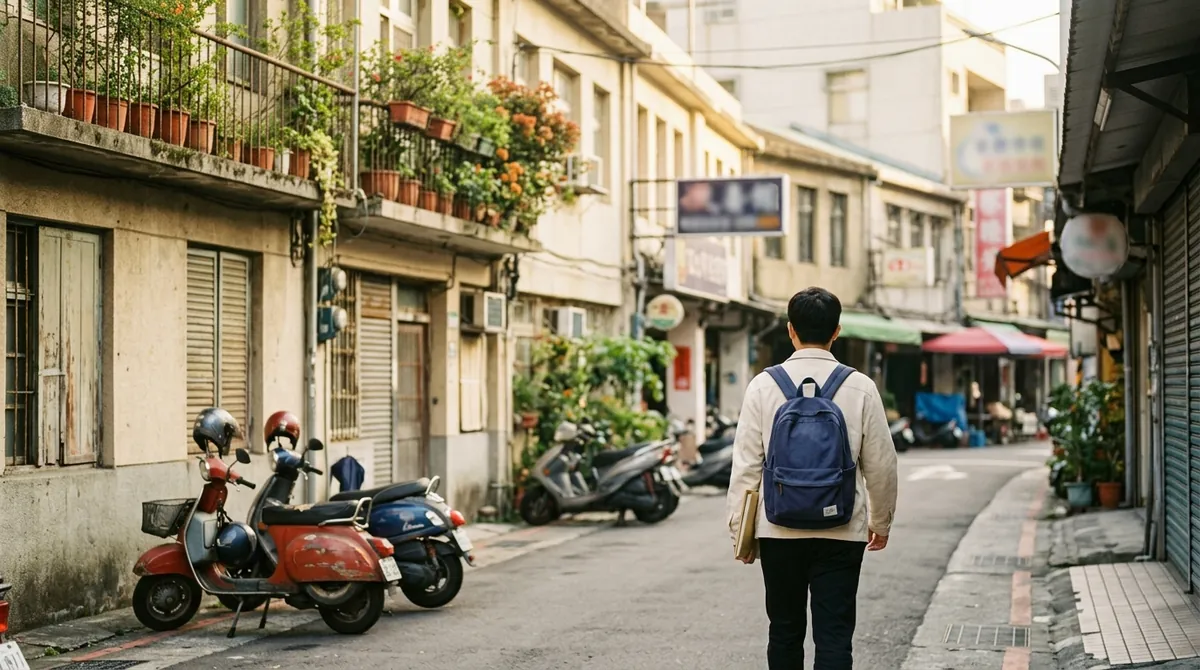
The TOCFL (Test of Chinese as a Foreign Language) is Taiwan's official Mandarin proficiency test, run by SC-TOP for Taiwan's Ministry of Education. Take it if you're heading for Taiwan; take the HSK if you're heading for mainland China. The TOCFL has a Novice band and then three bands, A, B and C, with two levels each: Levels 1 to 6, which its organisers match to the European CEFR scale from A1 to C2. You can sit it in Traditional or Simplified characters, and listening and reading are tested separately from speaking and writing.
The short version:
- Take the TOCFL if you want to study, work or win a scholarship in Taiwan. For programmes taught in Chinese, the Taiwan Scholarship asks for a TOCFL result and accepts no other Chinese test.
- Take the HSK if you want to study or work in mainland China, or want the test with the most dates, centres and practice books.
- Either works if you just want a goal and a certificate. The TOCFL's levels come with CEFR labels, which European schools and employers recognise; the HSK's link to the CEFR is disputed.
Facts below were checked on the official TOCFL site, tocfl.edu.tw, and Taiwan's Ministry of Education pages in November 2026.
What Is the TOCFL Test?
The TOCFL's Chinese name is 華語文能力測驗 (huáyǔwén nénglì cèyàn, Chinese language proficiency test). It was developed at National Taiwan Normal University, first held in 2003, and the current version has been in use since 2013. It's run by the Steering Committee for the Test Of Proficiency-Huayu (SC-TOP), set up in 2005 under Taiwan's Ministry of Education. It used to be called the TOP, which is why older forum posts use that name.
It's really four tests, and you choose which to sit:
- Listening and reading, the main test. In Taiwan it's now a computerised adaptive test (TOCFL CAT): one test for everyone, with no level to choose. The computer picks each question from your previous answers, harder after a right answer and easier after a wrong one, and shows your score and level at the end. Listening has about 35 questions in about 50 minutes, reading about 35 questions in 60 minutes, and you can't go back to change an answer (SC-TOP). Overseas, centres run either the adaptive test or the older band test, on computer or on paper; in a band test you choose your band.
- Speaking, a separate test taken by band. Tasks range from answering questions about a short animation (Novice) to describing experiences and pictures (Bands A and B) and role-play, summarising an article and arguing a view (Band C).
- Writing, a separate test for Bands A to C, typed on a computer with a Zhuyin or Hanyu Pinyin keyboard. Band A is two 20-minute tasks (a picture story and a short letter), Band B two 60-minute tasks of 450–550 characters each, and Band C a summary and an 800–1,000 character essay (SC-TOP).
In a band test, your score decides which of the band's two levels you reach, or whether you pass at all. Since 1 January 2026, score reports and certificates are digital only: you download them as PDFs, and anyone can check them on the Ministry of Education's verification system.
SC-TOP lists these uses for the certificate: applying for the Taiwan Scholarship, applying to Taiwanese universities and the Overseas Chinese joint entrance exam, and proving your Chinese for a job. It isn't offered in mainland China, where the HSK is the national test.
TOCFL Levels
There are eight levels in four bands, and SC-TOP gives each a Chinese name. The CEFR and word columns come from SC-TOP's own level table. The last column counts the words in SC-TOP's current 8,000-word list (the September 2024 file), which we downloaded and totalled; both counts are cumulative. On a phone, swipe the table sideways.
| Band | Level | Chinese name | CEFR (SC-TOP) | Words (SC-TOP table) | Words in the official list |
|---|---|---|---|---|---|
| Novice 準備級 (zhǔnbèi jí) | Novice 1 | 準備級一級 (zhǔnbèi jí yī jí) | Below A1 | – | 160 |
| Novice 2 | 準備級二級 (zhǔnbèi jí èr jí) | Below A1 | – | 394 | |
| Band A 入門基礎級 | Level 1 | 入門級 (rùmén jí, entry) | A1 | 500 | 741 |
| Level 2 | 基礎級 (jīchǔ jí, basic) | A2 | 1,000 | 1,226 | |
| Band B 進階高階級 | Level 3 | 進階級 (jìnjiē jí, intermediate) | B1 | 2,500 | 2,399 |
| Level 4 | 高階級 (gāojiē jí, high-intermediate) | B2 | 5,000 | 4,741 | |
| Band C 流利精通級 | Level 5 | 流利級 (liúlì jí, fluent) | C1 | 8,000 | 7,517 |
| Level 6 | 精通級 (jīngtōng jí, proficient) | C2 | More than 8,000 | No list |
The two word columns differ because SC-TOP revised the list in 2022 to match the word list of Taiwan's National Academy for Educational Research, and its level table still quotes the round numbers. The Novice band sits below the six CEFR-linked levels: SC-TOP added it for adult beginners outside Chinese-speaking regions. For the course hours SC-TOP suggests per level, and how the TOCFL's CEFR labels compare with the HSK's, see HSK vs CEFR.
TOCFL vs HSK: Side by Side
The HSK column is for the HSK as it stands at the time of writing (November 2026), in the middle of its move from six levels to nine. On a phone, swipe the table sideways.
| TOCFL (Taiwan) | HSK (mainland China) | |
|---|---|---|
| Run by | SC-TOP, for Taiwan's Ministry of Education | Chinese Testing International (CTI) |
| Where it counts | Taiwanese universities, the Taiwan Scholarship and Huayu Enrichment Scholarship, jobs in Taiwan | Chinese universities and scholarships, jobs in mainland China; widely known outside China too |
| Characters | Traditional or Simplified, chosen when you register | Simplified as standard; ask your test centre if you need Traditional |
| Levels | Novice 1–2, then Levels 1–6 in Bands A, B and C | HSK 1–6; the new nine-level HSK starts levels 1–6 on 13 December 2026 (7–9 since 2022) |
| CEFR | Levels 1–6 are A1–C2 in SC-TOP's own materials | Claimed A1–C2 in 2010, disputed; nothing official for the new levels |
| Skills | Listening and reading together; speaking and writing as separate tests | Listening, reading and (from HSK 3) writing in one paper; speaking is the separate HSKK |
| Format | In Taiwan, one adaptive computer test with no level choice; overseas, the adaptive test or a band test, on computer or paper | One level per sitting, on paper, on computer at a centre, or online at home |
| How often | In Taiwan, listening and reading on 10 weekends in 2026 and 7 in 2027, speaking and writing on 3 dates a year; overseas, set by each local organiser | Many dates a year on the official calendar |
| Validity | No expiry printed; results can be downloaded for 2 years after the test | Scores valid for 2 years from the test date |
| Word list | The 8,000-word list, in Traditional with Zhuyin and pinyin, up to Level 5 | 5,000 words for HSK 6; about 11,000 for the new HSK 7–9 |
| Fees | In Taiwan, NT$2,000 for listening and reading, NT$1,400 per speaking or writing level; in the UK and Ireland from 2027, £30–35 | Set by level and test centre |
Sources: SC-TOP's Taiwan test calendar and fees and its September 2026 notice of overseas fees from 2027 (£35 for the computer test and £30 for paper in the UK and Ireland, €30–35 in much of Europe), all at the time of writing; SC-TOP's digital certificate FAQ (December 2025); chinesetest.cn for HSK formats and validity. For the HSK's move to nine levels, see HSK 3.0: what changes and when.
TOCFL to HSK Level Conversion (Approximate)
There's no official one-to-one conversion between the two tests. Neither organiser publishes one that the other accepts, so every chart is a comparison through the CEFR or through word counts. The closest thing to an official view from either side is SC-TOP's own table, built on the estimates of the Fachverband Chinesisch, the association of Chinese teachers in German-speaking countries. It lines the six-level HSK up with the TOCFL like this:
| TOCFL | CEFR | Six-level HSK (SC-TOP's table) | Nine-level HSK, by word count (our reading) |
|---|---|---|---|
| Novice 1–2 | Below A1 | HSK 1–2 | New HSK 1 (300 words) |
| Level 1 | A1 | HSK 3 | New HSK 2 (500 words) |
| Level 2 | A2 | HSK 4 | New HSK 3 (1,000 words) |
| Level 3 | B1 | HSK 5 | Between new HSK 4 (2,000) and 5 (3,600) |
| Level 4 | B2 | HSK 6 | New HSK 6 (5,400 words) |
| Level 5 | C1 | None | New HSK 7–9 (about 11,000 words) |
| Level 6 | C2 | None | Beyond the HSK word lists |
Leipzig University's conversion table also puts HSK 6 level with TOCFL Level 4. The HSK's own 2010 claim (HSK 4 as B2, HSK 6 as C2) would instead match the two tests level for level, which is why charts online disagree; HSK vs CEFR sets out the competing estimates and their sources. The last column is only our comparison of the 2025 HSK syllabus word counts with the TOCFL's, and a new-format level also tests characters, grammar and, from level 3, speaking.
In practice: if you hold an old HSK 4, expect to sit Band A and aim for Level 2; with HSK 5 or 6, Band B. Allow extra time if you learned only Simplified characters.
Should You Take the TOCFL or the HSK?
Let the place you're going decide.
- Studying in Taiwan on the Taiwan Scholarship: the TOCFL. The Ministry of Education's directions for the scholarship (amended 10 February 2026) ask applicants to programmes not fully taught in English for a TOCFL result at Band B or higher, and say the results of any other Chinese test won't be accepted. The scholarship's website mentions Level 2 for some routes, so check the notice from the Taiwan office in your country.
- A Huayu Enrichment Scholarship to study Mandarin in Taiwan: the TOCFL. Recipients of awards of nine months or longer must sit Band B and reach Level 3, unless they already hold that result from the previous two years, or the stipend is suspended for a month (National Chung Hsing University, quoting the scholarship rules).
- A degree, job or scholarship in mainland China: the HSK. Chinese universities and the Chinese Government Scholarship ask for HSK results.
- You learn Traditional characters, or plan to live in Taiwan: the TOCFL tests what you're learning, and its word list follows Taiwan usage. Our posts on how Taiwanese Mandarin differs and on Simplified vs Traditional characters cover the differences.
- No particular destination: the HSK is easier to book, with more dates, centres, textbooks and past papers. The TOCFL gives you a CEFR level that European employers and universities understand, and its adaptive test places you without your having to guess a level.
You can take both. Grammar and most vocabulary carry over; the extra work is the other character set and a list of Taiwan or mainland words. If you're still deciding whether an exam is worth it at all, our post on whether to take the HSK covers who needs a certificate and who doesn't.
How to Prepare for the TOCFL
- Find your band. Our free Chinese level test estimates your HSK and CEFR level from the words you know in about five minutes; use the CEFR reading and the level table above to choose a band. In Taiwan the adaptive test makes the choice for you.
- Use the official word list. SC-TOP's 8,000-word list is a free Excel file, one sheet per level, in Traditional characters with Zhuyin, pinyin and parts of speech. It also has a sheet of everyday words that differ between Taiwan and the mainland, worth learning if you studied from mainland materials.
- Try the official mock tests. The mock test page has free papers to download, an online practice platform, speaking test questions and mock tests to buy. Do at least one under time, so the question types aren't new on the day.
- Get comfortable with Traditional characters. Even if you sit the Simplified version, everything around you in Taiwan is Traditional. Our Traditional and Simplified converter shows a text in both, word by word, with Taiwan forms.
- Practise typing. The writing test is typed, so practise with the Zhuyin or pinyin keyboard you'll use, against the clock.
- Pace the adaptive test. You can't go back, and if you answer fewer than 25 reading questions your reading score is scaled down, so keep moving.
Most of the work, as for any exam, is knowing enough words well enough to read them at speed in real sentences. Mandarin Mosaic teaches words that way, one new word per sentence with spaced reviews, and lets you switch to Traditional characters. Be aware of its limits for the TOCFL: its lessons are levelled by the HSK rather than the TOCFL, and the sentences use mainland vocabulary.
Frequently Asked Questions
Can I take the TOCFL outside Taiwan?
Yes. SC-TOP's overseas registration site lists nearly 60 test areas, including the UK, Ireland, the United States, Canada, Australia and much of Europe and Asia. Each local organiser sets its own dates, so check early. The test isn't offered in mainland China.
Is the TOCFL in Traditional or Simplified characters?
Either: you choose the Traditional or Simplified version when you register, and the overseas system lets you change it by email until registration closes. The official word list and most practice material are in Traditional characters.
How long is a TOCFL certificate valid?
SC-TOP doesn't print an expiry date, but you can download your score report and certificate for only two years after the test, and schemes often want a recent result: the Huayu Enrichment Scholarship accepts a Level 3 result from the previous two years. The HSK, by comparison, says its scores are valid for two years.
Does Taiwan accept the HSK?
Not for the Taiwan Scholarship, whose rules accept only the TOCFL. Universities set their own language requirements, and some may take an HSK result, but the TOCFL is the test Taiwan's institutions ask for, so sit it if Taiwan is your goal.