 Mandarin Mosaic
Free on iPhone, iPad and Android.
Download on theApp Store Get it onGoogle PlayYour first month of Premium is free.
Blog
Guides to learning Mandarin through real sentences: reading, listening, speaking and the tools that help.

SuperChinese Review: Is It Worth Paying For?
An honest SuperChinese review: an HSK 1–5 course with pronunciation scores from lesson one and the CHAO AI tutor. Prices, complaints and how it compares with Duolingo.

How to Speak Mandarin: From Understanding to Talking
Speaking is a separate skill from knowing words. Get the tones right, learn chunks, shadow, say your own sentences with feedback, and talk to people early.

HelloChinese vs Duolingo: Which Is Better for Chinese?
HelloChinese teaches more of Chinese: handwriting, grammar, tone feedback, Traditional. Duolingo is free all the way. Features, prices and our verdict.

How to Learn Chinese Characters: A Method That Sticks
Learn the common characters first, in words rather than alone. Use their parts to remember them, read before you write, and review with spaced repetition.

Chinese New Year in Chinese: 春节, Greetings and the 2027 Date
春节 (chūnjié) is Chinese New Year. The 2027 date (6 February, Year of the Goat), greetings like 新年快乐 and 恭喜发财 with audio, red envelopes and the zodiac.

HSK Vocabulary List: Every Level from HSK 1 to HSK 6
HSK 1 to 6 is 5,000 words and about 2,660 characters. Counts for every level, sample words, the new 9-level lists, and full lists with sentences.

HSK 3 Vocabulary List: All 300 Words with Sentences
HSK 3 adds 300 new words, for 600 in all. Each one is here with pinyin, its meaning and an example sentence, sorted by topic, with notes on 把, 被 and 越…越.

HSK 4 Vocabulary List: All 600 Words with Sentences
Every HSK 4 word: the 600 new ones that take you to 1,200, each with pinyin, meaning and an example sentence, plus notes on 以为, 竟然 and 即使.

HSK 2 Vocabulary List: All 150 Words with Sentences
The 150 new HSK 2 words with pinyin, meaning and an example sentence each, grouped by topic, with notes on 着, 过, 得 and 比 and the newer HSK lists.

Chinese Learning Discord Servers: 7 Active Ones to Join
Seven active Discord servers for learning Mandarin, checked in October 2026: which suit language exchange, voice chat, beginners, dramas or Taiwan.

How to Watch Netflix with Chinese Subtitles
Turn on Chinese subtitles on any device, fix missing Simplified or Traditional options, add pinyin with dual subtitles, and find Chinese shows by level.

HSK 1 Vocabulary List: All 150 Words with Sentences
All 150 HSK 1 words with pinyin, meaning and a native-checked example sentence each, grouped by topic. Plus how the 300- and 500-word lists differ.

HSK vs CEFR: How Chinese Levels Compare (A1 to C2)
There's no official HSK to CEFR conversion. See the main published estimates side by side, what A1 to C2 mean in Chinese, and how to find your level.

LingQ for Chinese: Price, Free Plan and Honest Review
LingQ Premium costs $14.99 (£12.99) a month, less on yearly plans, and the free plan stops at 20 saved words. How well it works for Chinese, and alternatives.

Chinese Study Plan: A Week-by-Week Plan for Every Level
A Chinese study plan you can follow: a 30- or 60-minute daily routine, then weekly targets from pinyin and tones to HSK 4–5 and past the plateau.

Lucky and Unlucky Numbers in Chinese: 8, 6, 9, 4 and More
8, 6 and 9 are lucky in Chinese and 4 is unlucky, because of how they sound. Every digit from 0 to 9, codes like 520 and 250, and a number decoder.

Daily Routine in Chinese: Words and Sentences for Your Day
Describe your daily routine in Chinese: nearly 40 everyday verbs, times of day, the time-before-verb rule and a sample 我的一天 text, with pinyin.

Duolingo Chinese Alternatives: 9 Apps for What It Misses
The best Duolingo alternatives for Chinese, picked by what you're missing: characters, grammar, reading, speaking or tones. Honest pros, cons and prices.

Mandarin Tone Sandhi: Rules, Tone Pairs and Practice
Tone sandhi is how Mandarin tones change side by side: 3+3 becomes 2+3, and 不 and 一 shift. Every rule with audio, all 20 tone pairs and a quiz.

How to Type Chinese on Any Device (Pinyin Keyboard Setup)
How to type Chinese on Windows, Mac, iPhone and Android: add a pinyin keyboard, type without tones, pick characters fast, and add tone marks.

What HSK Level Does Duolingo Chinese Get You To?
Duolingo says its Chinese course covers HSK 1-3 and half of HSK 4. What that means now it reaches B2, why it isn't HSK 4, and how to close the gap.

Best Anki Decks for Business Chinese (BCT and Work)
The best Anki decks for business Chinese and the BCT, what the Business Chinese Test covers, 35 core work words with pinyin, and how to build your own deck.

ChatGPT and AI Chat vs Chunk Practice for Speaking Chinese
How to practise Chinese with ChatGPT or DeepSeek: prompts for your level, honest limits, and why chunk practice trains the phrases you freeze on.
Chunking Chinese App Review: Speak in Chunks, Not Words
A full review of Chunking Chinese, the Mandarin speaking trainer that teaches reusable sentence chunks. Features, daily loop, HSK coverage, strengths and limits.

The 10 Best Mandarin Learning Websites in 2026
The 10 best Mandarin learning websites in 2026: courses, graded readers, vocabulary and handwriting tools, what each costs, and how to combine them.

Pokémon in Chinese: A Learner's Guide to Names and Regions
Pokémon in Chinese: the official name 宝可梦, older names like 神奇宝贝 and 比卡超, why regions differ, and the key names with pinyin.

10 Best Flashcard Templates for Learning Chinese in 2026
Printable, digital and Notion flashcard templates for learning Chinese compared: what each is good for, what it costs, and which support spaced repetition.

Chinese Grammar Lessons: What to Learn at Each HSK Level
A level-by-level Chinese grammar syllabus: the key patterns for HSK 1-2, 3-4 and 5-6, each with an example in characters, pinyin and English.

What Not to Do on Chinese New Year: 8 Taboos to Know
Eight Chinese New Year taboos many families still observe, from clocks to haircuts, the word-play behind each, and the Mandarin phrases to go with them.

How to Turn Your English Name into a Chinese Name
How to turn your English name into a Chinese name: sound-based names like 大卫 (dàwèi), meaning-based names, surname first, and characters to avoid.

Handwriting in Chinese: A Practical Guide for Learners
Learn the art of handwriting in Chinese. This guide covers stroke order, character construction, practice methods, and how to avoid common learner mistakes.

How to Break the Intermediate Chinese Plateau in 2026
Stuck on the intermediate Chinese plateau? Learn practical strategies to break through, from sentence mining with Mandarin Mosaic to targeted drills.

Level-Appropriate Chinese Sentences: How to Find and Use Them
How to find Chinese sentences at your level: the i+1 idea, four checks for a good study sentence, curated packs vs self-mining, and a daily review routine.

Automated Anki for Chinese: Your Step-by-Step Guide
Learn to build an automated Anki for Chinese workflow. This guide covers sentence sourcing, audio generation, and troubleshooting, plus a simpler alternative.

Why Anki Is Hard for Chinese (And What to Do About It)
Struggling with Anki for Mandarin? Learn why Anki is hard for Chinese, from tones to context, and discover effective strategies and tools to succeed.

10 Best Anki Alternatives for Learning Chinese in 2026
Tired of Anki's complexity? Find the best anki alternative for chinese with our detailed review of 10 apps, including Mandarin Mosaic, Pleco, and Skritter.

The 7 Best Chinese Sentence Mining Apps in 2026
Discover the best Chinese sentence mining app for you. Our 2026 guide reviews 7 top tools, including Mandarin Mosaic, to boost your vocabulary and grammar.

How to Say Goodbye in Chinese: 再见, 拜拜 and More
How to say goodbye in Chinese: 再见, 拜拜, 回头见, 慢走, 一路平安 and more, with pinyin, tones, when to use each and example dialogues.

Family in Chinese: Words for Family Members and Relatives
Family in Chinese: 家 and 家人, words for parents, siblings and grandparents, the paternal and maternal terms for uncles and aunts, and how to use them politely.

What Is Your Chinese Name? How to Ask and Answer in Mandarin
How to ask someone's name in Chinese, answer with 我姓… and 我叫…, use the polite 您贵姓 (nín guìxìng), and get Chinese name etiquette right.

The Top 10 Most Common Chinese Surnames: A Learner's Guide
The 10 most common Chinese surnames, from 王 and 李 to 周: characters, pinyin, origins, Hong Kong and Taiwan spellings, and example sentences.

What Is Spaced Repetition? How It Works for Learning Mandarin
What is spaced repetition? How the forgetting curve, Leitner boxes, SM-2 and FSRS work, and how to use SRS to remember Mandarin vocabulary for good.

How Many Words Is 3,000 Chinese Characters?
How many words is 3,000 Chinese characters? About 2,000 words of text, but knowing 3,000 characters is a very different thing. Here's why.

What Is AnkiDroid? A Practical Guide to Spaced Repetition for Mandarin
What is AnkiDroid? How the free Android version of Anki uses spaced repetition, and how to set it up for Chinese characters, pinyin and audio.

Your Guide to Tandem Language Learning for Mandarin
How to make a Mandarin language exchange work: find a reliable tandem partner, run fair 50/50 sessions, and turn what you hear into sentences you remember.

How to Say Tourist in Chinese, Plus Useful Travel Phrases
How to say tourist in Chinese: 游客 (yóukè), 观光客 (guānguāngkè) and 旅游者 (lǚyóuzhě), with example sentences and survival phrases for your trip.

The 12 Best Ways to Free Learn Mandarin Online in 2026
Discover the 12 best resources to free learn Mandarin online. A complete guide to courses, apps, and tools for every level, from beginner to advanced.

How to Say "I" in Chinese: A Complete Guide to 我 (wǒ)
Learn how to say I in Chinese (我 wǒ) with confidence. This guide covers pronunciation, tones, and using pronouns like 我们 (wǒmen) and 咱们 (zánmen).

The Best Flashcard App for Learning Chinese in 2026
The best flashcard app for Chinese? We compare Mandarin Mosaic, Chunking Chinese, Anki, Pleco, Skritter and Quizlet, and show why sentences beat word cards.

McDonald's Menu in China: 8 Items in Chinese and English
The McDonald's China menu in English and Chinese: Big Mac (巨无霸), McSpicy, McNuggets, taro pie and more, with pinyin and the phrases to order at the counter.

How Many Words to Become Fluent in Chinese? 4,000–6,000
You need about 4,000–6,000 words to be fluent in Chinese, though its dictionaries list 69,000 to 370,000. Word counts by HSK level, and how to learn them.

Chinese Idioms (成语): A Practical Guide for Learners
What Chinese idioms (成语, chéngyǔ) are, 11 useful ones with pinyin, meanings, stories and example sentences, and how to learn them without overusing them.

I Love You in Mandarin: 我爱你 (wǒ ài nǐ) and Softer Ways
我爱你 (wǒ ài nǐ) is I love you in Mandarin. How to say it with the right tones, why people often say 我喜欢你 instead, how to reply, and what 520 means.

Clozemaster vs Anki: Which Is Best for Learning Chinese in 2026?
A deep dive into Clozemaster vs Anki for Mandarin. Discover which SRS app builds vocabulary, grammar, and fluency faster for your specific learning style.

Mandarin Mosaic vs Clozemaster: Which Is Better for Chinese?
Mandarin Mosaic vs Clozemaster for learning Chinese: how each picks sentences, schedules reviews and charges, and which suits your level.

Mandarin Mosaic vs Duolingo: Which Is Better for Chinese?
Mandarin Mosaic vs Duolingo for learning Chinese: how each teaches, what it costs, where each is stronger, and when to switch from one to the other.

Anki vs Duolingo: Which Is Best for Learning Chinese?
Anki or Duolingo for learning Chinese? How they differ on memory, motivation and content, who each suits, and how to combine them.

Is Anki Free? Costs in 2026 for Desktop & Mobile
Explore is anki free options in 2026 with a quick cost breakdown for Anki Desktop, AnkiMobile, and AnkiDroid to pick the best study setup.

The 12 Best Mandarin Learning Apps in 2026
Looking for the best Mandarin learning app? We compare 12 apps for beginners, HSK, reading and sentence mining, with prices and who each one suits.

How to Say Please in Chinese: 请, 麻烦你, 拜托 and More
How to say please in Chinese: when to use 请 (qǐng), 麻烦你 (máfan nǐ), 拜托 (bàituō) and 劳驾, with example sentences, pinyin and common mistakes.

Numbers in Chinese Mandarin: Counting, Dates, Money and More
Learn numbers in Mandarin Chinese, from 0-10 to 万 and 亿, plus 二 vs 两, dates, time, money, phone numbers and measure words, all with pinyin.

Anki Image Occlusion for Chinese: How to Make the Cards
How to use Anki's built-in image occlusion for Chinese: make visual flashcards for characters, sentences, pinyin and grammar, with tips for better cards.

Chinese Graded Readers and Textbooks: The Best by Level
Mandarin Companion and Chinese Breeze for beginners, then Sinolingua and Imagin8 Press: the best graded readers by level, plus the textbooks worth buying.

8 Chinese Tongue Twisters to Sharpen Your Mandarin Pronunciation
Eight real Chinese tongue twisters with characters, pinyin and translations, from 四是四 to 吃葡萄, plus the sounds each one trains and how to practise.

Mandarin Mosaic vs Anki: Which App Is Better for Chinese Learners?
Mandarin Mosaic or Anki for learning Chinese? We compare their learning method, setup, features and cost, and say honestly where each one is the better choice.

Quizlet vs Anki: Which Is Best for Learning Mandarin Chinese?
Deciding between Quizlet vs Anki for Mandarin? Our in-depth guide compares SRS, user experience, and costs to help you choose the right tool for your journey.

Chinese vs Japanese: The Real Differences for Learners
The real differences between Chinese and Japanese: writing systems, tones vs pitch accent, and grammar, explained for learners deciding which to tackle.

Good Night in Chinese: 晚安 and Other Ways to Say It
晚安 (wǎn'ān) is the everyday way to say good night in Chinese. When to use 早点睡 and 睡个好觉 instead, how to reply, and the Cantonese version.

14 Essential Websites for Chinese Learners in the UK (2026)
14 useful websites for UK learners of Chinese: bookshops, graded readers, a speaking trainer, a dictionary, dramas, audiobooks and web novels.

Chinese Sentence Structure: Word Order Rules with Examples
Chinese word order in one line: subject + time + place + verb + object. The rules with examples, plus questions, 不 vs 没, 的 and common mistakes.

8 in Chinese (八, bā): Why It's the Luckiest Number
八 (bā) is 8 in Chinese, and it sounds like 发 (fā, to prosper). Why 8 is so lucky, how to write it, and why Beijing opened the 2008 Olympics at 8:08 pm.

Mid-Autumn Festival in Chinese: 中秋节, Greetings and Mooncakes
中秋节 (zhōngqiū jié) is the Mid-Autumn Festival. How to say it, the greetings people send (中秋快乐), upcoming dates, mooncake words and the legend of Chang'e.

What Does "nǐ hǎo ma" Mean? Hello and How Are You in Chinese
nǐ hǎo ma (你好吗) means "How are you?", but native speakers rarely use it. Learn what to say instead, how to reply, and why 你好 is said ní hǎo.

Reviews of Pimsleur Mandarin: Is It Worth It for Learners?
What reviews of Pimsleur Mandarin say: how its audio method teaches speaking and tones, its limits, current pricing, and what to pair it with.
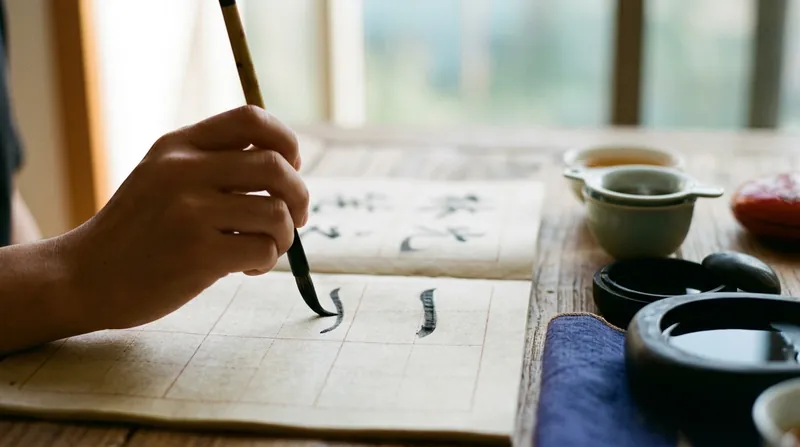
Mastering Radicals in Chinese: A Beginner’s Guide
Unlock Hanzi secrets with our guide to radicals in Chinese. Learn how components reveal meaning and sound, making character learning logical and fast.

How to Say ‘And’ in Chinese: 和, 跟, 而且 and More
和 (hé) only joins nouns. Learn when to use 和, 跟, 与, 以及, 还有, 而且, 并且, 也, 还 and 又…又… to say ‘and’ in Chinese, with natural examples.

Beat The Forgetting Curve in Your Mandarin Studies
Stop forgetting Mandarin words. This guide explains the forgetting curve and provides science-backed strategies like spaced repetition to master vocabulary.

Chinese Symbols and Their Meanings: 20 Common Characters
20 common Chinese symbols and their meanings, from 爱 (love) to 福 (good fortune), plus how characters build meaning and how to avoid tattoo mistakes.

Mandarin Tones Explained: The 4 Tones and How to Practise
A Mandarin tones chart with the pitch shape of all four tones, the third-tone and 不/一 changes, the neutral tone, and drills to practise Chinese tones.

How to Say Good Morning in Mandarin: 早, 早上好 and 早安
How to say good morning in Mandarin: 早上好 (zǎoshang hǎo), 早 (zǎo) and 早安 (zǎo'ān), when to use each, the tones, and natural replies.

10 Essential Phrases in Chinese, with Pinyin and Examples
Ten essential phrases in Chinese, from 你好 to 多少钱, with correct pinyin, tone changes, natural example sentences and tips for practising them aloud.

Is Chinese Hard to Learn? An Honest Guide for UK Learners
Is Chinese hard to learn? Our guide explores the real challenges of Mandarin—tones, characters, and grammar—and provides practical strategies for UK learners.

How Long Does It Take to Learn Mandarin? Hours and Years
Basic Mandarin takes 100–250 hours; professional fluency takes about 2,200 class hours, says the US FSI. Hours by goal, plus 6-month and 1-year plans.

Why Reading Chinese News Is a Great Way to Learn Mandarin
Why reading Chinese news builds vocabulary and reading speed, where to find news at your level, from graded sites to BBC 中文, and how to read it.

Mastering Chinese Through Sentence Mining: The Complete Guide
A practical guide to Chinese sentence mining: what it is, where to find good Mandarin sentences, the i+1 principle, and how to review and speak them.

Duolingo Chinese Review: Is It Good for Learning Mandarin?
An honest review of Duolingo's Chinese course: what it teaches, how far it gets you, what Super and Max cost, and the alternatives for serious learners.

Duolingo Chinese: Simplified or Traditional? What It Teaches
Duolingo teaches Mandarin in Simplified characters only, with no Traditional option. What the course covers, where it falls short and what to add for fluency.

How can you immerse yourself in Chinese at home?
How can you immerse yourself in Chinese at home? Easy tips for language learners

How many Chinese characters should you learn per day?
How many Chinese characters should you learn per day? A realistic goal for language learners

A Chinese Learning Morning Routine
A Chinese Learning Morning Routine That Actually Fits Your Busy Schedule.

Comprehensible Input for Chinese: Learn by Understanding
What comprehensible input is, what Krashen's i+1 means for Mandarin, and where to find graded readers, podcasts and sentences at your level.

How to Live in China: A Down-to-Earth Guide for Newcomers
A down-to-earth guide to living in China: visas, residence permits, paying with WeChat Pay and Alipay, costs, getting around, work and learning Mandarin.

How to Order Food in Chinese: A Simple Guide for Beginners
The Mandarin phrases you need to order food in Chinese: getting a table, ordering dishes, spice levels, dietary needs and paying, with characters and pinyin.

Learning Chinese from Social Media: Rednote, Douyin and TikTok
How to learn Chinese from social media: using Rednote (Xiaohongshu), Douyin and TikTok for reading, listening and speaking practice, with key vocabulary.

How to Learn Chinese Pinyin: A Beginner's Guide
Learn Chinese pinyin step by step: initials, finals, the four tones, where tone marks go, spelling rules like ü and xī'ān, and how to practise.

What Is the Chinese Bridge Competition? A Learner's Guide
What is the Chinese Bridge (汉语桥) competition? Who can enter, how the UK final and global finals work, the speech, quiz and talent rounds, and the prizes.

How to Learn Chinese Fast: Practical Tips That Work
How to learn Chinese fast: practical tips on pinyin and tones, vocabulary with spaced repetition, immersion, and speaking practice from day one.

How hard are traditional Chinese characters to learn?
How hard are traditional Chinese characters to learn? Where they're used, how they differ from simplified (體/体, 愛/爱), and how to learn both.

Should you take the Chinese HSK tests?
Should you take the HSK? What the Chinese proficiency test involves, the old 6-level and new 9-level exams, who needs a certificate and how to prepare.

How to Learn Chinese from TV Shows
How to learn Chinese from TV shows: which dramas, sitcoms and cartoons suit your level, where to watch them, and how to turn episodes into vocabulary.

Word flashcards vs sentence mining for learning Chinese
Word flashcards vs sentence mining for learning Chinese: Which method works best?

How Good Are Cloze Deletion Tests for Learning Chinese?
Are cloze (fill-in-the-blank) tests good for learning Chinese? What they train, where they fall short, and how to use them, with real examples.

Learning Chinese dialects
Learning Chinese dialects: A casual guide to mastering regional tongues.

How to Learn Chinese from Books
How to learn Chinese from books: the textbooks to start with, graded readers like Mandarin Companion, and how to study vocabulary and grammar alone.

Learn Chinese with Podcasts: The Best Picks by Level
The best Chinese podcasts for beginner, intermediate and advanced learners, from TeaTime Chinese to 故事FM, and how to learn from them with transcripts.

Daily Habits to Boost Your Chinese: 5 Easy Routines
Five small daily habits that build your Chinese: listening on the commute, speaking aloud, quick vocabulary reviews, short reading sessions and Chinese media.