 Mandarin Mosaic
Free on iPhone, iPad and Android.
Download on theApp Store Get it onGoogle PlayYour first month of Premium is free.
Mastering Radicals in Chinese: A Beginner’s Guide
Chinese radicals are the key to making sense of written Chinese. Think of them less as rigid rules and more as category labels that give you a heads-up about a character’s meaning or sound. It’s what turns the massive task of memorising thousands of characters into a logical, manageable puzzle.
Why Radicals Are the Key to Understanding Chinese

If you're just starting out in Mandarin, staring at a page of complex characters can feel a bit overwhelming. It’s totally natural to wonder how anyone could possibly remember thousands of unique, intricate symbols. But here’s the thing: it isn't about brute-force memorisation. It's about spotting patterns, and radicals in Chinese are the system that makes those patterns visible.
Imagine trying to organise a huge library without any categories. Every single book would be a random item, and finding what you wanted would be a nightmare. Radicals are like the genre signs in that library—"Fiction," "History," "Science"—grouping characters into logical families based on a shared idea.
The Logic Behind the System
At its heart, the Chinese writing system is incredibly visual. Many of the 214 traditional radicals started out as simple pictures, or pictographs, of the things they represent. The radical for 'person' (人), for example, really does look a bit like a person walking, and the one for 'mouth' (口) is a simple box.
Over thousands of years, these little pictures evolved and were combined to create more complex characters. This is where it gets useful for learners. When you see a character you don’t recognise, spotting its radical gives you a massive clue.
Take the 'water' radical (氵). When you see it, there's a good chance the character has something to do with liquid:
- 河 (hé) - river
- 汤 (tāng) - soup
- 洗 (xǐ) - to wash
This simple system brings order to the vast majority of Chinese characters. Instead of learning thousands of unrelated symbols, you can learn a much smaller set of radicals—getting a handle on around 100 will cover most common characters—and use them to decode new words you encounter.
A radical is essentially the root of a character, giving you an immediate hint about its general meaning. Mastering them changes your learning approach from memorisation to logical deduction, making the entire process more efficient and intuitive.
Once you learn to spot these components, you start to see the structure inside every character. This skill is foundational, not just for reading, but also for writing and even looking up words in a dictionary. It’s the difference between staring at a wall of symbols and seeing a beautifully constructed puzzle, where every piece has its place and purpose.
How Radicals Reveal Meaning and Sound
At first glance, Chinese characters might seem like a chaotic jumble of strokes. But look closer, and you'll realise they aren't random at all. Most characters are clever compounds, with different parts working together to give you clues about the character's meaning and sound. This is where radicals in Chinese come in—they’re a powerful learning tool that lets you make smart guesses about new words.
Most character components fit into one of two main roles, and understanding this difference is the key to the logic behind written Chinese.
Semantic Radicals: The Meaning Givers
The most straightforward type of radical is the semantic component. You can think of it as a category tag. Its job is to point you towards the character’s general meaning or the world it belongs to.
A perfect example is the 'water' radical (氵), known as sān diǎn shuǐ or "three drops of water." Whenever you spot this on the left side of a character, you can bet the word has something to do with liquid.
- 河 (hé) – river
- 海 (hǎi) – sea
- 汤 (tāng) – soup
It’s a simple but incredibly useful pattern. Similarly, the 'mouth' radical (口) often shows up in characters related to speaking, eating, or making sounds. You’ll see it in words like 吃 (chī - to eat), 叫 (jiào - to call), and 唱 (chàng - to sing). Getting a feel for these concepts is fundamental to decoding the meaning of Chinese symbols.
Phonetic Components: The Sound Givers
The other piece of the puzzle is the phonetic component. This part of the character gives you a hint about its pronunciation. Now, it's not always an exact match, but it’s often close enough to be a fantastic guide.
Let's take the character 马 (mǎ), which means 'horse'. When it’s used as a phonetic component in other characters, it lends its sound.
- 妈 (mā) – mother
- 吗 (ma) – a question particle
See how both characters are pronounced with that same 'ma' sound, just with different tones? The radical on the left—女 (woman) for 'mother' and 口 (mouth) for a question—gives you the meaning clue, while 马 hands you the sound.
Together, semantic and phonetic components form the foundation of the vast majority of Chinese characters. Recognising which part hints at meaning and which suggests sound turns you from a passive memoriser into an active decoder.
This structure is everywhere in Chinese. With over 80% of Chinese characters being semantic-phonetic compounds, getting a solid grip on both component types is non-negotiable for any serious learner.
The Most Common Radicals For Beginners
Jumping into thousands of Chinese characters can feel like staring up at a mountain. But here's the secret: you don't need to learn them all one by one. By focusing on the most common radicals in Chinese, you can build a solid framework to make sense of a huge chunk of the characters you'll encounter. Think of it as your starter kit—a small set of keys that unlock hundreds of doors.
Learning these key components first is a massive shortcut. Instead of seeing each character as a random collection of lines, you'll start spotting familiar parts and logical combinations. This shift in perspective is what turns learning characters from a chore into a fascinating puzzle.
Radicals Related to Nature
The natural world was a huge inspiration for the first Chinese characters, so it’s no surprise many of the most common radicals come from the environment. Get these down, and you’ll have instant clues about a character's meaning.
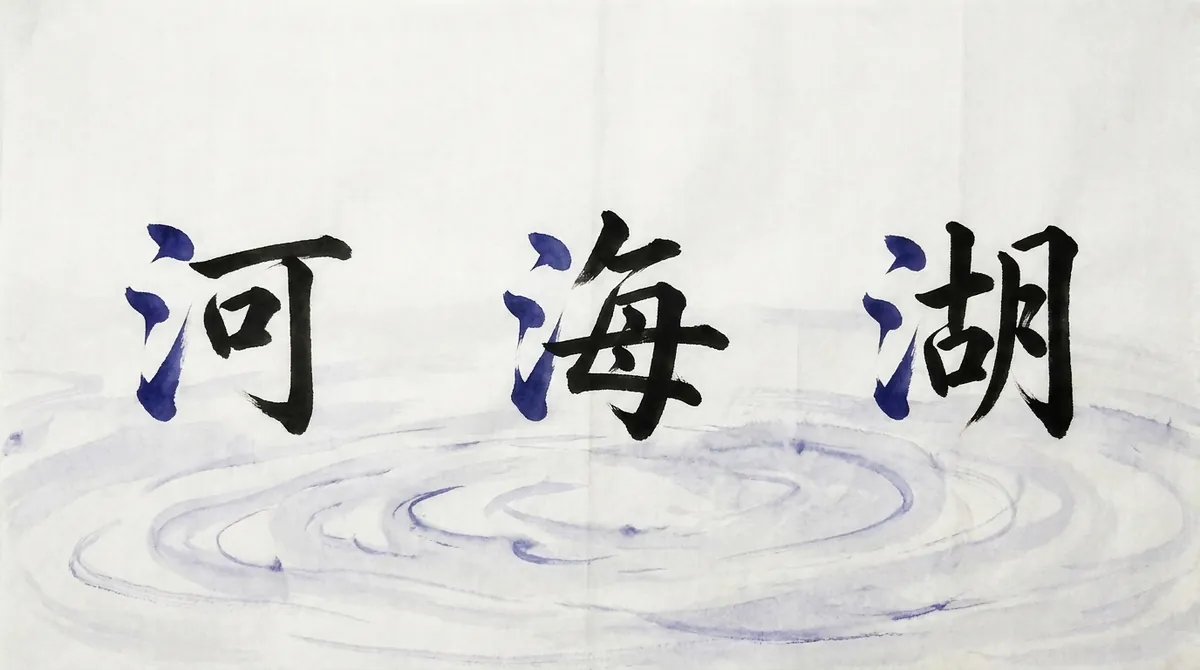
- 氵(shuǐ) - Water: You'll spot this in characters related to liquids, like 河 (hé, river) and 洗 (xǐ, to wash).
- 木 (mù) - Tree/Wood: This one pops up in words for things made of wood or related to trees, such as 椅 (yǐ, chair) and 森 (sēn, a dense forest).
- 火 (huǒ) - Fire: Signals concepts like heat, light, or cooking. You’ll find it in 灯 (dēng, lamp) and 热 (rè, hot), where it appears as 灬 at the bottom.
- 日 (rì) - Sun: Relates to daytime, brightness, or time itself. Good examples are 明 (míng, bright) and 早 (zǎo, early).
- 艹 (cǎo) - Grass: This radical often sits on top of characters related to plants, like 花 (huā, flower) and 茶 (chá, tea).
Radicals About People and Actions
Another major group of radicals revolves around us humans—our bodies, our relationships, and all the things we do. Recognising these will help you instantly grasp characters that describe people and daily activities.
Take the radical 人 (rén), for person. It’s one of the most fundamental. You'll often see it squished into the form (亻) on the left side of characters like 他 (tā, he) and 休 (xiū, to rest), which originally showed a person leaning against a tree.
By grouping radicals thematically—like nature, people, or objects—you create mental categories that make them much easier to remember. This approach is far more effective than trying to memorise a long, disconnected list.
Here are a few more must-know radicals related to people and their actions that you'll see everywhere:
- 口 (kǒu) - Mouth: Used for characters involving speaking, eating, or sounds, such as 吃 (chī, to eat) and 唱 (chàng, to sing).
- 心 (xīn) - Heart: Found in characters connected to feelings and thoughts, like 想 (xiǎng, to think) and 忘 (wàng, to forget). It often appears as a variant (忄) on the side.
- 手 (shǒu) - Hand: Indicates an action done with the hands. The side variant (扌) is extremely common, as seen in 打 (dǎ, to hit) and 找 (zhǎo, to look for).
- 言 (yán) - Speech: The speech radical, in its compressed form (讠), appears in words about language and communication, such as 说 (shuō, to speak) and 语 (yǔ, language).
Just learning this small set of core radicals gives you an incredible foundation. You’re now equipped to start breaking down characters and making educated guesses about their meanings, turning an intimidating script into a puzzle you can actually solve.
A Practical Strategy to Learn Characters Faster
Knowing about Chinese radicals is one thing, but actually using them to speed up your learning is a completely different ball game. The real trick is to move from passively spotting them to actively using them as your primary tool for decoding and remembering new characters. This approach transforms rote memorisation into something logical and even fun.
One of the best ways to do this is by creating mnemonics – little stories that connect a character's different parts. Instead of just seeing a jumble of strokes, you start to see a narrative. Take the character 休 (xiū), which means 'to rest'. It’s made up of the person radical (亻) and the tree radical (木). The story writes itself: a person leaning against a tree to rest. That simple image is far more memorable than the abstract character on its own.
Grouping Characters for Efficient Learning
A seriously powerful way to structure your study sessions is to learn characters in batches based on a shared radical. This is often called thematic grouping, and it works wonders for reinforcing the radical’s meaning while helping you build connections between words. For instance, you could dedicate a session just to the hand radical (扌).
- 打 (dǎ) - to hit (a hand using a nail)
- 找 (zhǎo) - to search for (a hand holding a spear-like object)
- 拉 (lā) - to pull (a hand standing something up)
By learning this way, you start to see the underlying logic of the language. Your brain automatically begins to link the 扌 radical with hand-related actions, which makes guessing the meaning of new, related characters much easier.
Unlocking Dictionaries and Differentiating Characters
This skill has immediate, practical uses, especially when you're stumped by an unknown word. Most digital dictionaries let you search by radical. If you come across a character you don't know but can identify its radical, you can slash the time it takes to look it up.
This systematic method is also your best defence against one of the biggest headaches for learners: telling similar-looking characters apart. Let's look at 清 (qīng), 'clear', and 情 (qíng), 'feeling'. They’re almost identical, but their radicals tell the full story. 清 has the water radical (氵), connecting it to clarity, while 情 has the heart radical (忄), tying it to emotions.
Using radicals as your guide isn’t just a study hack; it’s a fundamental shift in how you see the Chinese writing system. It gives you the power to dissect, understand, and remember characters with confidence, turning confusion into clarity.
Getting good at this takes time, of course, but the more characters you know, the more often you'll recognise a familiar component in a new one. To make this process even smoother, try plugging these character groups into a digital flashcard system using spaced repetition.
Putting Radical Knowledge into Practice
Knowing the theory behind Chinese radicals is a huge step forward. But the real progress comes when you start applying that knowledge as you actually engage with the language. This is where your understanding goes from academic to practical, turning every reading session into a chance to see how characters are built.
The goal is to stop seeing characters as abstract squiggles and start actively analysing them on the fly. A pop-up dictionary makes this easy, because you can check a character without leaving what you're reading.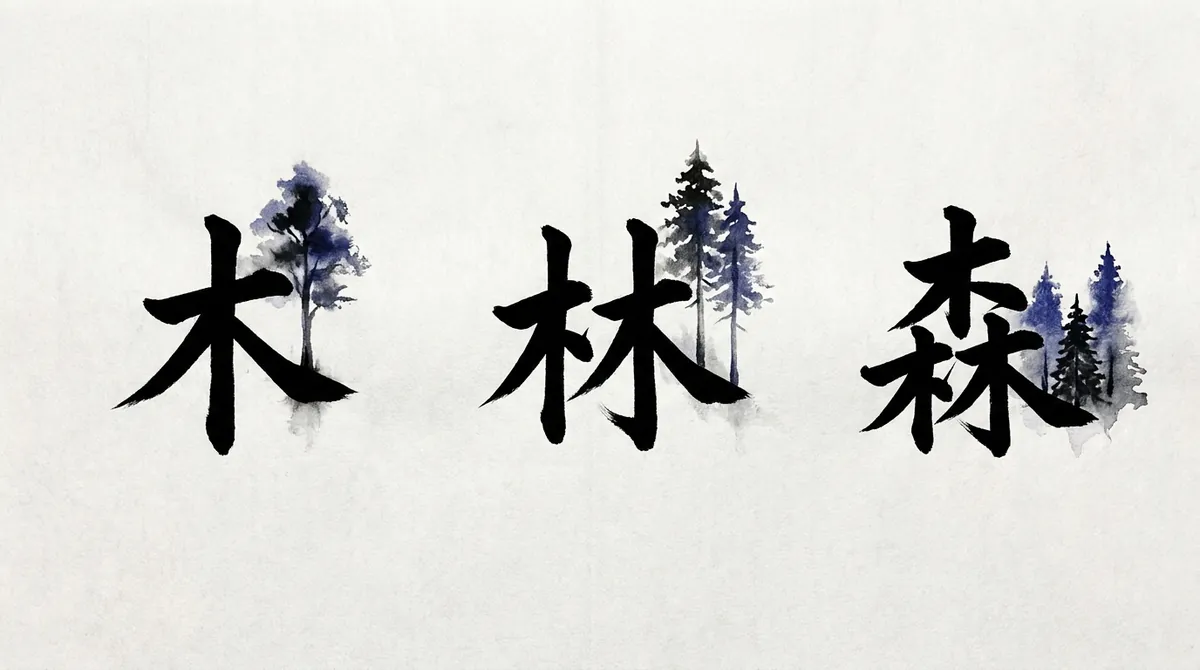
This simple shift turns passive reading into an active, rewarding learning experience. It closes the gap between knowing what a radical is and knowing how to use that information.
A Simple Workflow for Immersive Learning
Instead of halting your reading to look something up in a separate dictionary, you can build a slick, efficient habit right inside an app like Mandarin Mosaic. You want to make radical analysis an instant reflex, not a chore. This method builds on a powerful technique called sentence mining, where you learn new words from real sentences you understand. You can learn more about this effective method by reading our complete guide to sentence mining in Mandarin.
Here’s a simple workflow you can put into practice today:
- Encounter a New Word: As you read, you’ll naturally bump into characters you don’t recognise.
- Tap for Instant Insight: Use the one-tap dictionary to look up the character's meaning and pinyin.
- Identify the Radical: Look at the character and spot the radical you recognise.
- Connect Meaning to Context: Link the radical’s meaning (like 氵 for water) to the word’s meaning and the sentence you just read.
This immediate feedback loop is incredibly powerful. It anchors the radical's meaning in a memorable, contextual way that isolated flashcards just can’t replicate.
By consistently connecting a radical to a new word’s meaning within a live sentence, you’re training your brain to see characters not as flat symbols, but as logical puzzles. This contextual learning cements character structures into your long-term memory.
For instance, you might come across 洗 (xǐ), meaning "to wash". Instantly seeing the 氵 radical reinforces the link between "water" and "washing" right at the moment of discovery. This seamless process means you never lose your reading momentum while turning every new word into a mini-lesson on character anatomy.
Common Myths About Chinese Radicals
To keep your learning on track, it’s vital to have a realistic feel for what radicals in Chinese can and can’t do. They’re incredibly powerful guides, but if you treat them like infallible rules, you’re just setting yourself up for frustration. Let’s tackle some common misconceptions head-on.
One of the biggest myths is that a radical will always give you a character's exact meaning. The truth is, a radical is more of a clue, not a definition. Take the 'mouth' radical (口). Sure, it’s in the character for 'eat' (吃), which makes perfect sense. But it’s also in 'question' (问). The link is conceptual—it points to something done with the mouth, like speaking—but it’s not a direct translation.
Why Radicals Are Not a Perfect System
Another common stumble is assuming the phonetic component gives you the precise pronunciation. While it’s often a fantastic hint, it’s not always a perfect match. Tones can change, and sounds can shift over centuries of linguistic evolution. It's better to think of phonetic components as helpful relatives, not identical twins.
Finally, some learners get tripped up when they see radicals change shape or position. The 'heart' radical, for example, is 心 when it sits at the bottom of a character (like in 忘), but it squishes into 忄 when it’s on the left (like in 情). These variations aren’t there to confuse you; they’re just clever adaptations to make the character’s components fit together neatly.
Understanding that radicals are an imperfect but brilliant guidance system is key to using them effectively. They provide the logic and structure to the writing system, even if there are a few exceptions along the way.
Embracing radicals, imperfections and all, is the most effective path forward.
Lingering Questions About Chinese Radicals
Even with a solid plan, a few questions tend to pop up when you're getting to grips with Chinese radicals. Let's clear up some of the most common points of confusion.
How Many Chinese Radicals Are There, Really?
The classic list contains 214 Kangxi radicals. Modern simplified dictionaries use fewer: 201 in the official 2009 standard (older dictionaries used 189). The great news? You absolutely do not need to memorise them all.
Focus your energy on the 50-100 most common radicals. That's all you'll need to analyse the vast majority of characters you'll run into as a beginner or intermediate learner.
This approach gives you the best bang for your buck, study-wise.
Does the Radical Always Sit on the Left?
Nope. While the left-hand side is prime real estate for radicals, they can actually show up anywhere in a character. Learning to spot them in their different hiding places is a key skill.
- Top: 家 (jiā - home)
- Bottom: 思 (sī - to think)
- Right: 到 (dào - to arrive)
- Enclosing: 国 (guó - country)
Getting familiar with these patterns will make breaking down new characters so much easier.
Can a Character Have More Than One Radical?
This is a great question. For dictionary look-up purposes, a character is traditionally filed under just one radical. But in reality, many characters are built from multiple components that act as radicals in other characters.
For learning, it's far more useful to recognise all of these building blocks and what they mean. Don't just focus on the single "official" one. This gives you a much richer understanding of how the character is constructed.
Ready to put your radical knowledge into practice with a tool designed for contextual learning? See how Mandarin Mosaic can accelerate your vocabulary growth and make learning characters feel intuitive. Explore Mandarin Mosaic today.