 Mandarin Mosaic
Free on iPhone, iPad and Android.
Download on theApp Store Get it onGoogle PlayYour first month of Premium is free.
Numbers in Chinese Mandarin: Counting, Dates, Money and More

Numbers are one of the most logical parts of Mandarin. Learn the eleven characters for 0 to 10, add four more for hundred, thousand, ten thousand and hundred million, and you can build almost any number by stacking them together. This guide walks through counting, large numbers, the two words for "two", and the everyday places you'll use numbers: time, dates, prices, phone numbers and measure words.
Mastering the Core Numbers From 0 to 10
Every larger number, from eleven to a hundred million, is built from these characters, so learn them first, tones included.
Pay close attention to the tone marks in the pinyin column: 四 (sì, four) and 十 (shí, ten) differ mainly in their tones and initial sounds, and mixing them up changes the number. If you need a refresher on the sound system, our guide on how to learn Chinese Pinyin is a good place to start.
The Foundational Mandarin Numbers 0 to 10
| Numeral | Chinese Character (Hanzi) | Pinyin (with Tone) |
|---|---|---|
| 0 | 零 | líng |
| 1 | 一 | yī |
| 2 | 二 | èr |
| 3 | 三 | sān |
| 4 | 四 | sì |
| 5 | 五 | wǔ |
| 6 | 六 | liù |
| 7 | 七 | qī |
| 8 | 八 | bā |
| 9 | 九 | jiǔ |
| 10 | 十 | shí |
Once you've got these memorised, you've done most of the work.
How 一 (yī) Changes Its Tone
The number one has a tone change you'll hear constantly. 一 is said yī (first tone) when it stands alone, when you count or read out digits, at the end of a number (十一, shíyī, eleven) and in ordinals (第一, dì yī, first). Before another syllable it changes:
- Before a fourth tone it becomes yí: 一万 (yíwàn, ten thousand), 一个 (yí ge, one [of something])
- Before a first, second or third tone it becomes yì: 一千 (yìqiān, one thousand), 一年 (yì nián, one year), 一百 (yìbǎi, one hundred)
Dictionaries list it as yī, but this guide writes the tone you actually say. Our guide to tones in Chinese covers the four tones, and our tone sandhi guide has this and the other tone changes, with audio.
The Two Ways to Say Two
One of the first hurdles for new learners is knowing when to use the two words for "two": 二 (èr) and 两 (liǎng). They both mean "two", but they aren't interchangeable.
A good rule of thumb: 二 (èr) is the digit, used for counting, sequences and labels, while 两 (liǎng) is for an amount of two things.
Use 二 (èr) when the number is a label or part of a sequence:
- Counting and digits: one, two, three is 一、二、三 (yī, èr, sān), and a phone number with 123 in it is read yāo èr sān (see the phone number section below).
- Dates: February is 二月 (èryuè).
- Ordinal numbers: second place is 第二名 (dì èr míng).
- Inside larger numbers: 12 is 十二 (shí'èr) and 22 is 二十二 (èrshí'èr), even when you're counting things: 十二个人 (shí'èr ge rén, twelve people).
Use 两 (liǎng) for "a quantity of two", which usually means just before a measure word (more on those below):
- People: two people is 两个人 (liǎng ge rén).
- Items: two books is 两本书 (liǎng běn shū).
- Money: two yuan is 两块 (liǎng kuài).
- Time: two o'clock is 两点 (liǎng diǎn).
- Thousands and up: 2,000 is usually 两千 (liǎngqiān) and 20,000 is 两万 (liǎngwàn). For 200 you'll hear both 两百 (liǎngbǎi) and 二百 (èrbǎi).
Saying 二个人 instead of 两个人 is one of the most common beginner mistakes, so this distinction is worth getting right early.
Building Numbers from 11 to 999
Once you know one to ten, bigger numbers are a matter of stacking the ones you already know. The system is completely regular, with no equivalent of English "eleven", "twelve" or "twenty".
From Eleven to Nineteen
The teens are ten (十, shí) plus the digit. Eleven is literally "ten-one".
- 11: 十一 (shíyī), ten-one
- 12: 十二 (shí'èr), ten-two
- 15: 十五 (shíwǔ), ten-five
- 19: 十九 (shíjiǔ), ten-nine
The apostrophe in shí'èr just shows where one syllable ends and the next begins.
Crafting Multiples of Ten
For multiples of ten, the order flips to digit + ten: you say how many tens you have. Twenty is "two-ten", thirty is "three-ten", and so on up to ninety.
- 20: 二十 (èrshí), two-ten
- 30: 三十 (sānshí), three-ten
- 50: 五十 (wǔshí), five-ten
- 90: 九十 (jiǔshí), nine-ten
Put the two patterns together and you have every number up to 99: twenty (二十) and five (五) make twenty-five (二十五, èrshíwǔ).
The pattern for any two-digit number is digit + 十 + digit. For example, 47 is "four-ten-seven", or 四十七 (sìshíqī).
Expanding into the Hundreds
For the hundreds you need one new character: 百 (bǎi), "hundred". Say how many hundreds you have, then add the rest of the number.
- 100: 一百 (yìbǎi). Unlike English "hundred", you always say the 一.
- 200: 两百 (liǎngbǎi) or 二百 (èrbǎi)
- 345: 三百四十五 (sānbǎi sìshíwǔ), three-hundred four-ten-five
Two extra rules apply from here on.
A zero in the middle is said out loud, as 零 (líng). Even if there are several zeros in a row, you only say 零 once.
- 105: "one-hundred zero five", 一百零五 (yìbǎi líng wǔ)
- 602: "six-hundred zero two", 六百零二 (liùbǎi líng èr)
- 1,005: "one-thousand zero five", 一千零五 (yìqiān líng wǔ)
Zeros at the end are not said. 150 is simply "one-hundred five-ten":
- 150: 一百五十 (yìbǎi wǔshí). In casual speech this is often shortened to 一百五 (yìbǎi wǔ), which always means 150, never 105.
- 890: 八百九十 (bābǎi jiǔshí)
One more detail: on its own, ten is just 十, but inside a bigger number you say "one ten". So 110 is 一百一十 (yìbǎi yīshí), not 一百十.
With these rules you can say any number up to 999.
Counting into the Thousands and Beyond
Past 999 you meet the biggest difference between Chinese and English numbers: Mandarin groups large numbers in ten thousands, not thousands.
Meet the Key Players for Large Numbers
You need three more characters:
- 千 (qiān): thousand (1,000)
- 万 (wàn): ten thousand (10,000)
- 亿 (yì): hundred million (100,000,000)
There's no everyday single character for "million" or "billion". Those are built from 万 and 亿.
The Big Shift: Thinking in Ten Thousands
Instead of counting thousands, count how many ten-thousands (万, wàn) you have. 10,000 is 一万 (yíwàn), "one ten-thousand".
For 100,000, ask yourself how many ten-thousands it contains. The answer is ten, so 100,000 is 十万 (shíwàn), "ten ten-thousands". A million is a hundred ten-thousands: 一百万 (yìbǎi wàn).
A handy trick for reading long numbers: split the digits into groups of four from the right, instead of the usual groups of three. The left-hand group is followed by 万, and the right-hand group is read as normal.
- 45,000 → 4|5000 → 四万五千 (sìwàn wǔqiān), often shortened in speech to 四万五 (sìwàn wǔ)
- 12,345,678 → 1234|5678 → 一千二百三十四万五千六百七十八 (yìqiān èrbǎi sānshísì wàn wǔqiān liùbǎi qīshíbā)
How Large Numbers Work in Mandarin
Seeing the key numbers side by side makes the pattern clearer:
| Numeral | English Name | Mandarin Name |
|---|---|---|
| 1,000 | One thousand | 一千 (yìqiān) |
| 2,000 | Two thousand | 两千 (liǎngqiān) |
| 10,000 | Ten thousand | 一万 (yíwàn) |
| 100,000 | One hundred thousand | 十万 (shíwàn) |
| 1,000,000 | One million | 一百万 (yìbǎi wàn) |
| 10,000,000 | Ten million | 一千万 (yìqiān wàn) |
| 100,000,000 | One hundred million | 一亿 (yíyì) |
| 1,000,000,000 | One billion | 十亿 (shíyì) |
From 10,000, Mandarin keeps counting in 万 until it reaches the next milestone, 亿. China's population of roughly 1.4 billion, for example, is 十四亿 (shísì yì), "fourteen hundred-millions".
A good way to practise is to read large numbers you see every day, like house prices or the population of your town, out loud in Mandarin. You can also put number-heavy sentences into a custom pack in the Mandarin Mosaic app and review them with spaced repetition until reading them is automatic.
Using Numbers in Everyday Chinese Conversations
Here's where numbers come up most in daily life, and the patterns for each.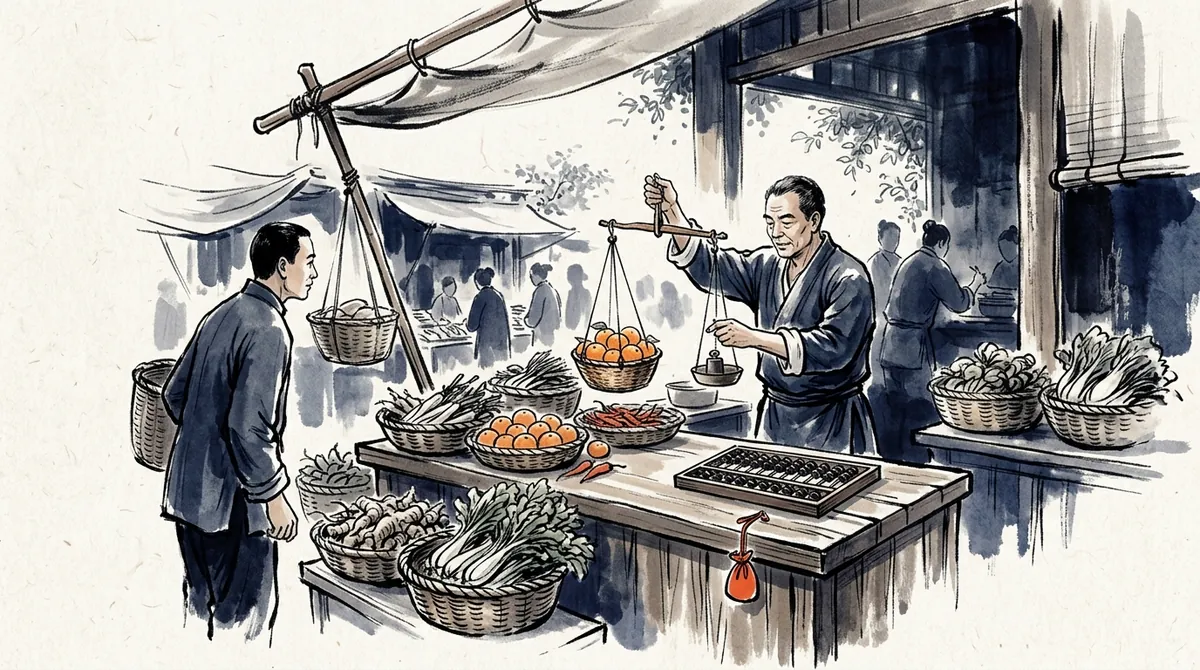
Telling the Time and Date
To use these times in sentences about your day, see our post on describing your daily routine in Chinese.
For the time you need 点 (diǎn) for the hour and 分 (fēn) for minutes: number + 点 + number + 分. The 分 is often dropped.
- What time is it? 现在几点? (xiànzài jǐ diǎn?)
- 2:00: 两点 (liǎng diǎn). Note 两, not 二.
- 3:15: 三点十五 (sān diǎn shíwǔ), or 三点一刻 (sān diǎn yí kè, "three and a quarter").
- 7:30: 七点半 (qī diǎn bàn, "seven and a half") is more common than 七点三十分 (qī diǎn sānshí fēn).
Dates go from biggest to smallest: year, then month, then day.
- 年 (nián): year
- 月 (yuè): month. The months are simply numbered: 一月 (yīyuè) is January, 十二月 (shí'èryuè) is December.
- 号 (hào): day, in speech. 日 (rì) is used in writing and formal speech.
So 25 December 2026 is 二〇二六年十二月二十五号 (èr líng èr liù nián shí'èr yuè èrshíwǔ hào). The year is read digit by digit, with 〇 read as líng.
Days of the week are numbered too: 星期 (xīngqī, week) plus a number, from 星期一 (xīngqī yī, Monday) to 星期六 (xīngqī liù, Saturday). Sunday is the exception: 星期天 (xīngqī tiān) or 星期日 (xīngqī rì).
Reciting Phone Numbers
Phone numbers and other strings of digits are read one digit at a time. In mainland China, the number one is usually read as 幺 (yāo) rather than yī, which is easy to confuse with 七 (qī) on a bad line. You'll hear yāo in room numbers, bus routes and emergency numbers too: the police number 110 is 幺幺零 (yāo yāo líng).
A phone number like 138-1234-5678 is read aloud as "yāo sān bā, yāo èr sān sì, wǔ liù qī bā".
In phone numbers, two is always 二 (èr), never 两 (liǎng).
Talking About Money
The official unit of currency is the 元 (yuán), which is what you'll see written on price tags. In speech, people almost always say 块 (kuài) instead. A tenth of a yuan is a 角 (jiǎo) in writing and a 毛 (máo) in speech.
- How much is it? 多少钱? (duōshao qián?)
- ¥2: 两块 (liǎng kuài)
- ¥15: 十五块 (shíwǔ kuài)
- ¥99.80: 九十九块八毛 (jiǔshíjiǔ kuài bā máo), usually shortened to 九十九块八 (jiǔshíjiǔ kuài bā)
For prices in context, see our guide to ordering food in Chinese. If you're curious about the cultural side of numbers and pricing, read about the number 8 in Chinese culture.
Counting Objects with Measure Words
This is one of the most important parts of Mandarin grammar: measure words (量词, liàngcí). English has a few, like "a pair of shoes" or "a slice of pizza". Mandarin needs one whenever a number comes before a noun.
The pattern is number + measure word + noun:
- Incorrect: 三书 (sān shū)
- Correct: 三本书 (sān běn shū), three [measure word for bound items] books
The most useful measure word is 个 (gè), usually said with a neutral tone (ge). It works for people, many objects and abstract things, and it's the safe choice when you don't know the specific one.
- 一个人 (yí ge rén), one person
- 三个月 (sān ge yuè), three months
- 五个苹果 (wǔ ge píngguǒ), five apples
A few other common ones are worth learning early:
- 本 (běn): books and magazines, as in 一本书 (yì běn shū, one book)
- 张 (zhāng): flat things like paper, tickets and tables, as in 两张票 (liǎng zhāng piào, two tickets)
- 杯 (bēi): cups or glasses of a drink, as in 一杯咖啡 (yì bēi kāfēi, a cup of coffee)
- 只 (zhī): many animals, as in 一只猫 (yì zhī māo, a cat)
- 件 (jiàn): clothes on the upper body and matters, as in 一件衣服 (yí jiàn yīfu, an item of clothing)
To ask "how many?", use 几 (jǐ) with a measure word when you expect a small number, and 多少 (duōshao) for larger or unknown amounts: 你有几本书? (nǐ yǒu jǐ běn shū?, how many books do you have?).
Going Deeper: Sounding Like a Native Speaker
These details will make your numbers sound more natural.
From Counting to Ranking: Ordinal Numbers
To turn a number into an ordinal ("first", "second", "third"), put 第 (dì) in front of it.
- First: 第一 (dì yī)
- Second: 第二 (dì èr)
- Tenth: 第十 (dì shí)
Add a measure word or noun after it: 第一名 (dì yī míng, first place), 第一次 (dì yī cì, the first time). Floors are an exception: "the third floor" is just 三楼 (sān lóu), so "I live on the third floor" is 我住三楼 (wǒ zhù sān lóu).
Talking Parts and Wholes: Fractions, Percentages and Decimals
Fractions use the pattern ...分之... (...fēn zhī...), roughly "of ... parts, ...". The order is the reverse of English: the denominator (the whole) comes first, then 分之, then the numerator (the part).
The Mandarin fraction formula: denominator + 分之 (fēn zhī) + numerator
So one-third (1/3) is 三分之一 (sān fēn zhī yī), literally "of three parts, one". Three-fifths (3/5) is 五分之三 (wǔ fēn zhī sān).
Percentages work the same way, with 百 (bǎi, hundred) as the denominator: 25% is 百分之二十五 (bǎi fēn zhī èrshíwǔ).
Decimals use 点 (diǎn, point), with the digits after it read one by one: 3.14 is 三点一四 (sān diǎn yī sì).
Common Colloquialisms and Shortcuts
In everyday speech, especially in northern China, 两个 (liǎng ge) is often shortened to 俩 (liǎ), "two of". Because the measure word is already built in, you don't add 个 after it: "the two of us" is 我们俩 (wǒmen liǎ). There's a matching word for three, 仨 (sā): 我们仨 (wǒmen sā), "the three of us".
The Cultural Significance of Numbers
Some numbers are considered lucky or unlucky because of what they sound like. The best-known example is four: 四 (sì) sounds like 死 (sǐ, death), differing only in tone. Many buildings in China skip the fourth floor, and some skip 14 and 24 as well. It's a good example of why tones matter, and our guide to Chinese tones will help you keep them apart.
On the lucky side, 八 (bā) sounds like 发 (fā), as in 发财 (fācái, to get rich), which is why phone numbers and number plates full of eights sell for a premium. Six, 六 (liù), suggests things going smoothly (六六大顺, liùliù dà shùn), and nine, 九 (jiǔ), sounds like 久 (jiǔ, long-lasting). For every digit, plus number codes like 520 and 250, see lucky and unlucky numbers in Chinese.
Frequently Asked Questions About Chinese Numbers
What's the Real Difference Between 二 (èr) and 两 (liǎng)?
二 (èr) is the digit: you use it for counting, phone numbers, dates, ordinals (第二) and inside larger numbers like 十二. 两 (liǎng) means "two of something" and comes before a measure word: two people is 两个人 (liǎng ge rén), never 二个人. If you're answering "how many?", you need 两.
Why Is the Number 4 Considered Unlucky in Chinese Culture?
Because 四 (sì, four) sounds almost the same as 死 (sǐ, death); only the tone is different. That's why some buildings skip the fourth floor and why people avoid the number in phone numbers and addresses. Eight, 八 (bā), is the lucky opposite because it sounds like 发 (fā, to prosper).
How Do I Say a Phone Number in Mandarin?
Say each digit one by one, use 二 (èr) for two, and in mainland China say 幺 (yāo) for one. So 138-1234-5678 is "yāo sān bā, yāo èr sān sì, wǔ liù qī bā".
How Do I Say a Million in Chinese?
Count in ten-thousands: a million is a hundred ten-thousands, 一百万 (yìbǎi wàn). Ten million is 一千万 (yìqiān wàn), a hundred million has its own word, 一亿 (yíyì), and a billion is 十亿 (shíyì).
What Are Measure Words and Why Are They So Important?
Measure words, or 量词 (liàngcí), go between a number and a noun: 三本书 (sān běn shū), three books, not 三书. Each noun has its usual measure word, but 个 (gè) works for people and many everyday objects, so it's your fallback when you're not sure. Learning nouns together with their measure words, in real sentences, is the easiest way to get them right.
Numbers and measure words stick best when you meet them in real sentences, not tables. Mandarin Mosaic is a sentence-mining app for iOS and Android that teaches you Chinese through sentences with one new word at a time, with audio and spaced repetition. See how it works in our introduction to sentence mining, or visit mandarinmosaic.com to download it.