8 in Chinese (八, bā): Why It's the Luckiest Number
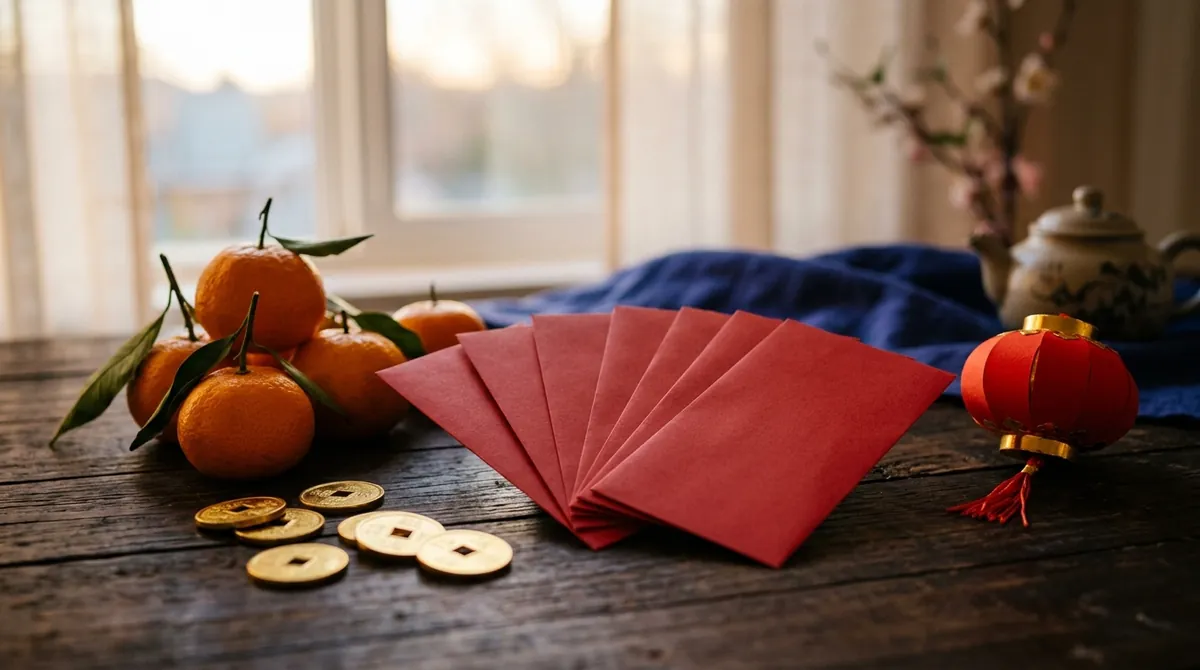
When it comes to lucky numbers in Chinese culture, the number 8, written as 八 (bā), is the undisputed king. Its legendary status comes from something quite simple: its pronunciation sounds remarkably similar to the word for wealth and prosperity, 发 (fā).
Understanding the Lucky Number 8 in Chinese
For anyone learning Mandarin, getting your head around the importance of the number eight is a huge cultural shortcut. Unlike numbers that are lucky for some ancient, mythological reason, the power of eight is almost entirely down to how it sounds. This link between pronunciation and meaning is a recurring theme in Chinese, making the number 8 a perfect first step into deeper cultural beliefs.
This simple linguistic quirk has a massive impact on daily life, influencing everything from the price of a phone number to the grand opening date for a new business. In essence, saying "eight" is like echoing the sound of "getting rich", weaving a little bit of good fortune right into the language itself.
The Chinese Number 8 at a Glance
To get us started, here’s a quick rundown of the essential details for any Mandarin student. This table gives you the foundational knowledge you’ll need before we dive deeper into its cultural significance.Aspect Details Character 八 (Simplified/Traditional) Pinyin bā Tone First tone (a high, flat sound) Formal Character 捌 (Used in financial contexts) Cultural Meaning Luck, prosperity, wealth, and good fortune
With these basics covered, you're ready to see just how far the influence of this lucky number really goes in the Chinese-speaking world.
The Phonetic Link Between Eight and Wealth
The reason the number 8 in Chinese is so revered isn’t down to some ancient, mystical secret; it’s all about a simple quirk of the language.
In Mandarin, the word for eight, 八, is pronounced bā. This sounds incredibly similar to the word for prosperity or to get rich, 发 (fā). Within Chinese, this phonetic echo carries massive cultural weight.
This is why just hearing the number 8 can instantly bring up feelings of good fortune and financial success. It has shaped everything from business decisions to choosing a phone number, all because people connect the sound of the number with the promise of wealth. You can read more about China's fascination with lucky numbers on chinahighlights.com.
Why Tones Are So Important
Now, you might be thinking that bā and fā don't sound exactly the same. You're right. The first consonant is different (b vs f), but they share the same tone.
- 八 (bā) uses the first tone, which is high and flat.
- 发 (fā) also uses the first tone, sharing that same high, level sound.
So the two words differ only in their first consonant, which is exactly why they sound so alike. Change the tone, though, and you get a different word entirely: tones aren't an optional extra in Mandarin, they're part of what a word means. You can get the full rundown in our detailed guide to understanding tones in Chinese. If you want to check your own tones as you speak, the Chunking Chinese fluency trainer gives feedback on the tone and sound of each character in the phrases you say.
For a Mandarin learner, understanding the link between
bāandfāis more than a vocabulary lesson. It’s a key insight into how sound shapes culture, belief, and even behaviour in the Chinese-speaking world.
This powerful phonetic association is what drives the cultural obsession with the number 8. It’s a constant, audible reminder of wealth and prosperity, turning a simple digit into a powerful cultural symbol.
How to Write the Character for Eight
When you’re just starting out with Chinese characters, some can feel a bit intimidating. Luckily, the number eight, 八 (bā), isn't one of them. It's made up of just two simple strokes, making it one of the first characters many learners master and feel confident writing.
The secret to getting any character right is, of course, the stroke order. For 八, it’s a beautifully simple two-step process:
- First, the left stroke (撇, piě): Start with a short, gentle stroke that falls from top-right to bottom-left.
- Next, the right stroke (捺, nà): Follow it with a longer stroke that falls from top left to bottom right, ending in a slight flick. It sits apart from the first stroke and extends further out, creating a nice, balanced shape.
Crucially, the two strokes shouldn't touch at the top. This gives the character its open and stable appearance. It's a really satisfying one to get right!
The infographic below shows the phonetic link that gives the number its lucky status.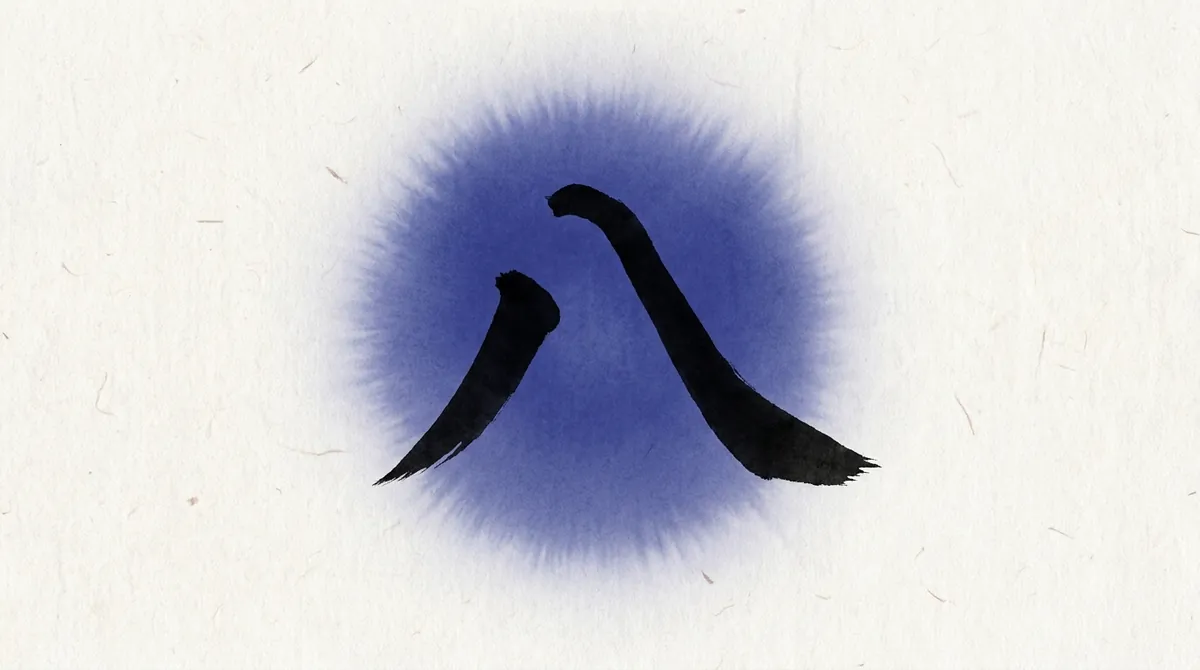
As you can see, the flow shows how the numeral's sound, bā, is so close to fā (to prosper), creating a powerful cultural connection that has spread across the Chinese-speaking world.
The Formal Character 捌
Just when you think you've got it figured out, Chinese throws you a curveball. Alongside the simple 八, there's a much more complex version: 捌 (bā). This is what's known as the formal or "anti-fraud" character.
You'll see 捌 used primarily in financial and official contexts. Its intricate design makes it incredibly difficult to alter on things like cheques, invoices, and legal documents—a clever, built-in security feature of the writing system itself.
While you’ll be using 八 for everyday things like writing dates or phone numbers, being able to recognise 捌 is a massive advantage if you ever deal with financial paperwork. It’s a perfect example of how the written language has adapted for very specific, practical needs.
This dual-character system really highlights the depth and ingenuity within Chinese writing. If you’re curious to explore this further, you can learn more about the meaning of Chinese symbols in our detailed article. Getting a handle on both forms of the number 8 will give you a much more complete picture of how the language works in the real world.
Seeing Number 8 in Everyday Chinese Life
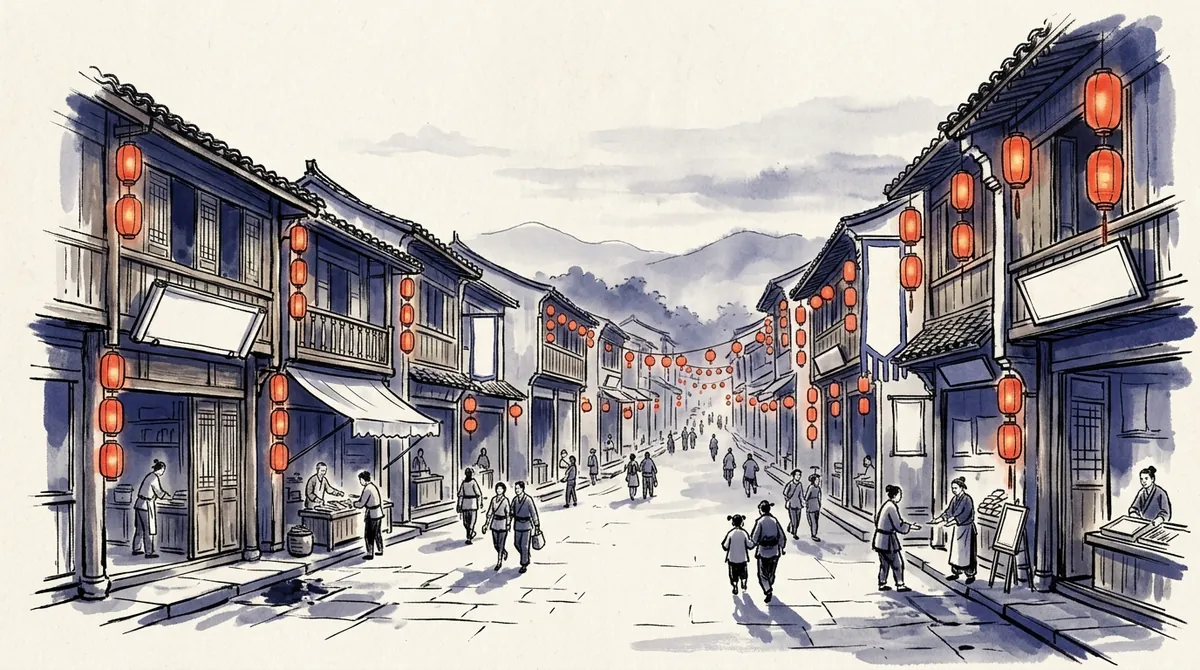
The Chinese fascination with the number eight isn't just some old superstition; it actively shapes the world in very real, and often very expensive, ways. From big life decisions to small daily purchases, the drive to include this lucky digit is a powerful force you'll see everywhere in Chinese society.
This belief is so deep-rooted that people will go to incredible lengths just to secure it. The symbolism all comes back to pronunciation – the sound of ‘eight’ is a near-perfect match for the word for wealth and fortune. It's a conviction that steers real-world choices, from picking an address to buying a phone number, all in the hope of attracting a bit more prosperity.
High Stakes for Lucky Digits
One of the most obvious examples is just how much value is placed on things that feature the number eight. It's totally normal for people to pay a small fortune for a phone number or a car license plate that ends in a string of eights.
Just think about these common scenarios where eight takes centre stage:
- Property: An apartment on the 8th floor, or a house with the number 8 in the address, is often seen as far more desirable and can easily fetch a higher price.
- Business: A new shop might plan its grand opening for the 8th of August (8/8) to get off to a prosperous start. You'll also see product prices set with eights, like ¥88 or ¥888, all the time.
- Personal Items: A mobile number ending in 8888 is a massive status symbol. In fact, the most coveted combinations can sell for huge sums at auction. In 2003, Sichuan Airlines paid 2.33 million yuan for the phone number 8888-8888.
It's clear that the number 8 isn't just a passive belief. It's an active principle that directly influences economic behaviour, personal choices, and even how buildings are numbered.
Numbers in Important Dates
The preference for eight also spills over into major life events. Just like a business owner might pick August 8th for an opening day, people often try to lock in dates containing the number eight for big occasions like weddings or signing important contracts.
This way of thinking is quite similar to how other cultural events, such as traditional festivals, are tied to specific lucky dates to maximise good fortune. You can learn more about how timing shapes these celebrations in our article about the Mid-Autumn Festival in Chinese tradition. Seeing how these beliefs play out in real life offers a fascinating window into the cultural mindset.
How the Number 8 Shapes Business and Global Events
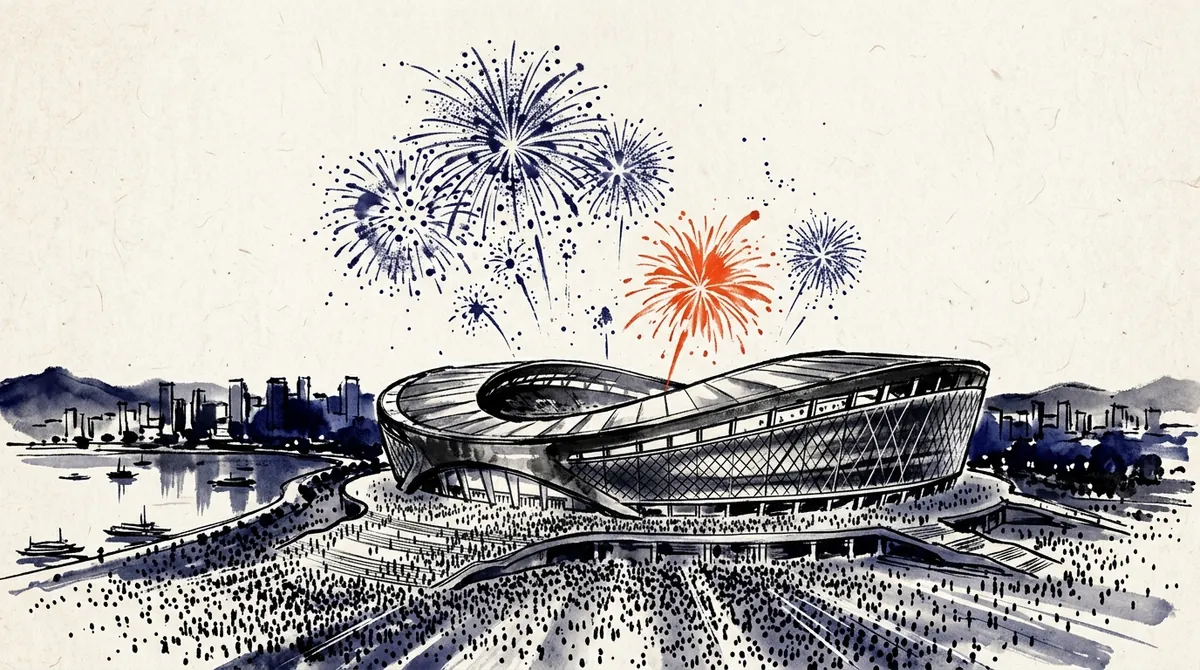
The incredible influence of the number 8 in Chinese culture isn't just a personal superstition—it actively shapes major business decisions and even global events. This isn't a minor detail; it’s a powerful cultural force that shows just how deeply numerology is woven into the fabric of economic and political life.
Perhaps the most famous example of this was the Beijing 2008 Olympic Games. It was absolutely no accident that the opening ceremony kicked off with spectacular precision on August 8th, 2008, at exactly 8:08:08 PM. This was a deliberate, highly symbolic move designed to channel the auspicious energy of the number eight, aiming to secure prosperity and success for the games on the world stage. It was a powerful statement of cultural identity, broadcast to billions.
From Global Stages to Store Shelves
This strategic use of the number eight pops up just as often in the world of commerce. For any Mandarin learner, once you start noticing it in pricing and marketing, you'll see it everywhere.
Companies frequently sprinkle the number 8 into their strategies to attract customers and signal good fortune. You'll often spot it in a couple of key areas:
- Pricing Strategies: It’s incredibly common to see products priced at amounts like ¥88.88 or ¥888. This isn't just about creating a catchy price; it's a savvy marketing tool meant to make the product feel luckier and more desirable.
- Launch Dates: Just like the Olympics, businesses often schedule important events like product launches or grand openings on dates featuring the number eight. Picking a date like August 8th (8/8) is a popular way to try and guarantee a prosperous start.
The significance of numbers, especially the number 8, plays an integral role in Chinese culture where numerology influences business and social activities. This cultural importance can be seen in global events, such as the choice of the Beijing Olympics opening date, to align with auspicious numbers that promise success and good fortune. Discover more insights about the meaning of numbers in Chinese culture on cambridgenetwork.co.uk.
When you get your head around this connection between numbers and business, you start to see a fascinating picture of how a simple sound-alike word can become a potent tool in branding, marketing, and even international diplomacy.
Common Questions About the Number 8
Of course, the moment you start digging into Chinese culture, questions about how these beliefs play out in real life are bound to pop up. Getting your head around the nuances of lucky numbers like eight gives you a much richer feel for the language and its cultural backdrop. Let's tackle some of the most common questions Mandarin learners have.
Do More Eights Mean More Luck?
You might be wondering if piling on the eights—like 88 or 888—makes things even luckier. The answer is a massive yes. If a single number 8 in Chinese is a good omen, then stacking them is seen as cranking up the good fortune exponentially. That’s why you’ll spot these repeating digits everywhere, from sought-after licence plates to phone numbers, as they’re thought to multiply wealth and prosperity.
Are Beliefs About Number 8 Universal in China?
While the link between eight and wealth is everywhere, the intensity of this belief can differ. It’s particularly potent in southern China, especially in Cantonese-speaking areas like Guangdong and Hong Kong. There, the pronunciation of eight (baat) sounds even more like the word for prosperity (faat).
In other parts of China, eight is still definitely a lucky number, but perhaps with a little less fanfare. That said, it’s a belief that has gone national and even global, thanks to major events and its heavy use in business. For any Mandarin learner, it’s a safe bet to assume the number eight is viewed positively pretty much everywhere.
How Does Eight Compare to Unlucky Numbers?
The positive vibes of eight are a world away from the most dreaded number in Chinese culture: four (四, sì). Four is considered desperately unlucky because its pronunciation is almost identical to the word for death (死, sǐ). This creates a powerful cultural tug-of-war between the two numbers.
The contrast between eight (八, bā) and four (四, sì) is a perfect example of how sound shapes meaning in Chinese culture. One number sounds like prosperity, while the other echoes death, drawing a clear line between good and bad fortune.
This deep-seated aversion to the number four means many buildings in China will just skip the 4th floor entirely, jumping from 3 to 5. On the flip side, floors and addresses with the number eight are highly desirable, showing just how much these sounds influence everyday life and even the blueprints of buildings.
Ready to move beyond isolated words and learn Mandarin in context? Mandarin Mosaic helps you build vocabulary and grammar intuition by studying real sentences. Its smart, sentence-mining approach makes learning more effective and engaging. Explore how Mandarin Mosaic can accelerate your progress today.