Learn Mandarin with the McDonald's Menu in China: 8 Essential Items for 2026
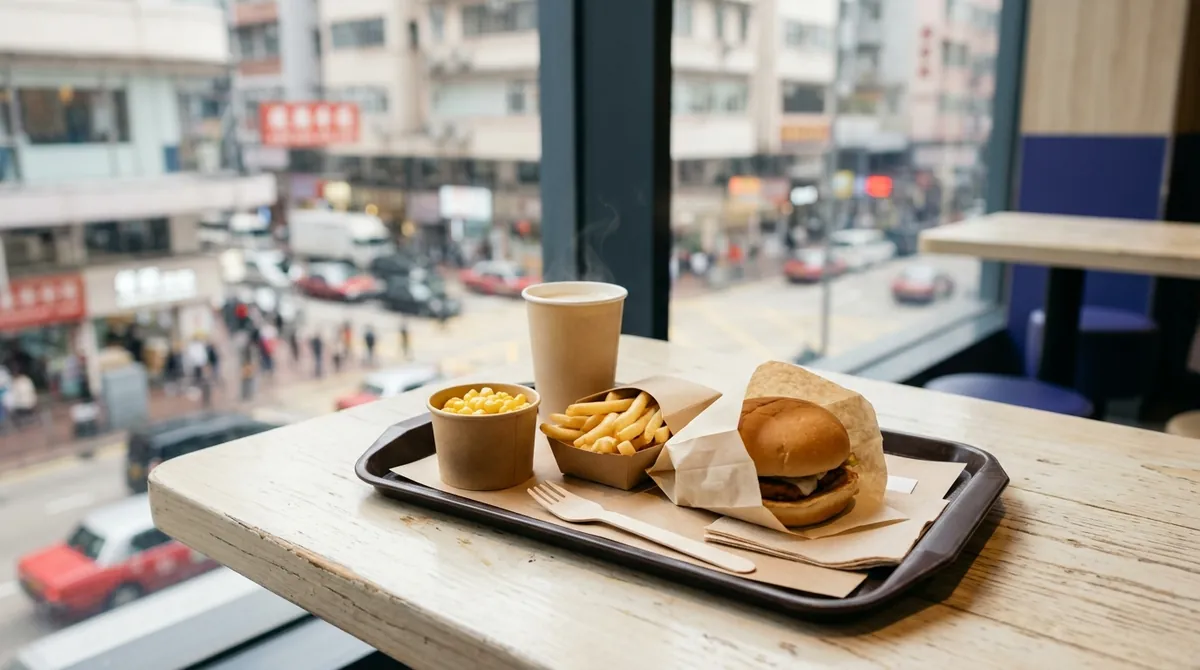
Stepping into a McDonald's in China isn't just about grabbing a quick meal; it's a surprisingly effective language-learning opportunity. While the Golden Arches are familiar, the McDonald's menu in China is a unique fusion of global classics and local flavours, creating a perfect, real-world classroom for Mandarin learners. Forget abstract grammar rules and decontextualised vocabulary lists. Here, every item on the menu board is a practical lesson waiting to be ordered. This guide is designed to turn your next fast-food run into a structured study session.

This article provides a detailed breakdown of core and special menu items you'll only find in China. For each item, you'll get everything you need for confident ordering and practical learning: the Mandarin name (汉字), pinyin for pronunciation, and a simple description. We go further by offering pronunciation tips for tricky sounds, sample ordering sentences you can use immediately, and cultural notes explaining why certain ingredients or flavours are popular. This approach moves beyond simple translation, giving you the context needed to understand the why behind the words.

Whether you're a beginner building foundational Chinese vocabulary, an intermediate student seeking practical sentence-mining examples, or a heritage speaker reconnecting with the language, this listicle offers a structured path. You will learn to order everything from a breakfast congee (粥 - zhōu) and soy milk (豆浆 - dòu jiāng) combo to limited-edition festival items, building your fluency one delicious, tangible order at a time. Let's explore the menu.

1. Spicy Chicken McNuggets with Sichuan Peppercorn Sauce

A signature item on the McDonald's menu in China, these are not your standard McNuggets. While the crispy chicken pieces are familiar, they are served with a dipping sauce that introduces a foundational concept in Chinese cuisine: 麻辣 (málà), or numbing-spicy. This item offers a perfect, real-world lesson in regional Chinese flavours, specifically the profile of Sichuan.

Three crispy golden chicken nuggets alongside a bowl of dark red dipping sauce with red berries.

The key ingredient in the sauce is the Sichuan peppercorn, or 花椒 (huājiāo), which creates a tingling, numbing sensation known as 麻 (má). This is paired with the fiery heat of chillies, or 辣 (là). Understanding the distinction between these two sensations is a significant step for any Mandarin learner exploring authentic Chinese food culture.

Vocabulary and Ordering

  • Item Name: 麦辣鸡块 (Màilà jīkuài) - Spicy Chicken Nuggets
  • Sauce: 麻辣酱 (málà jiàng) - Numbing-Spicy Sauce
  • Pronunciation Tip: The 'mà' in 麦 (mài) is a falling tone, distinct from the rising tone of 麻 (má). Practise distinguishing these two tones to ensure clear communication.
  • Price Range: ¥13-20 (for a small portion)

Ordering Phrase: 我要一份麦辣鸡块,配麻辣酱。 Wǒ yào yí fèn Màilà jīkuài, pèi málà jiàng. (I want one serving of Spicy Chicken Nuggets, with the numbing-spicy sauce.)

Language Learning in Context

This menu item provides an excellent opportunity to expand your Chinese food-related vocabulary and grammar. Notice the use of the measure word 份 (fèn) for a 'serving' or 'portion', which is common when ordering fast food.

You can also practise describing the taste. For example, if someone asks how it is, you could say: "这个鸡块又麻又辣,很好吃!" (Zhège jīkuài yòu má yòu là, hěn hǎochī! - This chicken nugget is both numbing and spicy, very delicious!). The "又...又... (yòu...yòu...)" structure is a useful pattern for describing multiple qualities. Mastering the concept of málà through this familiar food item is a practical way to connect your Chinese language learning with a tangible cultural experience found across China.

2. Rice Bowls with Chinese Proteins (Pork, Chicken, Shrimp)

Perhaps the most significant localisation on the McDonald's menu in China, the availability of rice bowls marks a fundamental nod to local dining customs. Instead of a burger, customers can opt for a staple carbohydrate, 米饭 (mǐfàn), or rice, topped with familiar Chinese-style proteins. This offering provides a brilliant context for learning core Chinese vocabulary related to meals and customisation.

An illustration of a bowl of white rice topped with meat, tofu, and shrimp, served with sauce and chopsticks.

These rice bowls, known generally as 饭碗 (fànwǎn), directly cater to the Chinese preference for a hot, rice-based meal. The protein options are equally localised, featuring choices like 猪肉 (zhūròu) - pork, 鸡肉 (jīròu) - chicken, and 虾 (xiā) - shrimp, often prepared in a savoury sauce. Ordering one is a practical exercise in building sentences that go beyond the typical Western fast-food script.

Vocabulary and Ordering

  • Item Name: 那么大鸡排满碗饭 (Nàme dà jīpái mǎn wǎn fàn) - So Big Chicken Steak Full Bowl of Rice (A common menu example)
  • Key Nouns: 米饭 (mǐfàn) - rice; 猪肉 (zhūròu) - pork; 鸡肉 (jīròu) - chicken; 虾 (xiā) - shrimp
  • Pronunciation Tip: The word for bowl, 碗 (wǎn), has a falling-then-rising third tone. Differentiate it from the falling fourth tone of 饭 (fàn) to sound more natural.
  • Price Range: ¥25-35 (for a full bowl meal)

Ordering Phrase: 我要一碗米饭,加一份鸡肉。 Wǒ yào yì wǎn mǐfàn, jiā yí fèn jīròu. (I want a bowl of rice, with a portion of chicken.)

Language Learning in Context

This menu item is an excellent tool for understanding Chinese measure words. Notice the use of 碗 (wǎn) for a 'bowl' of rice, while 份 (fèn) is used for a 'portion' of the protein. Grasping when to use 碗 (wǎn), 份 (fèn), or 盘 (pán) for 'plate' is a key step for intermediate Chinese learners.

You can also practise customisation using the verb 加 (jiā), meaning 'to add'. This is a highly practical word in any Chinese restaurant. For instance, to ask for extra sauce, you could say: "可以加一点酱吗?" (Kěyǐ jiā yìdiǎn jiàng ma? - Can I add a little sauce?). Ordering a simple rice bowl from the McDonald's menu in China becomes a valuable, low-pressure opportunity to practise these essential Chinese sentence structures.

3. Shrimp Burger (虾堡) with Tartar Sauce

A fascinating example of menu localisation, the Shrimp Burger illustrates how a Western fast-food concept is adapted to meet Chinese culinary preferences. While the burger format is familiar, the use of shrimp as the primary protein reflects the popularity of seafood in many parts of China. For Mandarin learners, this item provides a great opportunity to explore vocabulary related to food fusion and cultural comparisons.

A colorful, stylized burger with a pink patty, lettuce, and sauce, served on a tray.

The burger itself, often called the 鲜虾堡 (xiān xiā bǎo) or Fresh Shrimp Burger, features a patty made from whole shrimp pieces. This item is a key part of the McDonald's menu in China and highlights how global brands cater to local tastes. Understanding this product helps learners discuss not just food, but also the broader themes of globalisation and cultural adaptation using practical, everyday Mandarin.

Vocabulary and Ordering

  • Item Name: 虾堡 (xiā bǎo) - Shrimp Burger or 鲜虾堡 (xiān xiā bǎo) - Fresh Shrimp Burger
  • Key Ingredients: 虾 (xiā) - Shrimp; 酱 (jiàng) - Sauce
  • Pronunciation Tip: The 'xiā' in 虾 (xiā) is a high, flat tone. Ensure you don't let your pitch drop, as this can change the meaning.
  • Price Range: ¥20-28

Ordering Phrase: 我要一个鲜虾堡套餐。 Wǒ yào yí ge xiān xiā bǎo tàocān. (I want one Fresh Shrimp Burger meal.)

Language Learning in Context

This burger is an excellent subject for practising comparative sentences in Chinese. You can contrast it with more traditional Western burgers, which is a common point of discussion. For example, you could explain, "这个虾堡和传统的牛肉汉堡不一样" (Zhège xiā bǎo hé chuántǒng de niúròu hànbǎo bù yíyàng - This shrimp burger is different from a traditional beef burger).

For a more advanced conversation, you can discuss the cultural reasons behind such menu items. Try using a compound sentence like: "虽然是西方快餐,但这家餐厅用中国人喜欢的虾来做汉堡" (Suīrán shì xīfāng kuàicān, dàn zhè jiā cāntīng yòng Zhōngguó rén xǐhuān de xiā lái zuò hànbǎo - Although it's Western fast food, this restaurant uses shrimp, which Chinese people like, to make its burgers). This demonstrates an ability to connect food with cultural context, a significant skill in Mandarin fluency.

4. Glutinous Rice Balls (汤圆) in Dessert Offerings

Seeing a traditional dessert like glutinous rice balls on the McDonald's menu in China is a powerful indicator of how major brands localise their offerings. This item, 汤圆 (tāngyuán), is not just a sweet treat; it is a food deeply embedded in Chinese culture, particularly during festivals. Its presence offers a profound opportunity for Mandarin learners to connect vocabulary with significant cultural traditions.

Often filled with sweet black sesame or red bean paste, these chewy rice balls are typically served in a warm, sweet broth. Their round shape and the way they are served together in a bowl symbolises family togetherness and reunion. While McDonald's offers sweet Glutinous Rice Balls (汤圆) as a dessert, the broader Chinese culinary landscape also boasts savoury, dough-wrapped delights like delicious pan fried soup dumplings. Understanding both sweet and savoury cultural foods provides a more complete picture.

Vocabulary and Ordering

  • Item Name: 汤圆 (tāngyuán) - Glutinous Rice Balls
  • Cultural Terminology: 团圆 (tuányuán) - Reunion (Note the similar sound to tāngyuán)
  • Pronunciation Tip: Both 汤 (tāng) and 圆 (yuán) have a flat first tone and a rising second tone, respectively. Focus on the smooth, even pitch for 'tāng' and the upward inflection for 'yuán'.
  • Price Range: ¥10-15 (for a small bowl)

Ordering Phrase: 我要一碗汤圆,谢谢。 Wǒ yào yì wǎn tāngyuán, xièxie. (I want one bowl of glutinous rice balls, thank you.)

Language Learning in Context

This menu item opens the door to discussing Chinese festivals and family values. You will often encounter the measure word 碗 (wǎn), meaning 'bowl', when ordering soups or desserts like this. This is a practical term for any food-related conversation in Chinese.

You can practise forming sentences that link the food to its cultural meaning. For instance, explaining its symbolism: "汤圆象征着团圆和家庭的重要性" (Tāngyuán xiàngzhēng zhe tuányuán hé jiātíng de zhòngyàoxìng - Glutinous rice balls symbolise reunion and the importance of family). Associating specific foods on the McDonald's menu in China with holidays like the Lantern Festival (元宵节 Yuánxiāo jié) is an excellent method for building a deeper, more contextual understanding of the Chinese language.

5. Breakfast Porridge (粥) and Soy Milk (豆浆) Combinations

Stepping into a McDonald's in China during the morning reveals a menu that fundamentally respects local breakfast traditions. Instead of just hash browns and McMuffins, you'll find classic Chinese breakfast staples like 粥 (zhōu), a savoury rice porridge or congee, and 豆浆 (dòujiāng), or soy milk. This part of the McDonald's menu in China provides an immediate connection to the daily routines of millions.

These items are not just a novelty; they represent a core part of Chinese breakfast culture, which often favours warm, savoury, and easily digestible foods to start the day. Including these on the menu is a direct acknowledgement of these cultural norms, making McDonald's a practical breakfast option for locals and an invaluable learning ground for Mandarin students seeking cultural fluency.

Vocabulary and Ordering

  • Porridge: 粥 (zhōu)
  • Soy Milk: 豆浆 (dòujiāng)
  • Sweet Soy Milk: 甜豆浆 (tián dòujiāng)
  • Unsweetened/Savoury Soy Milk: 咸豆浆 (xián dòujiāng) - Note: McDonald's typically serves a standardised sweet version.
  • Price Range: ¥8-15 (for a single item or simple combo)

Ordering Phrase: 早上好,我要一碗粥和一杯热豆浆。 Zǎoshang hǎo, wǒ yào yì wǎn zhōu hé yì bēi rè dòujiāng. (Good morning, I want a bowl of porridge and a cup of hot soy milk.)

Language Learning in Context

This breakfast combination is perfect for practising essential daily routine vocabulary in Chinese. The phrase 早上我喜欢喝豆浆和吃粥 (Zǎoshang wǒ xǐhuān hē dòujiāng hé chī zhōu), meaning "In the morning, I like to drink soy milk and eat porridge," is a fantastic sentence to add to your study routine.

Pay close attention to the measure words. You use 碗 (wǎn) for a 'bowl' of porridge and 杯 (bēi) for a 'cup' or 'glass' of soy milk. Distinguishing between measure words is a key step for moving beyond beginner-level Mandarin. You can also discuss preferences: "豆浆可以是甜的或咸的,这取决于你的喜好" (Dòujiāng kěyǐ shì tián de huò xián de, zhè qǔjué yú nǐ de xǐhào), meaning "Soy milk can be sweet or salty, depending on your preference." This sentence introduces more advanced structures and vocabulary, ideal for intermediate Chinese learners.

6. Tea Beverages (Jasmine Tea, Oolong Tea) with Chinese Tea Service Language

Reflecting the deep-rooted tea culture in China, McDonald's offers more than just the standard fizzy drinks and coffee. The inclusion of traditional Chinese teas like Jasmine and Oolong provides a fantastic opportunity for Mandarin learners to engage with the vocabulary of 茶文化 (chá wénhuà), or tea culture, in a modern, everyday setting. This part of the McDonald's menu in China connects a daily routine with centuries of tradition.

Ordering these beverages requires you to specify the type of tea and often the temperature. This simple act opens a door to understanding politeness and specificity in service interactions. 茉莉花茶 (mòlihuā chá) is a fragrant green tea scented with jasmine blossoms, while 乌龙茶 (wūlóng chá) is a semi-oxidised tea with a more complex, roasted flavour. Beyond its delightful aroma, discovering the benefits of Jasmine Green Tea can add another layer to your appreciation of Chinese tea culture.

Vocabulary and Ordering

  • Jasmine Tea: 茉莉花茶 (mòlihuā chá)
  • Oolong Tea: 乌龙茶 (wūlóng chá)
  • Pronunciation Tip: The 'lóng' in 乌龙 (wūlóng) has a rising tone, similar to asking a question. Focus on the upward inflection to distinguish it from other sounds.
  • Price Range: ¥10-18

Ordering Phrase: 我要一杯热的茉莉花茶,谢谢。 Wǒ yào yì bēi rè de mòlihuā chá, xièxie. (I want a cup of hot jasmine tea, thank you.)

Language Learning in Context

This menu choice is ideal for practising descriptors for temperature and preferences in Chinese. You can ask for tea that is 热的 (rè de) - hot, or 冰的 (bīng de) - iced. You can also make more advanced requests, such as asking for less sugar: 少糖 (shǎo táng).

Learning about tea also introduces you to its cultural significance. You could practise a more complex sentence like: "在中国文化中,茶代表了尊重和热情好客" (Zài Zhōngguó wénhuà zhōng, chá dàibiǎo le zūnzhòng hé rèqíng hàokè - In Chinese culture, tea represents respect and hospitality). Mastering these common beverage-related sentences is a great step towards fluency, and you can find more useful expressions by exploring essential phrases in Chinese for daily conversation.

7. Limited-Time Regional Offerings (Seasonal Mooncakes, Festival Foods)

One of the most dynamic aspects of the McDonald's menu in China is its lineup of limited-time offerings tied to important cultural events. These items, such as special 月饼 (yuèbǐng) for the Mid-Autumn Festival or unique burgers for Chinese New Year, provide an excellent opportunity for Mandarin learners to connect language with timely cultural traditions. This rotating menu challenges you to move beyond static vocabulary and engage with the living, breathing rhythm of the Chinese calendar.

These seasonal promotions are a fantastic real-world application of temporal language and festival-specific terminology. For example, during the Mid-Autumn Festival, you might see advertisements for mooncakes with unique fillings like 咸蛋黄 (xián dàn huáng), or salted egg yolk. Understanding these promotions requires you to know not just the food item, but also the cultural context and the specific time of year they appear.

Vocabulary and Ordering

  • Item Name: 节庆限定 (Jiéqìng xiàndìng) - Festival Limited Edition
  • Example Item: 月饼 (yuèbǐng) - Mooncake
  • Pronunciation Tip: The 'qìng' in 节庆 (jiéqìng) is a falling tone, pronounced with a sharp, downward inflection. The 'xiàn' in 限定 (xiàndìng) also has a falling tone.
  • Price Range: Varies widely based on the item and festival (e.g., ¥80-150 for a box of mooncakes)

Ordering Phrase: 请问,你们有今年中秋节的限定月饼吗? Qǐngwèn, nǐmen yǒu jīnnián Zhōngqiū jié de xiàndìng yuèbǐng ma? (Excuse me, do you have this year's limited edition mooncakes for the Mid-Autumn Festival?)

Language Learning in Context

This category is perfect for practising temporal adverbs and discussing cultural traditions in Chinese. The appearance of these items on the McDonald's menu in China is a cue to talk about specific times of the year. For an excellent primer on the traditions behind these items, you can learn more about the Mid-Autumn Festival in Chinese culture.

You can use these items to master words like 今年 (jīnnián) - this year, 去年 (qùnián) - last year, and 明年 (míngnián) - next year. For instance, you could ask a friend: "你吃过麦当劳去年的新年汉堡吗?" (Nǐ chīguò Màidāngláo qùnián de xīnnián hànbǎo ma? - Have you tried McDonald's New Year burger from last year?). This links grammar directly to a memorable, real-world event.

8. Customizable Meal Bundles (套餐 - Tào Cān) with Modular Component Selection

A central feature of the McDonald's menu in China is the emphasis on 套餐 (tào cān), or meal bundles. Far more than a simple "combo," this system allows for significant customisation, requiring a deeper understanding of ordering conventions. Mastering this structure is an invaluable step for learners aiming for real conversational fluency, as it mirrors authentic restaurant interactions across China.

This modular approach means you can swap standard components, like changing chips for corn or rice, or a fizzy drink for soy milk. This requires using specific verbs like 换 (huàn), meaning 'to change' or 'to swap'. Navigating these choices effectively moves a learner from simply stating what they want to actively negotiating the components of their meal, a crucial skill for daily life in China.

Vocabulary and Ordering

  • Item Name: 套餐 (Tàocān) - Set Meal / Combo Meal
  • Key Verb: 换 (huàn) - to change, to swap
  • Pronunciation Tip: The 't' in 套餐 (tàocān) is an unaspirated 't', sounding more like a 'd' in English. It's produced without a strong puff of air.
  • Price Range: ¥25-50 (depending on the main item)

Ordering Phrase: 我要一个汉堡套餐,但是把薯条换成米饭。 Wǒ yào yí ge hànbǎo tàocān, dànshì bǎ shǔtiáo huàn chéng mǐfàn. (I want a burger combo, but please change the chips to rice.)

Language Learning in Context

The 套餐 system is a practical training ground for intermediate Chinese grammar and conversational skills. It forces you to use the 把 (bǎ) structure to specify what you want changed, as seen in the ordering phrase above. You can also practise conditional sentences to inquire about possibilities before committing.

For instance, you might ask: "如果我选择虾堡,我可以要豆浆吗?" (Rúguǒ wǒ xuǎnzé xiā bǎo, wǒ kěyǐ yào dòujiāng ma? - If I choose the shrimp burger, can I have soy milk?). This kind of interaction is a realistic simulation of expressing preferences and making decisions in a Chinese-speaking environment. For a deeper dive into the mechanics of ordering, our guide on how to order food in Chinese provides more foundational phrases and structures.

McDonalds China: 8-Item Menu Comparison

ItemImplementation complexityResource requirementsExpected outcomesIdeal use casesKey advantages
Spicy Chicken McNuggets with Sichuan Peppercorn SauceModerate — explain málà sensory conceptTaste-descriptor vocabulary, audio, cultural notes, sentence packsUnderstand "má là" sensation, order/comment on spice preferencesIntermediate lessons on regional cuisine, sentence miningIntroduces authentic flavor concept and regional terminology
Rice Bowls with Chinese Proteins (Pork, Chicken, Shrimp)Low to moderate — straightforward menu vocabularyProtein names, measure words (碗/份), ordering phrases, imagesConfident ordering of staple meals, use of measure wordsBeginner to intermediate restaurant ordering practiceTeaches staple carbohydrate/protein vocab and functional ordering
Shrimp Burger (虾堡) with Tartar SauceModerate — contrast Western format with Chinese ingredientsComparative vocabulary (汉堡 vs traditional terms), seafood terms, compound sentencesCompare food systems, use seafood vocabulary, form contrastsLessons on food hybrids, cultural comparison exercisesBridges Western and Chinese culinary vocabulary
Glutinous Rice Balls (汤圆) in Dessert OfferingsModerate — requires cultural background and texture languageFestival context, texture descriptors, seasonal vocabularyDiscuss traditions, symbolic meanings, descriptive texture termsCultural/holiday lessons, heritage reconnection modulesTeaches festival vocabulary and cultural symbolism
Breakfast Porridge (粥) and Soy Milk (豆浆) CombinationsModerate — covers regional variations and daily routinesRegional variants, routine language, accompaniments, nutrition termsDescribe daily habits, order breakfast, discuss regional differencesDaily routines, living-in-China orientation, advanced practical useFoundational for authentic daily-life interactions and nutrition talk
Tea Beverages (Jasmine, Oolong) with Tea Service LanguageModerate to high — etiquette and nuanced preferencesTea variety names, temperature/strength terms, cultural protocols, idiomsPolite beverage requests, discuss tea etiquette and benefitsHospitality language, advanced cultural lessons, etiquette practiceEssential cultural vocabulary; supports polite social interactions
Limited-Time Regional Offerings (Seasonal Mooncakes, Festival Foods)High — dynamic content tied to calendar eventsFestival calendar, temporal expressions, rotating content, festival vocabMaster temporal language, festival terms, participate in real eventsSeasonal modules, real-time cultural engagement, motivation-driven lessonsHigh real-world relevance; motivates learners with current content
Customizable Meal Bundles (套餐) with Modular SelectionHigh — complex conditionals and many optionsFull ordering scenarios, conditional grammar, measure words, roleplay scriptsPractical ordering fluency, conditional and comparative languageRoleplay-based ordering drills, advanced practical conversation prepMost transferable to real-life dining; builds complex request skills

Turn Your Next Meal into a Mandarin Lesson

Navigating the McDonald's menu in China offers more than just a quick meal; it presents a practical and engaging classroom for your Mandarin studies. Throughout this guide, we have moved beyond simple vocabulary lists, exploring the real-world context where language comes alive. You have seen how a seemingly familiar fast-food environment is rich with unique linguistic opportunities, from ordering a breakfast of porridge (粥 - zhōu) and soy milk (豆浆 - dòu jiāng) to asking about a seasonal mooncake special.

The core takeaway is that everyday situations are powerful tools for language acquisition. By examining the McDonald's menu in China, we have uncovered a structured method for building practical vocabulary, understanding cultural nuances, and practising complete, natural-sounding sentences. This approach transforms a passive learning experience into an active, contextual one. You are no longer just memorising words; you are preparing for a real interaction.

Key Insights for Your Language Journey

Reflecting on the items we have covered, from the Sichuan peppercorn sauce that introduces you to regional flavour profiles to the customizable meal bundles (套餐 - tào cān) that teach you about modular language, several key principles for effective learning emerge:

  • Context is King: Learning "shrimp burger" (虾堡 - xiā bǎo) is useful, but learning it alongside the sentence "我要一个虾堡" (Wǒ yào yī ge xiā bǎo) is practical. The real-world setting of a restaurant provides the context that makes vocabulary stick.
  • Culture and Language are Inseparable: The availability of items like glutinous rice balls (汤圆 - tāng yuán) during festivals or congee for breakfast is not random. These choices reflect deep-seated Chinese dietary habits, and understanding them adds another layer to your comprehension.
  • Structure Accelerates Progress: This article organised items into categories, providing a framework for your learning. Applying this method yourself, whether at a bubble tea shop or a local supermarket, will help you manage cognitive load and learn more efficiently. You can focus on "beverages," then "snacks," creating small, manageable learning units.

Your Actionable Next Steps

To truly turn this knowledge into skill, you must apply it. Your next study session should involve more than just flashcards. Here is a clear path forward:

  1. Choose Your "Order": Pick three items from this list that you find interesting. Focus on mastering their names, tones, and one complete ordering sentence for each.
  2. Practise Aloud: Record yourself saying the sentences. Use the pinyin and pronunciation tips as a guide. Compare your recording to a native speaker's pronunciation if possible. The goal is confidence, not perfection.
  3. Simulate the Interaction: Role-play the entire exchange. Imagine walking up to the counter. What do you say first? (你好 - Nǐ hǎo). How do you order? How do you say thank you? (谢谢 - Xièxie). This simple simulation builds muscle memory for real-life conversations.
  4. Expand Your "Menu": Once you are comfortable, "add" more items to your personal study list. Explore the online menu of another Chinese fast-food chain like KFC (肯德基 - Kěndéjī) and see how many characters and sentence structures you already recognise.

Mastering the vocabulary and grammar associated with the McDonald's menu in China is a stepping stone to greater fluency. It proves that you can handle a common, everyday transaction entirely in Mandarin. This success builds the confidence needed to tackle more complex situations, from asking for directions to discussing your hobbies. Each small victory in a low-stakes environment like a fast-food restaurant prepares you for the high-stakes conversations that lead to true connection. Your journey to fluency is not a single leap but a series of small, confident steps, and your next meal can be one of them.


If you found this method of learning Chinese through real-world examples effective, you will appreciate the structured approach of Mandarin Mosaic. Our platform transforms authentic content like menus and conversations into interactive lessons, helping you build practical vocabulary and grammar skills without the setup hassle of traditional methods. Start turning your environment into your classroom today at Mandarin Mosaic.

More Posts: