 Mandarin Mosaic
Free on iPhone, iPad and Android.
Download on theApp Store Get it onGoogle PlayYour first month of Premium is free.
HSK 2 Vocabulary List: All 150 Words with Example Sentences

HSK 2 adds 150 new words to the 150 you learn for HSK 1, making 300 in total. That's level 2 of the HSK 2.0 exam, the six-level version of China's official Chinese test that has been sat since 2010. All 150 new words are below, sorted by topic, each with its pinyin, its meaning and a short example sentence. The page assumes you already know the first 150. If you don't yet, start with the HSK 1 vocabulary list.
The example sentences come from Mandarin Mosaic's sentence library, and every one except the sentence for 羊肉 (yángròu, lamb) has been checked by a native speaker. We looked for short, everyday sentences that use each word in its HSK 2 sense. Some still include a word from a later level, because sentences made only from 300 words soon sound forced. A few HSK 2 words are shown inside a longer word they usually appear in, such as 晴 in 晴天 (qíngtiān, a sunny day).
Which HSK 2? 300, 500 or 1,272 Words
The size of "HSK 2" depends on which version of the test you mean. These are the level 2 figures from Wikipedia's HSK article. The totals include the level 1 words:
| Version | Levels | HSK 2 words in total | New at level 2 | Status in 2026 |
|---|---|---|---|---|
| HSK 2.0 (from 2010) | 6 | 300 | 150 | The exam for levels 1–6 that people have sat until now |
| 2021 standard | 9 | 1,272 | 772 | A framework for teaching and textbooks. Only its HSK 7–9 exam launched (in 2022) |
| 2025 exam syllabus ("HSK 3.0") | 9 | 500 | 200 | Published in November 2025. First official exam worldwide on 13 December 2026 |
The date of the first official sitting comes from the Shanghai Municipal Education Commission. If you're booking a test, ask your test centre which version your sitting uses. Our post on whether to take the HSK covers what each level tests, and HSK vs CEFR explains how HSK 2 compares with European levels like A1 and A2.
For learning rather than exams, the version matters less. These 150 words cover family, travel, food, weather and the small grammar words that join simple sentences together, so they're worth learning whichever list you move on to. Mandarin Mosaic has lesson packs for the HSK 2.0 levels and for the new HSK 3.0 levels.
The HSK 2 Word List
Each row gives the simplified characters, with the traditional form in brackets where it's different. The pinyin next to the word has its dictionary tones. The pinyin under each sentence writes 一 and 不 the way they're spoken, so 一个 is yí ge and 不要 is bú yào, but it doesn't mark third-tone changes. Both rules are explained in our guide to tone sandhi. To hear any syllable, use the pinyin chart, and if the tone marks are new to you, start with the four tones.
Time and Weather

日 (rì) is the written word for the day of the month, so printed dates use 日 where people say 号 (hào): 四月三日 is 3 April.
| Word | Pinyin | Meaning | Example sentence |
|---|---|---|---|
| 早上 | zǎoshang | (early) morning | 我明天早上想见你。wǒ míngtiān zǎoshang xiǎng jiàn nǐ.I want to see you tomorrow morning. |
| 晚上 | wǎnshang | evening, night | 我昨天晚上去了电影院。wǒ zuótiān wǎnshang qù le diànyǐngyuàn.I went to the cinema last night. |
| 去年 | qùnián | last year | 公司去年生意不好。gōngsī qùnián shēngyi bù hǎo.The firm did badly last year. |
| 日 | rì | day of the month (written); sun | 他要在四月三日来找你。tā yào zài sìyuè sān rì lái zhǎo nǐ.He will come to see you on the third of April. |
| 时间(時間) | shíjiān | time | 这需要时间。zhè xūyào shíjiān.It takes time. |
| 小时(小時) | xiǎoshí | hour | 我已经写了三个小时了。wǒ yǐjīng xiě le sān ge xiǎoshí le.I've been writing for three hours. |
| 生日 | shēngrì | birthday | 我要送你一份生日礼物。wǒ yào sòng nǐ yí fèn shēngrì lǐwù.I'm going to give you a birthday present. |
| 晴 | qíng | sunny, clear (weather) | 今天是一个晴天。jīntiān shì yí ge qíngtiān.It's a sunny day today. |
| 阴(陰) | yīn | cloudy, overcast | 天有点阴,可能会下雨。tiān yǒudiǎn yīn, kěnéng huì xià yǔ.It's a bit overcast; it might rain. |
| 雪 | xuě | snow | 他在雪中漫步。tā zài xuě zhōng mànbù.He's strolling in the snow. |
Numbers and Measure Words
Before a measure word, "two" is 两 (liǎng), not 二 (èr): 两个人 (liǎng ge rén) is "two people". 次 (cì) counts how many times you do something and goes after the verb. 一下 (yíxià) after a verb makes the action short or casual, as in 等一下 (děng yíxià), "wait a moment".
| Word | Pinyin | Meaning | Example sentence |
|---|---|---|---|
| 零 | líng | zero | 他的分数是零。tā de fēnshù shì líng.His score is zero. |
| 百 | bǎi | hundred | 我的钱包里有一百元。wǒ de qiánbāo li yǒu yìbǎi yuán.I have a hundred yuan in my wallet. |
| 千 | qiān | thousand | 听众至少也有五千人。tīngzhòng zhìshǎo yě yǒu wǔqiān rén.The audience was at least five thousand. |
| 两(兩) | liǎng | two (before a measure word) | 我昨天早上吃了两个包子。wǒ zuótiān zǎoshang chī le liǎng ge bāozi.I ate two steamed buns yesterday morning. |
| 第一 | dìyī | first, number one | 他是第一个到达那里的。tā shì dìyī ge dàodá nàli de.He was the first to get there. |
| 件 | jiàn | measure word for clothes, matters | 这件衣服不适合我。zhè jiàn yīfu bú shìhé wǒ.This piece of clothing doesn't suit me. |
| 次 | cì | time, occurrence | 我去过北京两次。wǒ qù guo běijīng liǎng cì.I've been to Beijing twice. |
| 一下 | yīxià | (after a verb) briefly, have a go | 我能试穿一下吗?wǒ néng shìchuān yíxià ma?May I try it on? |
People and Family
Chinese has separate words for older and younger brothers and sisters. 您 (nín) is the polite "you", for older people, customers and anyone you want to show respect to.
| Word | Pinyin | Meaning | Example sentence |
|---|---|---|---|
| 哥哥 | gēge | older brother | 我很喜欢我的哥哥。wǒ hěn xǐhuan wǒ de gēge.I really like my older brother. |
| 姐姐 | jiějie | older sister | 我姐姐和我都喜欢穿牛仔裤。wǒ jiějie hé wǒ dōu xǐhuan chuān niúzǎikù.My older sister and I both like wearing jeans. |
| 弟弟 | dìdi | younger brother | 我的弟弟是一名大学生。wǒ de dìdi shì yì míng dàxuéshēng.My younger brother is a university student. |
| 妹妹 | mèimei | younger sister | 坐在你妹妹旁边。zuò zài nǐ mèimei pángbiān.Sit beside your little sister. |
| 丈夫 | zhàngfu | husband | 她的丈夫是一位医生。tā de zhàngfu shì yí wèi yīshēng.Her husband is a doctor. |
| 妻子 | qīzi | wife | 他经常按他妻子的吩咐去做。tā jīngcháng àn tā qīzi de fēnfu qù zuò.He often does what his wife tells him to. |
| 孩子 | háizi | child | 他只是一个三岁的孩子。tā zhǐ shì yí ge sān suì de háizi.He is only a child of three. |
| 男 | nán | male | 我爱我的男朋友。wǒ ài wǒ de nánpéngyou.I love my boyfriend. |
| 女 | nǚ | female | 我有一个女朋友。wǒ yǒu yí ge nǚpéngyou.I have a girlfriend. |
| 服务员(服務員) | fúwùyuán | waiter, waitress | 别忘了给服务员小费。bié wàng le gěi fúwùyuán xiǎofèi.Don't forget to tip the waiter. |
| 大家 | dàjiā | everyone | 大家不要一起说话!dàjiā bú yào yìqǐ shuōhuà!Don't all speak at once! |
| 姓 | xìng | surname; to be surnamed | 请你拼一下你的姓好吗?qǐng nǐ pīn yíxià nǐ de xìng hǎo ma?Would you please spell your surname? |
| 您 | nín | you (polite) | 我非常感谢您。wǒ fēicháng gǎnxiè nín.I'm extremely grateful to you. |
| 它 | tā | it | 我很高兴你喜欢它。wǒ hěn gāoxìng nǐ xǐhuan tā.I'm glad you like it. |
Places and Transport
The sentence for 宾馆 is the longest on the page. It's the only native-checked sentence we have for the word, so we kept it.
| Word | Pinyin | Meaning | Example sentence |
|---|---|---|---|
| 宾馆(賓館) | bīnguǎn | hotel | 据报道,就宾客的舒适程度来说,这家宾馆管理得很好。jù bàodào, jiù bīnkè de shūshì chéngdù lái shuō, zhè jiā bīnguǎn guǎnlǐ de hěn hǎo.The hotel was, from all accounts, very well run as far as the comfort of the guests was concerned. |
| 房间(房間) | fángjiān | room | 我想预定一个房间。wǒ xiǎng yùdìng yí ge fángjiān.I'd like to book a room. |
| 门(門) | mén | door, gate | 请把门打开。qǐng bǎ mén dǎkāi.Open the door, please. |
| 机场(機場) | jīchǎng | airport | 我想打车去机场。wǒ xiǎng dǎchē qù jīchǎng.I want to take a taxi to the airport. |
| 火车站(火車站) | huǒchēzhàn | railway station | 我今天要去火车站买车票。wǒ jīntiān yào qù huǒchēzhàn mǎi chēpiào.I'm going to the train station today to buy a ticket. |
| 公共汽车(公共汽車) | gōnggòng qìchē | bus | 她是一名公共汽车售票员。tā shì yì míng gōnggòng qìchē shòupiàoyuán.She is a bus conductor. |
| 票 | piào | ticket | 请问你的票在哪里?qǐngwèn nǐ de piào zài nǎli?Excuse me, where's your ticket? |
| 路 | lù | road, way | 我今天走错了路。wǒ jīntiān zǒu cuò le lù.I went the wrong way today. |
| 公司 | gōngsī | company, firm | 他去了新公司开始上班。tā qù le xīn gōngsī kāishǐ shàngbān.He joined the new company and started working. |
| 教室 | jiàoshì | classroom | 这所大学里有多少教室?zhè suǒ dàxué li yǒu duōshao jiàoshì?How many classrooms are there at this university? |
Directions and Distance
Distance uses 离 (lí): 我家离学校很近 (wǒ jiā lí xuéxiào hěn jìn) is "my home is close to the school". 从 (cóng) means "from" and 往 (wǎng) means "towards".
| Word | Pinyin | Meaning | Example sentence |
|---|---|---|---|
| 左边(左邊) | zuǒbian | left, the left side | 他站在房间的左边。tā zhàn zài fángjiān de zuǒbian.He stood on the left side of the room. |
| 右边(右邊) | yòubian | right, the right side | 他站在我右边。tā zhàn zài wǒ yòubian.He was standing to my right. |
| 旁边(旁邊) | pángbiān | beside, next to | 我坐在他旁边。wǒ zuò zài tā pángbiān.I sat next to him. |
| 外 | wài | outside | 我想去外面玩。wǒ xiǎng qù wàimiàn wán.I want to go outside and play. |
| 往 | wǎng | towards | 请往这边看。qǐng wǎng zhèbian kàn.Look this way, please. |
| 从(從) | cóng | from | 从明天起,我就不用上班了。cóng míngtiān qǐ, wǒ jiù bú yòng shàngbān le.From tomorrow, I will not have to go to work. |
| 离(離) | lí | away from (in distances) | 你家离超市有多远?nǐ jiā lí chāoshì yǒu duō yuǎn?How far is your home from the supermarket? |
| 远(遠) | yuǎn | far | 我家离地铁站很远。wǒ jiā lí dìtiězhàn hěn yuǎn.My home is far from the metro station. |
| 近 | jìn | near, close | 我的学校离超市很近。wǒ de xuéxiào lí chāoshì hěn jìn.My school is close to the supermarket. |
Food and Drink
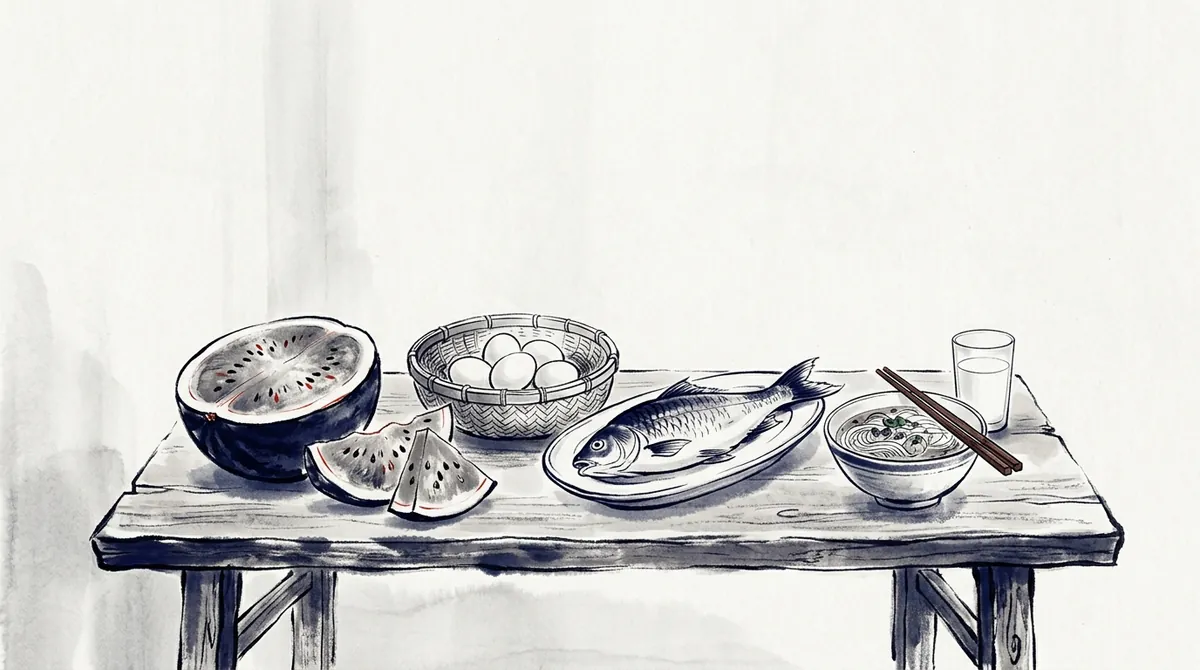
| Word | Pinyin | Meaning | Example sentence |
|---|---|---|---|
| 羊肉 | yángròu | lamb, mutton | 你想吃几串烤羊肉?nǐ xiǎng chī jǐ chuàn kǎo yángròu?How many lamb skewers would you like? |
| 鸡蛋(雞蛋) | jīdàn | egg | 我今天早上吃了一个鸡蛋。wǒ jīntiān zǎoshang chī le yí ge jīdàn.I ate an egg this morning. |
| 鱼(魚) | yú | fish | 请把这块鱼放在盘子里。qǐng bǎ zhè kuài yú fàng zài pánzi li.Please put this piece of fish on a plate. |
| 面条(麵條) | miàntiáo | noodles | 他在面条里放了些醋。tā zài miàntiáo li fàng le xiē cù.He put some vinegar in the noodles. |
| 西瓜 | xīguā | watermelon | 我喜欢吃西瓜。wǒ xǐhuan chī xīguā.I like watermelon. |
| 牛奶 | niúnǎi | milk | 我昨天买了一瓶牛奶。wǒ zuótiān mǎi le yì píng niúnǎi.I bought a bottle of milk yesterday. |
| 咖啡 | kāfēi | coffee | 给我再来一壶咖啡。gěi wǒ zài lái yì hú kāfēi.Bring me another pot of coffee. |
| 好吃 | hǎochī | tasty, delicious | 我今天做了一道很好吃的菜。wǒ jīntiān zuò le yí dào hěn hǎochī de cài.I made a delicious dish today. |
Things, the Body and Colours
| Word | Pinyin | Meaning | Example sentence |
|---|---|---|---|
| 手机(手機) | shǒujī | mobile phone | 我手机快没电了。wǒ shǒujī kuài méi diàn le.My phone is running out of battery. |
| 手表(手錶) | shǒubiǎo | watch | 我买了一只新的手表。wǒ mǎi le yì zhī xīn de shǒubiǎo.I bought a new watch. |
| 报纸(報紙) | bàozhǐ | newspaper | 他打开报纸开始阅读。tā dǎkāi bàozhǐ kāishǐ yuèdú.He opened the newspaper and began to read. |
| 铅笔(鉛筆) | qiānbǐ | pencil | 我用铅笔写了一封信。wǒ yòng qiānbǐ xiě le yì fēng xìn.I wrote a letter in pencil. |
| 药(藥) | yào | medicine | 这些药对你有好处。zhèxiē yào duì nǐ yǒu hǎochu.This medicine will do you good. |
| 身体(身體) | shēntǐ | body; health | 他的身体非常健康。tā de shēntǐ fēicháng jiànkāng.He is in very good health. |
| 眼睛 | yǎnjing | eye | 她睁开眼睛。tā zhēngkāi yǎnjing.She opened her eyes. |
| 颜色(顏色) | yánsè | colour | 窗帘的颜色和地毯相近。chuānglián de yánsè hé dìtǎn xiāngjìn.The curtains are a similar colour to the rug. |
| 白 | bái | white | 他的头发已经全白了。tā de tóufa yǐjīng quán bái le.His hair has already gone completely white. |
| 黑 | hēi | black; dark | 她总穿着黑衣服。tā zǒng chuān zhe hēi yīfu.She always dresses in black. |
| 红(紅) | hóng | red | 我记得她长着红头发。wǒ jìde tā zhǎng zhe hóng tóufa.I remember she had red hair. |
School, Work and Questions
| Word | Pinyin | Meaning | Example sentence |
|---|---|---|---|
| 课(課) | kè | lesson, class | 今天的课真无聊。jīntiān de kè zhēn wúliáo.Today's lesson is really boring. |
| 题(題) | tí | question (in an exam), problem | 我问儿子:“这是你在课堂上做的题吗?”wǒ wèn érzi: zhè shì nǐ zài kètáng shang zuò de tí ma?I asked my son, ‘Is this a problem you did in class?’ |
| 考试(考試) | kǎoshì | exam; to take an exam | 明天的考试让我紧张。míngtiān de kǎoshì ràng wǒ jǐnzhāng.I'm nervous about tomorrow's exam. |
| 问题(問題) | wèntí | question, problem | 我想问一个问题。wǒ xiǎng wèn yí ge wèntí.I would like to ask a question. |
| 意思 | yìsi | meaning | 你到底是什么意思?nǐ dàodǐ shì shénme yìsi?What on earth do you mean? |
| 事情 | shìqing | thing, matter | 我有好多事情要做。wǒ yǒu hǎo duō shìqing yào zuò.I have a lot of things to do. |
| 上班 | shàngbān | to go to work, to be at work | 我在上班。wǒ zài shàngbān.I'm at work. |
Sport and Free Time
唱歌 (chànggē), 跳舞 (tiàowǔ) and 游泳 (yóuyǒng) are each a verb plus its object, so other words can go between the two halves: 唱了一首歌 (chàng le yì shǒu gē) is "sang a song".
| Word | Pinyin | Meaning | Example sentence |
|---|---|---|---|
| 运动(運動) | yùndòng | sport, exercise; to exercise | 你运动了两个小时了,休息吧。nǐ yùndòng le liǎng ge xiǎoshí le, xiūxi ba.You've been exercising for two hours. Take a break. |
| 跑步 | pǎobù | to run, to jog | 我有时候会去跑步。wǒ yǒushíhou huì qù pǎobù.I sometimes go for a run. |
| 游泳 | yóuyǒng | to swim; swimming | 每星期我去游泳两次。měi xīngqī wǒ qù yóuyǒng liǎng cì.I go swimming twice a week. |
| 打篮球(打籃球) | dǎ lánqiú | to play basketball | 他喜欢打篮球。tā xǐhuan dǎ lánqiú.He likes playing basketball. |
| 跳舞 | tiàowǔ | to dance | 我从小就喜欢跳舞。wǒ cóng xiǎo jiù xǐhuan tiàowǔ.I've loved dancing since I was a child. |
| 唱歌 | chànggē | to sing | 她唱歌非常好听。tā chànggē fēicháng hǎotīng.She sings very well. |
| 旅游(旅遊) | lǚyóu | to travel; tourism | 我很喜欢去台湾旅游。wǒ hěn xǐhuan qù táiwān lǚyóu.I love travelling to Taiwan. |
| 玩 | wán | to play, to have fun | 看起来她玩得很开心。kàn qǐlai tā wán de hěn kāixīn.Looks like she's having a good time. |
Verbs: Daily Life
完 (wán) often follows another verb to say the action is finished: 吃完 (chī wán) is "to finish eating", and 用完 (yòng wán) is "to use up".
| Word | Pinyin | Meaning | Example sentence |
|---|---|---|---|
| 起床 | qǐchuáng | to get up | 我通常大概7点起床。wǒ tōngcháng dàgài qī diǎn qǐchuáng.I usually get up at about seven. |
| 穿 | chuān | to wear, to put on | 我喜欢穿黄色的衣服。wǒ xǐhuan chuān huángsè de yīfu.I like to wear yellow. |
| 洗 | xǐ | to wash | 我正在洗车。wǒ zhèngzài xǐ chē.I'm washing my car. |
| 休息 | xiūxi | to rest, to take a break | 我休息了一下。wǒ xiūxi le yíxià.I took a break. |
| 生病 | shēngbìng | to be ill, to fall ill | 我最近生病了。wǒ zuìjìn shēngbìng le.I've been ill recently. |
| 笑 | xiào | to laugh, to smile | 他笑着告诉我这个消息。tā xiào zhe gàosu wǒ zhège xiāoxi.He told me the news with a laugh. |
| 等 | děng | to wait (for) | 我在这边等你。wǒ zài zhèbian děng nǐ.I'll be waiting for you here. |
| 找 | zhǎo | to look for; to find | 我要找我的手机。wǒ yào zhǎo wǒ de shǒujī.I'm looking for my phone. |
| 准备(準備) | zhǔnbèi | to prepare, to get ready | 他们正在准备考试。tāmen zhèngzài zhǔnbèi kǎoshì.They are preparing for the exam. |
| 开始(開始) | kāishǐ | to begin, to start | 他是去年六月开始在这里工作的。tā shì qùnián liùyuè kāishǐ zài zhèli gōngzuò de.He started work here last June. |
| 完 | wán | to finish; (after a verb) used up, done | 他的红墨水用完了。tā de hóng mòshuǐ yòng wán le.He has run out of red ink. |
Verbs: Coming, Going and Giving
给 (gěi) is a verb, "to give", and also means "for" or "to" before a person: 给你打电话 (gěi nǐ dǎ diànhuà) is "to phone you".
| Word | Pinyin | Meaning | Example sentence |
|---|---|---|---|
| 走 | zǒu | to walk; to leave | 我每天都要走很多路。wǒ měi tiān dōu yào zǒu hěn duō lù.I have to walk a lot every day. |
| 进(進) | jìn | to enter, to go in | 他打开门,进房间去了。tā dǎkāi mén, jìn fángjiān qù le.He opened the door and entered the room. |
| 出 | chū | to go out, to come out | 他今天早上出去上班了。tā jīntiān zǎoshang chūqu shàngbān le.He went out to work this morning. |
| 到 | dào | to arrive; to (a place) | 医生一会儿就到。yīshēng yíhuìr jiù dào.The doctor will be here shortly. |
| 送 | sòng | to give (as a present); to take, see off | 我要送朋友去机场。wǒ yào sòng péngyou qù jīchǎng.I'm going to drop off a friend at the airport. |
| 给(給) | gěi | to give; for, to | 妈妈准备了好吃的东西给我。māma zhǔnbèi le hǎochī de dōngxi gěi wǒ.Mother has prepared something delicious for me. |
| 卖(賣) | mài | to sell | 现在卖报纸利润很少。xiànzài mài bàozhǐ lìrùn hěn shǎo.There is very little profit in selling newspapers at present. |
Verbs: Talking, Knowing and Helping
觉得 (juéde) is for opinions and feelings, and 知道 (zhīdào) is for knowing facts. To say you know a person, use 认识 (rènshi) from HSK 1.
| Word | Pinyin | Meaning | Example sentence |
|---|---|---|---|
| 说话(說話) | shuōhuà | to talk, to speak | 你以为你在跟谁说话?nǐ yǐwéi nǐ zài gēn shéi shuōhuà?Who do you think you're talking to? |
| 问(問) | wèn | to ask | 我想问你明天要去哪里。wǒ xiǎng wèn nǐ míngtiān yào qù nǎli.I want to ask where you're going tomorrow. |
| 告诉(告訴) | gàosu | to tell | 我之后再告诉你。wǒ zhīhòu zài gàosu nǐ.I'll tell you later. |
| 介绍(介紹) | jièshào | to introduce | 她把我介绍给她的朋友。tā bǎ wǒ jièshào gěi tā de péngyou.She introduced me to her friend. |
| 帮助(幫助) | bāngzhù | to help; help | 我无法帮助你。wǒ wúfǎ bāngzhù nǐ.I can't help you. |
| 觉得(覺得) | juéde | to feel; to think | 我觉得很困。wǒ juéde hěn kùn.I feel very sleepy. |
| 知道 | zhīdào | to know | 我怎么知道?wǒ zěnme zhīdào?How should I know? |
| 懂 | dǒng | to understand | 我懂一点儿德语。wǒ dǒng yìdiǎnr déyǔ.I understand a little German. |
Verbs: Want, Hope, Can, Might and Let
要 (yào) is "want to" or "going to", 希望 (xīwàng) is "to hope", 可以 (kěyǐ) asks for or gives permission, and 可能 (kěnéng) says something might happen. 让 (ràng) is "let" or "make", as in 让我想一想 (let me think).
| Word | Pinyin | Meaning | Example sentence |
|---|---|---|---|
| 要 | yào | to want; will, going to; must | 你要去北京多长时间?nǐ yào qù běijīng duō cháng shíjiān?How long are you going to Beijing for? |
| 可以 | kěyǐ | can, may (permission) | 如果我明天不去可以吗?rúguǒ wǒ míngtiān bú qù kěyǐ ma?Is it okay if I don't go tomorrow? |
| 可能 | kěnéng | might, possibly; possible | 我曾认为这可能是真的。wǒ céng rènwéi zhè kěnéng shì zhēn de.I thought it might be true. |
| 希望 | xīwàng | to hope; hope | 我希望你身体健康、平安。wǒ xīwàng nǐ shēntǐ jiànkāng, píng'ān.I hope you are healthy and safe. |
| 让(讓) | ràng | to let; to make (someone feel) | 让我想一想。ràng wǒ xiǎng yi xiǎng.Let me think. |
Adjectives
快 (kuài) also means "soon": 快…了 says something is about to happen, as in the example for 手机 above, 我手机快没电了 (my phone is about to die).
| Word | Pinyin | Meaning | Example sentence |
|---|---|---|---|
| 新 | xīn | new | 我喜欢学习新单词。wǒ xǐhuan xuéxí xīn dāncí.I love learning new words. |
| 贵(貴) | guì | expensive | 这个包包真贵!zhège bāobāo zhēn guì!This bag is so expensive! |
| 便宜 | piányi | cheap | 什么便宜,我就买什么。shénme piányi, wǒ jiù mǎi shénme.I'll buy whatever is cheap. |
| 累 | lèi | tired | 你累了吗?是的,我有点儿累。nǐ lèi le ma? shì de, wǒ yǒudiǎnr lèi.Are you tired? Yes, I am a bit tired. |
| 忙 | máng | busy | 我很忙,下次再见面吧。wǒ hěn máng, xià cì zài jiànmiàn ba.I'm busy. Let's meet another time. |
| 快乐(快樂) | kuàilè | happy | 祝大家新年快乐!zhù dàjiā xīnnián kuàilè!A Happy New Year to one and all! |
| 快 | kuài | fast; soon | 他能跑得和我一样快。tā néng pǎo de hé wǒ yíyàng kuài.He can run as fast as I can. |
| 慢 | màn | slow | 我感到时间过得很慢。wǒ gǎndào shíjiān guò de hěn màn.I feel like time is passing slowly. |
| 高 | gāo | tall, high | 他越来越高了。tā yuè lái yuè gāo le.He's getting taller and taller. |
| 长(長) | cháng | long | 长颈鹿的脖子很长。chángjǐnglù de bózi hěn cháng.Giraffes have long necks. |
| 对(對) | duì | right, correct; to, towards | 大部分都是对的。dàbùfen dōu shì duì de.Most of them were correct. |
| 错(錯) | cuò | wrong; mistake, fault | 不是我的错。bú shì wǒ de cuò.It's not my fault. |
Adverbs: Very, Also, Still, Again
Most of these go before the verb or adjective (每, "every", goes before a measure word or noun). English can put "too" or "again" at the end of a sentence, but Chinese can't: 我也喜欢 (wǒ yě xǐhuan) is "I like it too". 别 (bié) before a verb means "don't".
| Word | Pinyin | Meaning | Example sentence |
|---|---|---|---|
| 非常 | fēicháng | very, extremely | 我今天的心情非常好。wǒ jīntiān de xīnqíng fēicháng hǎo.I'm in a very good mood today. |
| 最 | zuì | most | 秋季是我最喜欢的季节。qiūjì shì wǒ zuì xǐhuan de jìjié.Autumn is my favourite season. |
| 真 | zhēn | really, truly | 他真帅。tā zhēn shuài.He's so handsome. |
| 也 | yě | also, too | 我爱看电影,同时我也喜欢读书。wǒ ài kàn diànyǐng, tóngshí wǒ yě xǐhuan dúshū.I love watching films, and I like reading too. |
| 还(還) | hái | still; also | 他一直在生病,还不能工作。tā yìzhí zài shēngbìng, hái bù néng gōngzuò.He's been ill and isn't fit for work yet. |
| 就 | jiù | then; just; right away | 我到了就给你打电话。wǒ dào le jiù gěi nǐ dǎ diànhuà.I'll call you when I get there. |
| 再 | zài | again; then (later) | 我会再试一次。wǒ huì zài shì yí cì.I will try again. |
| 已经(已經) | yǐjīng | already | 现在她已经在英国住了一年了。xiànzài tā yǐjīng zài yīngguó zhù le yì nián le.She has now lived in the UK for a year. |
| 一起 | yīqǐ | together | 我和朋友一起去餐馆吃晚饭。wǒ hé péngyou yìqǐ qù cānguǎn chī wǎnfàn.I'm going to a restaurant for dinner with my friends. |
| 别(別) | bié | don't (in commands) | 请别打扰我。qǐng bié dǎrǎo wǒ.Please don't disturb me. |
| 每 | měi | every, each | 每个学生发了一本课本。měi ge xuésheng fā le yì běn kèběn.Each student was issued with a textbook. |
Because, So, Although, But and Why
These often come in pairs: 因为…所以… (because… so…) and 虽然…但是… (although… but…). English uses one word from each pair, but Chinese often uses both.
| Word | Pinyin | Meaning | Example sentence |
|---|---|---|---|
| 因为(因為) | yīnwèi | because | 我不喜欢它,因为它很吵。wǒ bù xǐhuan tā, yīnwèi tā hěn chǎo.I don't like it because it's noisy. |
| 所以 | suǒyǐ | so, therefore | 我今天生病了,所以不能去上学。wǒ jīntiān shēngbìng le, suǒyǐ bù néng qù shàngxué.I'm ill today, so I can't go to school. |
| 虽然(雖然) | suīrán | although | 我虽然很喜欢她,却不打算娶她。wǒ suīrán hěn xǐhuan tā, què bù dǎsuan qǔ tā.Although I like her a lot, I'm not going to marry her. |
| 但是 | dànshì | but, however | 我想去旅行,但是现在没时间。wǒ xiǎng qù lǚxíng, dànshì xiànzài méi shíjiān.I want to travel, but I don't have time right now. |
| 为什么(為什麼) | wèishénme | why | 你为什么想学中文?nǐ wèishénme xiǎng xué zhōngwén?Why do you want to learn Chinese? |
Grammar Words: 着, 过, 得, 吧, 正在 and 比
These six do grammatical jobs, so the example sentence tells you more than the meaning column:
- 着 (zhe) after a verb shows an ongoing action or state: 她打着雨伞 (tā dǎ zhe yǔsǎn) is "she's holding an umbrella".
- 过 (guo) after a verb says you've done something at some time: 我去过北京 (wǒ qù guo běijīng) is "I've been to Beijing".
- 得 (de) goes between a verb and a description of how it's done: 说得很好 (shuō de hěn hǎo) is "speaks well".
- 吧 (ba) at the end of a sentence makes it a suggestion or a guess: 走吧 (zǒu ba) is "let's go".
- 正在 (zhèngzài) before a verb says it's happening right now.
- 比 (bǐ) makes comparisons: 他比我高 (tā bǐ wǒ gāo) is "he's taller than me". Don't put 很 before the adjective in a 比 sentence.
| Word | Pinyin | Meaning | Example sentence |
|---|---|---|---|
| 着(著) | zhe | marks an ongoing action or state | 她打着雨伞。tā dǎ zhe yǔsǎn.She's holding an umbrella. |
| 过(過) | guo | (after a verb) have done before | 我之前从来没有去过中国。wǒ zhīqián cónglái méiyǒu qù guo zhōngguó.I've never been to China before. |
| 得 | de | links a verb to a description of how it's done | 今天的雨下得很大。jīntiān de yǔ xià de hěn dà.It's raining heavily today. |
| 吧 | ba | suggests ("let's…") or checks ("…right?") | 我们去吃冰淇淋吧。wǒmen qù chī bīngqílín ba.Let's go for an ice cream. |
| 正在 | zhèngzài | in the middle of (doing) | 我正在等公交车。wǒ zhèngzài děng gōngjiāochē.I'm waiting for the bus. |
| 比 | bǐ | than (in comparisons) | 他比她高5公分。tā bǐ tā gāo wǔ gōngfēn.He is 5 centimetres taller than her. |
How to Learn the 150 HSK 2 Words
A table like this is for checking and looking things up. To make the words stick, practise them this way:
- Learn each word in a sentence, not on its own. Words like 着, 过 and 得 have almost no translation, so a sentence is the only place you can see what they do. Learning from sentences with one new word in each is the idea behind sentence mining.
- Use spaced repetition. Review each word just before you'd forget it, with gaps that grow from a day to a week to a month. Reviews of words you half know take seconds, and they keep HSK 1 fresh while you add HSK 2.
- Recall, don't just reread. Cover the Chinese and try to produce it from the English, or fill in a missing word. It feels harder than reading the list again, and that's why it works.
At 5 to 10 new words a day, the 150 words take two to five weeks, plus a few minutes of reviews each day. If you're not sure what pace suits you, see how many characters to learn per day. Our Chinese study plan covers HSK 2 in its second stage, which runs from month two to month six and goes on to HSK 3.
Mandarin Mosaic's HSK 2 lessons take you through these words in sentences, with one new word per sentence where possible. You fill in the missing word, tap any word for its meaning and audio, and spaced repetition brings each word back in Review Lessons when it's due. The app is on iPhone and Android. At the time of writing, Premium's first month is free, and there's a limited free plan. Get it on iOS or Android.
Not sure whether you're already past HSK 2? The free Chinese level test estimates your HSK level in about five minutes, so you know which list to start from.
Frequently Asked Questions
How Many Words Are in HSK 2?
300 on the HSK 2.0 exam: the 150 HSK 1 words plus the 150 new words on this page. The 2021 standard puts 1,272 words at level 2, and the exam syllabus published in November 2025 puts 500 words at level 2. Both of those totals include level 1.
How Long Does It Take to Learn HSK 2?
If you already know the HSK 1 words, about two to five weeks for the 150 new ones, at 5 to 10 a day with daily reviews. Starting from zero, add the time for HSK 1 and for learning pinyin and tones first. Being ready for the exam takes a little longer, because you also need to follow the words at normal speaking speed.
Can I Skip HSK 1 and Go Straight to HSK 2?
You can sit the HSK 2 exam without having taken HSK 1, but you can't skip the words. HSK 2 assumes all 150 HSK 1 words, and almost every sentence on this page uses some of them. If you think you know most of them already, a quick run through the HSK 1 list will show up any gaps.
What Can You Say at HSK 2?
Quite a lot more than at HSK 1. You can talk about your family, your day and what you did yesterday, the weather, sport and hobbies, prices (贵 and 便宜) and getting around (机场, 火车站, 离…远). You can say you've done something before with 过, and compare two things with 比. Conversations are still simple, and native speakers will need to slow down for you.
Want to learn these 150 words in sentences, with audio and spaced repetition built in? Mandarin Mosaic has HSK 2 lessons made of short sentences with one new word at a time. It's on iPhone and Android, and at the time of writing Premium's first month is free, and there's a limited free plan. Get it on iOS or Android.