 Mandarin Mosaic
Free on iPhone, iPad and Android.
Download on theApp Store Get it onGoogle PlayYour first month of Premium is free.
How to Learn Grammar Naturally for Chinese Fluency

The most reliable way to make Chinese grammar automatic isn't memorising more rules. It's meeting each pattern again and again in sentences you understand, until it starts to feel right, and using a rule book only when you're stuck. This post explains why that works, how to do it with sentence mining and spaced repetition, and how to turn what you've absorbed into speech.
Why Traditional Grammar Drills Fail for Chinese
Most of us start Mandarin the same way: a textbook, a grammar chart, and a list of rules for tricky structures like the 把 (bǎ) construction or the many uses of 了 (le). It feels like the "right" way, because it's how we were taught at school.
The trouble is what happens in conversation. You may know the rule for 把 perfectly, yet when someone is waiting for your answer, there's no time to work it out.
The Gap Between Knowing and Using
Drills on their own leave a gap between knowing a rule and being able to use it. You can score well on a grammar test and still stumble over a simple sentence when you're talking to someone.
That's because rule-first study teaches you to build sentences consciously, piece by piece, like solving an equation. That's slow, and real conversation doesn't wait. Fluent speakers don't consult rules; they recognise what sounds right because they've heard it thousands of times.
Reframing Chinese Grammar
The alternative is to treat grammar less as a list of rules to study and more as a set of patterns to absorb. Chinese is well suited to this. There are no verb conjugations, no plural endings and no grammatical gender; much of the grammar is word order and a handful of particles, and those show up in every sentence you read.
- You don't need to be a linguist: you can use a pattern correctly long before you can explain it.
- Context comes first: a pattern you've met in a sentence you understand is easier to remember than a formula from a chart.
- Aim for "sounds right": the goal is for correct sentences to feel natural, not to analyse each one before you say it.
This doesn't mean explanations are useless. It means they work best as support for lots of input, not as a replacement for it.
Acquiring Grammar with Comprehensible Input
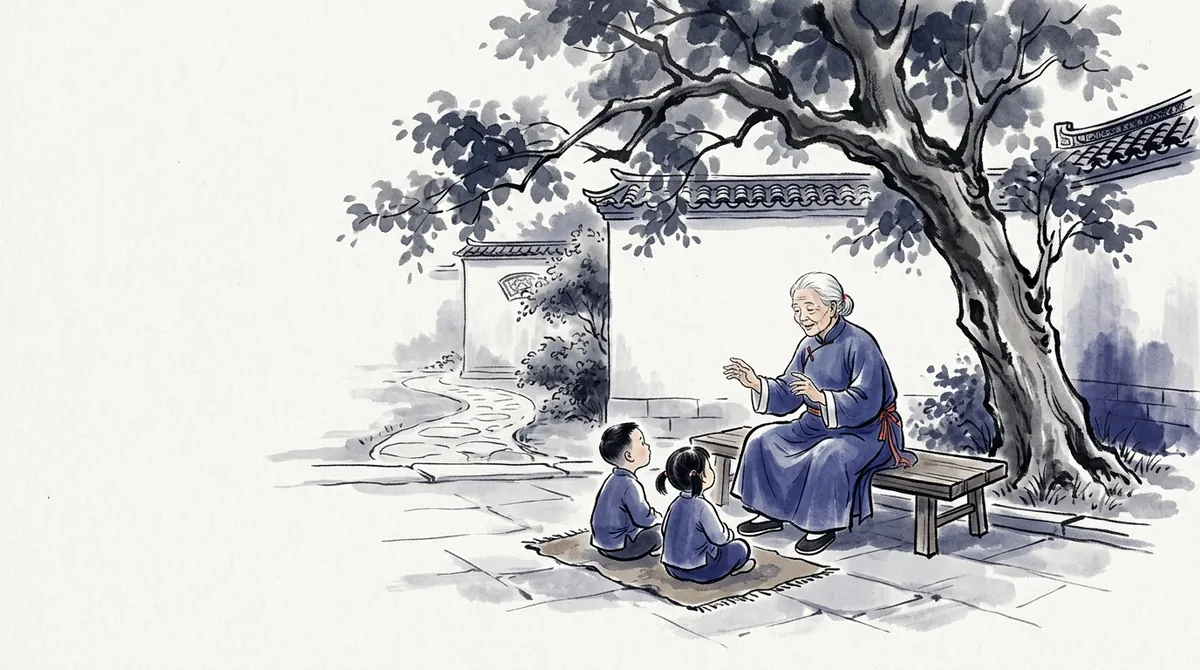
The idea behind learning grammar naturally is comprehensible input: you acquire a language by understanding messages in it. The linguist Stephen Krashen made this central to his input hypothesis, and it's the reason reading and listening at the right level do so much for your grammar.
Your brain is good at spotting patterns. Give it plenty of Chinese that you mostly understand, and it starts to work out the regularities: where time words go, what 了 does, how questions are formed. Our guide to how comprehensible input works for Chinese covers this in more depth.
The 'i+1' Sweet Spot
Krashen described the ideal input as "i+1": your current level (i) plus a little more. Sentence miners use the term for a sentence where you know everything except one new word or pattern. With the rest of the sentence understood, the context does most of the explaining.
Take these three sentences:
- 今天比昨天冷。 (jīntiān bǐ zuótiān lěng.) Today is colder than yesterday.
- 他比我高。 (tā bǐ wǒ gāo.) He's taller than me.
- 这个比那个便宜。 (zhège bǐ nàge piányi.) This one is cheaper than that one.
If you know the other words, you can work out the comparison pattern, A 比 (bǐ) B + adjective, without anyone telling you. Meet it a few dozen more times and you'll also notice what doesn't appear: nobody says 他比我很高. You've learned the rule, and its exception, from examples.
What the Research Says
It's worth being honest here: the research doesn't say grammar teaching is useless. A large 2000 meta-analysis by Norris and Ortega found that explicit instruction does help second-language learners, and that the gains last. Richard Schmidt's noticing hypothesis (1990) argues that you learn the features of the input you actually pay attention to.
Put together, that suggests a practical middle way: lots of comprehensible input as the backbone, attention to the patterns in it, and a short explanation when a pattern doesn't make sense on its own. That's what this post recommends.
Mandarin Mosaic is built around the input side of this:
- Sentences at your level: the app tracks which words you know and picks sentences with one new word where possible, so you stay in the i+1 zone.
- Tap for meaning: if the context isn't quite enough, tap any word for its pinyin, meaning and audio without leaving the sentence.
Building Your Chinese Sentence Mining Workflow
The most practical way to turn input into lasting knowledge is sentence mining: collecting Chinese sentences that contain a new word or pattern, then reviewing them until they feel familiar. Because you learn each word inside a real sentence, you pick up the grammar around it at the same time.
First, You Need Good Sentences
Your sentences should be comprehensible, correct and interesting to you. Opening a Liu Cixin novel as a beginner is a quick route to burnout.
Good places to find them:
- Graded readers: written for learners at specific levels, so most of each page is within reach.
- TV shows or podcasts with transcripts or subtitles: content you enjoy keeps you going, and transcripts let you copy out exact sentences. Our guide to learning Chinese from TV shows suggests shows by level.
- Ready-made sentence packs: an app like Mandarin Mosaic has HSK-levelled packs of sentences, each checked by a native speaker, so you don't have to hunt for material.
The best sentence to mine is one you mostly understand, with one new word or pattern in it. Too many unknowns and you end up translating instead of learning.
Picking Out Powerful Examples
As you read or listen, look out for sentences that show a pattern clearly. Beginners might collect examples of basic word order, such as time words before the verb. Intermediate learners can hunt for 把, 被 (bèi) or the 是…的 (shì…de) structure.
Here's how the two approaches compare.
Traditional vs. Natural Grammar Learning for Chinese
| Aspect | Traditional Method (Rule-Based) | Natural Method (Input-Based) |
|---|---|---|
| Focus | Memorising rules and exceptions. | Understanding grammar through real examples. |
| Material | Textbook explanations and drills. | Sentences from books, shows or ready-made packs. |
Example (把 structure) | Rule: Subject + 把 + Object + Verb + other element. | Mined sentence: 他把书放在桌子上。(tā bǎ shū fàng zài zhuōzi shàng.) He put the book on the table. |
| Outcome | You can explain the rule but may struggle to use it at speed. | You build a feel for when the structure sounds right. |
| Engagement | Often tedious. | Built from material you chose because it interests you. |
Remembering "他把书放在桌子上" gives you the structure, the vocabulary and a picture to go with it, all at once. Once you have a few sentences like it, the formula in the left-hand column is just a summary of what you already know. For a broader overview of how Chinese sentences fit together, see our post on building sentences in Chinese.
If you're setting up your own system, our guide to sentence mining goes through the process step by step.
The cycle itself is simple: you take in language you understand, and your brain gradually sorts out the patterns.
The more comprehensible input you get, the more examples your brain has to work with.
Making It Stick with Spaced Repetition
A great sentence you see once will fade. To keep it, review it with a spaced repetition system (SRS), which shows you material again at gradually longer intervals, just as you're starting to forget it. Our article on the forgetting curve explains why the timing matters.
In a flashcard app such as Anki, you'd put the Chinese sentence on the front, with the translation, pinyin and any notes on the back, and let the app schedule the reviews.
Mandarin Mosaic works a little differently. It tracks your words rather than cards. Each lesson blanks out the new word in a sentence for you to fill in (a cloze question), and words you've learned come back later in the Words to review lesson, in fresh sentences rather than the same card each time. That means you see each word, and the grammar around it, in several different contexts. You can also add sentences you've mined yourself as a custom pack. Every sentence is read aloud with lifelike text-to-speech.
Your Daily Routine to Internalise Chinese Grammar
Natural grammar learning depends on volume, and volume depends on consistency. You don't need hours a day; a short routine you actually keep is worth more.
A simple version: 20 minutes of new sentences, then 10 minutes on your reviews. Add whatever reading or listening you enjoy on top.
Creating a Sustainable Habit
The easiest way to make a habit stick is to attach it to one you already have. Your morning cup of tea becomes Chinese time; the train to work becomes review time. Once it's tied to something you do anyway, you no longer have to find the motivation each day.
Active noticing means paying light attention to how patterns work in the sentences you read and hear. You're not analysing or memorising rules, just observing.
Noticing is where the research on attention comes in. You might notice that time words like 今天 (jīntiān, today) and 明天 (míngtiān, tomorrow) come before the verb, never at the end of the sentence as in English, or that 了 keeps appearing after verbs when something has been completed. You don't need to stop and study it; just notice, and let the next dozen examples confirm it.
Fusing Sight and Sound
Always listen to the audio of the sentences you're studying, and ideally repeat them aloud. Hearing the rhythm of a sentence like 我是昨天来的 (wǒ shì zuótiān lái de, I came yesterday) helps the pattern stick as a sound, not just a shape on the page, and makes it easier to say yourself later.
For more ideas on fitting Chinese into your day, see our article on daily habits to boost your Chinese. A little every day beats long, infrequent sessions.
Turning Passive Knowledge into Active Speaking
Understanding a pattern when you read it is a big step, but the goal is to use it when you speak. Input builds the foundation; output turns recognition into something you can produce on demand.
Start small. Once a pattern feels familiar from your input, use low-pressure exercises to activate it, rather than trying to build sentences from scratch with a rule book.
Simple Production Exercises
A good first step is sentence manipulation: take a sentence you know well and change one part of it.
- Swap the subject: 我今天很忙 (wǒ jīntiān hěn máng, I'm very busy today) becomes 他今天很忙 (tā jīntiān hěn máng, he's very busy today).
- Change the object: in 我想喝茶 (wǒ xiǎng hē chá, I'd like some tea), swap 茶 (chá, tea) for 咖啡 (kāfēi, coffee): 我想喝咖啡 (wǒ xiǎng hē kāfēi, I'd like some coffee).
- Alter the time: in the first example, swap 今天 (jīntiān, today) for 明天 (míngtiān, tomorrow): 我明天很忙 (wǒ míngtiān hěn máng, I'm busy tomorrow).
It looks almost too basic, but it works. You're using a correct pattern as scaffolding, so every sentence you make is right, and saying it aloud reinforces the pattern further.
The goal isn't creativity; it's getting comfortable using structures you've absorbed. Think of it as riding without stabilisers, but on a quiet, familiar street.
From Manipulation to Creation
Once you're comfortable changing existing sentences, start making your own about your own life, still using familiar sentences as templates.
Say you've got used to the 是…的 (shì…de) structure, which highlights a detail (when, where, how) of something that has already happened. Using a mined sentence as your model, you might say 我是昨天坐火车来的 (wǒ shì zuótiān zuò huǒchē lái de, I came by train yesterday), stressing when and how you came.
Sentences about your own life are more meaningful, so they're easier to remember. That completes the cycle: input leads to understanding, and low-stakes output makes it yours.
Common Questions About Learning Grammar Naturally
Should I Throw Away My Chinese Grammar Textbook Completely?
No. Use it as a reference rather than a course. Let real sentences lead your learning, and when you meet a pattern that context doesn't explain, look it up. The free Chinese Grammar Wiki from AllSet Learning is excellent for this, with grammar points sorted by level and lots of example sentences.
The difference is the direction. Let the sentence lead you to a short explanation, not the other way round.
What if I Don't Understand a Grammar Point After Seeing It Many Times?
That's normal. Some patterns, like the different uses of 了, take many examples in many contexts before they click.
First, check your sentences really are comprehensible. If a sentence has several unknown words, you can't give the grammar your attention. Then look the point up in a grammar reference, read a short explanation, and go back to your sentences: they'll often make sense straight away. Finally, keep reviewing. A pattern that confuses you today may be obvious after another few weeks of examples.
How Long Does It Take to Learn Grammar Naturally This Way?
There's no finish line, and it depends on how much input you get. Simple patterns can start to feel natural within weeks of daily practice. Producing complex sentences correctly and without thinking takes months to years. The advantage of this approach is that it's sustainable: you're reading and listening to things you understand, which is easier to keep up than drills.
Is This Method Suitable for Absolute Beginners in Mandarin?
Yes. Simple sentences from day one teach you basic patterns, like subject-verb-object word order and question words staying where the answer goes, in their natural context. Beginners benefit from a short explanation of the very basics too, so a beginner course or a grammar reference alongside your sentences is no bad thing.
The i+1 idea matters most for beginners: one new thing at a time keeps each sentence manageable and stops the overload that makes many new learners give up.
Want to absorb Chinese grammar one sentence at a time? Mandarin Mosaic gives you HSK-levelled sentences with one new word where possible, cloze practice and built-in spaced repetition, on iOS and Android. Find out more and try it free.