How to Say Goodbye in Chinese: 再见, 拜拜 and More

Most learners meet 再见 (zàijiàn) in their first lesson, and it's correct almost anywhere. But in everyday life you'll hear plenty of other goodbyes: the casual 拜拜 (bāibāi), "see you" phrases like 回头见 and 明天见, and set phrases that hosts and guests say to each other, like 慢走. This guide covers the common ones, with pinyin, tones and example dialogues.
Why There's More Than One Way to Say Goodbye
In English you choose between "bye", "see you", "take care" and "good night" without thinking. Mandarin works the same way. When picking a goodbye, ask yourself:
- Who am I talking to? A friend, a teacher, a guest or a colleague?
- When will we meet again? Later today, tomorrow, or not for a long time?
- Am I the one leaving, or the one staying? Some phrases are only said by one side.
It helps to learn farewells grouped by situation rather than as a list of words. For greetings at the other end of a conversation, see our guides to saying hello and how are you and to saying good morning in Mandarin; for more everyday basics, see common phrases in Chinese.
再见 (zàijiàn): The Standard Goodbye
再见 is the goodbye in every textbook, and for good reason: it's polite, neutral and understood everywhere.
What the characters mean
- 再 (zài) means again
- 见 (jiàn) means see
Together they mean "see (you) again", so the phrase looks forward to the next meeting rather than sounding final. Many other farewells follow the same … 见 pattern, as you'll see below.
How to pronounce it
Both syllables are fourth tones, sharp and falling. When two fourth tones come together, the first one usually doesn't fall all the way: it drops from high to about the middle, and the second falls fully. So say zài with a shorter fall and jiàn with a clear, complete drop. The usual mistake is to say both syllables flat, like the English letters "z" and "jen".
When to use it
再见 is your safe default when you don't know someone well, in shops and offices, with teachers, and whenever you're unsure. Schoolchildren say 老师再见 (lǎoshī zàijiàn), "goodbye, teacher", at the end of class. Between friends it's perfectly fine too, though in casual conversation many people reach for 拜拜 instead.
Casual Goodbyes for Friends
拜拜 (bāibāi)
拜拜 comes from the English "bye-bye" and is extremely common in everyday Mandarin, with friends, family, colleagues, on the phone and in messages. It's usually written bāibāi in pinyin, though you'll also hear it said as báibái. Sometimes people shorten it to a single 拜!
In text messages you may see 88: 八八 (bā bā) sounds like "bye-bye".
拜拜 is casual rather than rude, but in a formal meeting or with someone much more senior, 再见 is the safer choice.
"See you" phrases
Put a time word in front of 见 (jiàn) and you get "see you then":
| Phrase | Pinyin | Meaning |
|---|---|---|
| 回头见 | huítóu jiàn | See you later (no fixed time) |
| 待会儿见 | dāihuìr jiàn | See you in a bit (later today) |
| 一会儿见 | yíhuìr jiàn | See you shortly |
| 明天见 | míngtiān jiàn | See you tomorrow |
| 下次见 | xià cì jiàn | See you next time |
| 周末见 | zhōumò jiàn | See you at the weekend |
待会儿见 and 一会儿见 only fit when you really will meet again soon, for example when you're heading off to a meeting and will see each other at lunch. 回头见 is vaguer, like "catch you later". Note that the 一 in 一会儿 is said yí, because it comes before a fourth tone.
Saying you're leaving
Often the goodbye is simply an announcement that you're off. These are extremely common, and usually get a 拜拜 or 好 in reply:
- 我先走了。(wǒ xiān zǒu le.) I'll head off (first).
- 我走了啊。(wǒ zǒu le a.) I'm off, then.
- 那我先挂了。(nà wǒ xiān guà le.) I'll hang up, then. The usual way to end a phone call.
At night, you can part with 晚安 (wǎn'ān), good night; see our guide to good night in Chinese for more.
A simple way to choose
- Relaxed, with friends: 拜拜
- Neutral and safe: 再见
- You'll meet again later today: 待会儿见 or 一会儿见
- You'll meet again at a known time: 明天见, 周末见
- Some time, no plan: 回头见
Formal and Situational Farewells
Some farewells depend on your role in the moment: whether you're the host or the guest, and whether someone is setting off on a journey.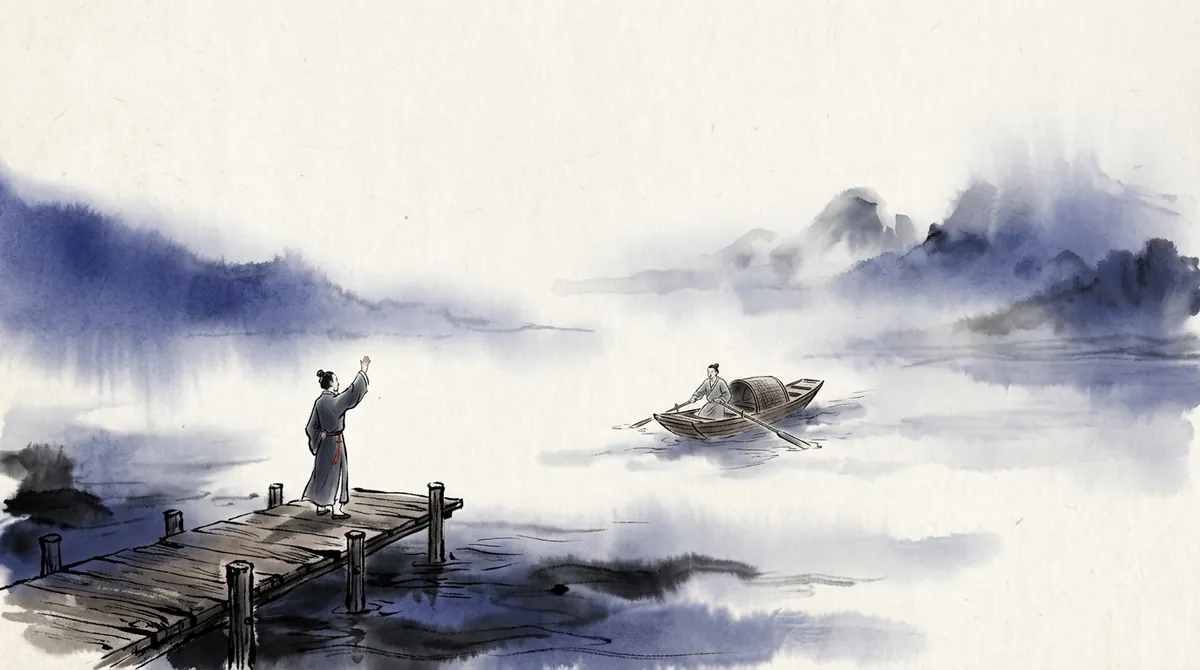
Leaving a formal gathering: 失陪了
失陪了 (shīpéi le) means roughly "excuse me for leaving you", literally "I fail to keep you company". It's a polite way to leave a dinner, banquet or business event early, or to step away from guests. Use it in formal settings; with close friends it would sound jokingly formal.
Hosts and guests
When a visitor leaves a home, office or shop, the host and guest each have their own lines:
- 慢走 (màn zǒu): literally "walk slowly", meaning "take care". Said by the host, or by shop and restaurant staff, to the person leaving. 走好 (zǒu hǎo) is similar.
- 有空再来 (yǒu kòng zài lái): "come again when you're free", from host to guest.
- 欢迎下次光临 (huānyíng xià cì guānglín): "we look forward to seeing you again", a set phrase in shops and restaurants.
- 请留步 (qǐng liúbù) or just 留步: "please don't see me out", said by the guest when the host walks them to the door.
Longer partings and journeys
- 保重 (bǎozhòng): take care (of yourself). For a longer separation, or when someone is unwell.
- 路上小心 (lùshang xiǎoxīn): take care on the way home. Common and caring, said to anyone heading off.
- 一路平安 (yílù píng'ān): have a safe journey.
- 一路顺风 (yílù shùnfēng): have a good trip, literally "a following wind all the way". Some people avoid saying it to someone about to fly and use 一路平安 instead.
- 后会有期 (hòuhuì yǒuqī): "we'll meet again some day". A literary phrase you'll hear in martial-arts dramas, or used half-jokingly.
Whether you're leaving or staying
English goodbyes mostly vary from casual to formal. Mandarin adds another question: are you the one leaving, or the one staying? 慢走 and 有空再来 belong to the person staying; 请留步 and 我先走了 belong to the person leaving. If a phrase seems oddly specific, it usually belongs to one side of a particular scene.
Putting It All Together with Example Dialogues
Here are a few short scenes you can borrow from.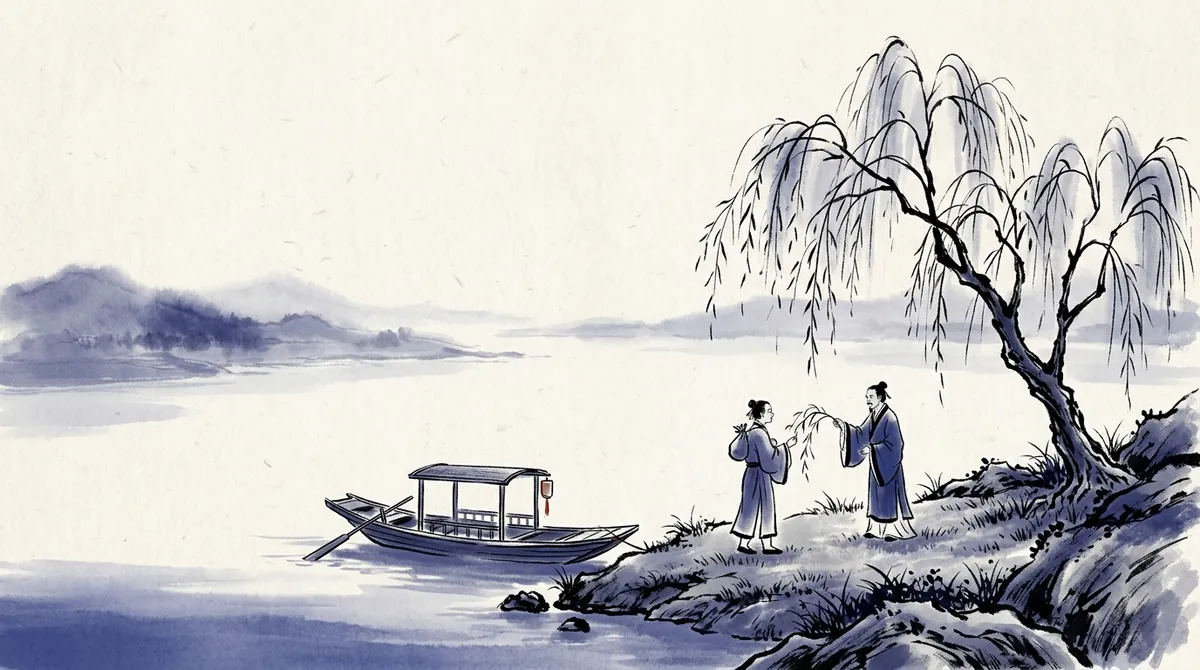
After class
A: 老师再见! lǎoshī zàijiàn! Goodbye, teacher!
B: 再见,明天见! zàijiàn, míngtiān jiàn! Goodbye, see you tomorrow!
Leaving friends at a café
A: 我先走了。 wǒ xiān zǒu le. I'm going to head off.
B: 好,拜拜!路上小心。 hǎo, bāibāi! lùshang xiǎoxīn. OK, bye! Get home safely.
Parting with a colleague until later
A: 我去开会了,下午再聊。 wǒ qù kāihuì le, xiàwǔ zài liáo. I'm off to a meeting, let's talk this afternoon.
B: 好,待会儿见。 hǎo, dāihuìr jiàn. OK, see you later.
Leaving someone's home
Guest: 时间不早了,我该走了。 shíjiān bù zǎo le, wǒ gāi zǒu le. It's getting late, I should go.
Host: 好,慢走!有空再来。 hǎo, màn zǒu! yǒu kòng zài lái. OK, take care! Come again when you're free.
Guest: 请留步,再见! qǐng liúbù, zàijiàn! Don't see me out. Goodbye!
Leaving a formal dinner early
A: 不好意思,我得先走了。失陪了。 bù hǎoyìsi, wǒ děi xiān zǒu le. shīpéi le. Sorry, I have to leave early. Please excuse me.
Read these aloud, then change one detail each time: café to office, friend to teacher, later today to next week. That's how farewell phrases become flexible instead of frozen.
Pronunciation Tips and Common Mistakes to Avoid
A farewell can be the right choice socially and still sound off if the tones are shaky. The usual mistakes are predictable.
Tones first, speed second
English speakers often rush short phrases and flatten the tones. Get the pitch shape right first:
- 再见 (zàijiàn): two falls, the first one shorter.
- 拜拜 (bāibāi): high and level, without the English rise-and-fall of "bye-bye".
- 慢走 (màn zǒu): a fall, then a low third tone.
- 回头见 (huítóu jiàn): two rising tones, then a fall.
Practise slightly exaggerated at first, then relax. If tones still feel slippery, our guide to tones in Chinese covers all four, with the tone-change rules.
Short, fixed phrases like these are exactly the kind worth drilling aloud until they come out without thinking. The Chunking Chinese fluency trainer, our sister app, gives you English prompts to answer in spoken Mandarin and scores the tone and pronunciation of each character, so you can check that your 再见 really falls twice.
Common usage mistakes
- Using 拜拜 in very formal settings: fine with friends and colleagues; with a senior client, use 再见.
- Using 慢走 in the wrong direction: it's said to the person leaving, by the person staying. The guest says 再见 or 请留步.
- Saying 一会儿见 when you won't meet again today: use 回头见 or 下次见 instead.
A quick self-check
| Situation | A likely choice |
|---|---|
| Neutral, or you're not sure | 再见 |
| Casual, with a friend | 拜拜 |
| You'll see them later today | 待会儿见 or 一会儿见 |
| You're seeing a guest off | 慢走 |
| You're leaving a formal gathering early | 失陪了 |
| Someone is setting off on a trip | 一路平安 |
Learning Goodbyes in Context
Farewells are easy to memorise as a list and hard to use in the moment, because a list doesn't tell you who says what to whom. Learning each phrase inside a sentence you can imagine yourself saying gives you the meaning, the tones and the situation at once. That's the idea behind sentence mining.
Try collecting one sentence for each phrase (one with 再见, one with 拜拜, one with 慢走), note who is speaking and to whom, and review them by scene. Spaced repetition then brings each sentence back just before you'd forget it.
Frequently Asked Questions
Is 再见 always correct?
Almost always. It can sound a little plain or formal among close friends, where 拜拜 is more usual, but it's never rude.
Is 拜拜 real Mandarin or just borrowed slang?
It's borrowed from English, but it's a completely normal part of everyday Mandarin, used by people of all ages.
What's the difference between 回头见 and 待会儿见?
待会儿见 means you'll see each other again later the same day. 回头见 is a looser "see you later" with no particular time in mind.
Is 慢走 the same as goodbye?
Not exactly. It's a caring send-off said by the host, or by staff, to someone who is leaving. You wouldn't say it when you're the one walking out.
How do I say goodbye on the phone or in a message?
On the phone, 好,拜拜 or 那我先挂了 are typical. In messages, 拜拜, 88 and, at night, 晚安 are all common.
Want to learn phrases like these the way they're really used? Mandarin Mosaic is a sentence-mining app for iOS and Android. It teaches vocabulary through real sentences with one new word at a time, with audio for every word and spaced repetition, so phrases like 再见, 拜拜 and 慢走 become part of your active Mandarin.