 Mandarin Mosaic
Free on iPhone, iPad and Android.
Download on theApp Store Get it onGoogle PlayYour first month of Premium is free.
10 Essential Phrases in Chinese, with Pinyin and Examples

Memorising isolated words is a slow route to confident conversation. You get much further by learning a handful of whole phrases, in whole sentences, and saying them out loud. This guide covers the 10 most useful phrases in Chinese for a beginner: what each one means, how to pronounce it (including the tone changes that trip learners up), when native speakers actually use it, and natural example sentences.
For each phrase you'll also get a tip for practising it through sentence mining: learning new words inside real sentences, rather than as single words on a flashcard.
1. 你好 (nǐ hǎo) - Hello
你好 (nǐ hǎo) is almost certainly the first Chinese phrase you will learn. Translating literally to “you good,” it serves as the universal greeting in Mandarin.
Strategic Breakdown
The true challenge of 你好 lies in its tones. Both 你 (nǐ) and 好 (hǎo) are third tones (a falling-then-rising pitch). However, when two third tones appear consecutively, a phonological rule called tone sandhi applies: the first third tone changes to a second tone (rising). Therefore, you pronounce it as ní hǎo, even though it is still written nǐ hǎo. This is a pronunciation rule you will encounter constantly in Mandarin (our guide to tones in Chinese covers it in more detail).
你好 means "hello", not "how are you?". It is also slightly formal: you'll hear it with strangers, in shops and on the phone, while friends tend to greet each other with just a name or a casual question. To ask how someone is, you add 吗 (ma) to make 你好吗 (nǐ hǎo ma), covered at number 9 below.
Actionable Takeaways & Examples
To move beyond the textbook, focus on using 你好 as a conversation starter within a complete sentence. This contextualises the greeting and helps you internalise natural speech patterns.
Example 1: 你好,今天天气很好。(nǐ hǎo, jīntiān tiānqì hěn hǎo.) - Hello, the weather is nice today.
- Tactic: Pair the greeting with a simple observation. This makes the interaction feel more natural and less like a scripted dialogue. It's a low-pressure way to extend a conversation.
Example 2: 你好吗?我很好。(nǐ hǎo ma? wǒ hěn hǎo.) - How are you? I'm doing well.
- Tactic: This call-and-response format is excellent for practising basic question-and-answer structures. Use this pattern to drill the ma (吗) particle for forming questions.
Key Insight: When you collect sentences for sentence mining, look for examples where 你好 opens a longer exchange, so you learn what naturally comes next. If you're preparing for a trip, our guide to learning Chinese for travel has more phrases to add.
2. 谢谢 (xièxie) - Thank you
As fundamental as saying hello, 谢谢 (xièxie) is how you say thank you. This expression of thanks is built by repeating the character 谢 (xiè), which means “to thank”. In everyday speech you say it doubled, not as a single 谢. You will use it constantly, from accepting a compliment to being handed your shopping.
Strategic Breakdown
The character 谢 is a fourth tone (a sharp, falling pitch), but the second 谢 in 谢谢 is pronounced with a light, neutral tone, which is why the pinyin is written xièxie. This strong-then-light rhythm is what makes it sound natural.
To say "thank you very much", the most common options are 太谢谢你了 (tài xièxie nǐ le, thank you so much) and 非常感谢 (fēicháng gǎnxiè, thank you very much), which is a little more formal. Understanding these variations helps you match your level of gratitude to the situation.
Actionable Takeaways & Examples
To master 谢谢, practise using it within full sentences that specify what you are thankful for. This moves beyond simple politeness into more meaningful and descriptive communication.
Example 1: 谢谢你的帮助。(xièxie nǐ de bāngzhù.) - Thank you for your help.
- Tactic: Use the "谢谢你 + 的 + [Noun]" structure to specify your gratitude. This is a highly adaptable pattern that allows you to thank someone for their time (时间, shíjiān), their gift (礼物, lǐwù), or their invitation (邀请, yāoqǐng).
Example 2: 太谢谢你了!(tài xièxie nǐ le!) - Thank you so much!
- Tactic: Use 太…了 (tài…le) around 谢谢你, or switch to 非常感谢 (fēicháng gǎnxiè), to intensify your appreciation. This is useful in situations where a simple "thank you" might feel insufficient, such as when receiving significant help or a special gift.
Key Insight: Learn 谢谢 together with its common response, 不客气 (bú kèqi - you're welcome). Note that 不 changes to bú here, because 客 (kè) is a fourth tone. Practising the pair as one exchange helps build the automatic call-and-response rhythm you need in real conversations.
3. 我不知道 (wǒ bù zhīdào) - I don't know
我不知道 (wǒ bù zhīdào) is one of the most useful phrases a learner can have. Translating directly to "I don't know," it provides an authentic and necessary response in real conversations. Rather than stumbling or switching to another language, using this phrase keeps the interaction in Mandarin, building your confidence and signalling to your conversation partner that you are actively engaged in the language, even when you encounter something unfamiliar.
Strategic Breakdown
The key pronunciation detail in 我不知道 involves 不 (bù). It is a fourth tone (falling), and it only changes to a second tone (bú) when the next syllable is also a fourth tone, as in 不是 (bú shì) or 不要 (bú yào). Here, 不 is followed by 知 (zhī), a first tone, so it stays bù: wǒ bù zhīdào. On its own, 知道 is often said with a light second syllable (zhīdao), but after 不 the 道 usually keeps its full fourth tone. In fast speech, 不 itself often goes light too.
This phrase combines 我 (wǒ - I), the negation 不 (bù - not), and the verb 知道 (zhīdào - to know). It is a direct and widely accepted way to express a lack of knowledge, suitable for both formal and informal situations. It’s an essential tool for navigating conversations that go beyond your current vocabulary or knowledge base.
Actionable Takeaways & Examples
Use 我不知道 not as a dead end, but as a pivot in conversation. It is most effective when used within a natural call-and-response pattern, which helps you practise listening comprehension and response timing.
Example 1: 你知道他在哪儿吗?我不知道。(nǐ zhīdào tā zài nǎr ma? wǒ bù zhīdào.) - Do you know where he is? I don't know.
- Tactic: Practise this phrase as a direct response to a question. This drills the pattern of hearing a question ending in 吗 (ma) and providing a simple, definitive answer. It’s perfect for reinforcing basic conversational flow.
Example 2: 这个字怎么读?我不知道。(zhège zì zěnme dú? wǒ bù zhīdào.) - How do you read this character? I don't know.
- Tactic: This scenario is extremely common for language learners. Using 我不知道 here is a practical tool that allows you to honestly state your limitation and ask for help, turning a knowledge gap into a learning opportunity.
Example 3: 对不起,我不知道答案。(duìbuqǐ, wǒ bù zhīdào dá'àn.) - I'm sorry, I don't know the answer.
- Tactic: Add 对不起 (duìbuqǐ - sorry) to make your response more polite, especially in more formal settings or when you feel an answer is expected. This shows politeness while still communicating your lack of knowledge clearly.
Key Insight: Collect a few sentences where it's used in different contexts, such as 我也不知道 (wǒ yě bù zhīdào, I don't know either). Our guide to sentence mining explains how to build this into a routine.
4. 对不起 (duìbuqǐ) - Sorry
对不起 (duìbuqǐ) is the standard way to apologise in Mandarin. Translating literally to something like "unable to face you," it conveys a sense of responsibility and regret.
Strategic Breakdown
In 对不起, the middle syllable 不 is pronounced with a light, neutral tone, which is why dictionaries write it duìbuqǐ. The pattern is a strong falling tone (duì), a quick, light bu, then qǐ, which at the end of a phrase is a full falling-rising third tone.
Culturally, 对不起 is a relatively strong, sincere apology, appropriate for situations like being late or making a real mistake. For minor things, like bumping into someone in a crowd, and for getting someone's attention ("excuse me"), the lighter 不好意思 (bù hǎoyìsi) is much more common.
Actionable Takeaways & Examples
Practise 对不起 alongside 不好意思, so you get a feel for when a real apology is needed and when a lighter "excuse me" will do.
Example 1: 对不起,我迟到了。(duìbuqǐ, wǒ chídào le.) - I'm sorry, I'm late.
- Tactic: Use this for clear, direct apologies. Pairing it with a reason (I'm late) makes the apology more complete and is excellent practice for building compound sentences.
Example 2: 不好意思,请问洗手间在哪儿?(bù hǎoyìsi, qǐngwèn xǐshǒujiān zài nǎr?) - Excuse me, where's the toilet?
- Tactic: When you're interrupting a stranger rather than apologising, use 不好意思 instead of 对不起. Follow it with 请问 (number 5 below) for the pattern "polite phrase + question."
Example 3: 对不起,我没有听清楚。(duìbuqǐ, wǒ méiyǒu tīng qīngchu.) - Sorry, I didn't hear clearly.
- Tactic: A perfect utility phrase for learners. This apologises for your own potential misunderstanding while politely asking for clarification, making it a crucial tool in real conversations.
Key Insight: To understand the weight of different apologies, collect example sentences with 对不起 and with 不好意思 and compare them. This reveals the social contexts that decide which phrase fits, a nuance often missed in textbooks.
5. 请问 (qǐngwèn) - May I ask / Excuse me (question)
请问 (qǐngwèn) is an essential polite phrase used before asking a question. It literally combines 请 (qǐng), meaning "please," with 问 (wèn), meaning "to ask." It signals a respectful enquiry, turning a potentially abrupt question into a courteous request for information, and it's the natural way to start a question to a stranger.
Strategic Breakdown
The core function of 请问 is to soften a question. Unlike the English "excuse me," which can be used to get past someone or get attention, 请问 is used almost exclusively to preface a question. It shows deference and acknowledges that you are about to take up someone’s time.
The pronunciation is straightforward: 请 (qǐng) is a third tone and 问 (wèn) is a fourth tone. Because 请 comes before another syllable, you only say the low part of the third tone (a "half third tone"), then drop sharply on 问: qǐngwèn. Recognising this sound also tells you when someone is about to ask you something.
Actionable Takeaways & Examples
Always place 请问 at the very beginning of your sentence when asking for directions, information, or clarification. This immediately establishes a polite tone for the interaction.
Example 1: 请问,你叫什么名字? (qǐngwèn, nǐ jiào shénme míngzi?) - May I ask, what is your name?
- Tactic: Using 请问 before a personal question like asking for a name is standard practice. It removes any sense of demand and makes the exchange feel much more like a polite, mutual introduction.
Example 2: 请问,现在几点? (qǐngwèn, xiànzài jǐ diǎn?) - Excuse me, what time is it?
- Tactic: This is a classic example of using 请问 with a stranger to ask for basic information. It’s a perfect, low-stakes phrase to practise in daily life, reinforcing the habit of using polite question openers.
Example 3: 请问,你会说英文吗? (qǐngwèn, nǐ huì shuō yīngwén ma?) - May I ask, do you speak English?
- Tactic: When approaching someone for help in a foreign country, leading with this phrase helps. It shows respect for the local language and culture even as you are about to switch to English.
Key Insight: To internalise 请问, collect dialogues from your study materials where it opens a question. You'll see the wide range of questions it can precede, from directions to prices, and how it works in real conversations rather than textbook examples.
6. 没关系 (méiguānxi) - It's okay / No problem
没关系 (méiguānxi) is the quintessential Chinese phrase for accepting an apology or reassuring someone. Translating literally to “no relationship” or “no relevance,” it signals that an issue is not significant enough to cause a problem. It's the standard, polite response to an apology.
Strategic Breakdown
The core utility of 没关系 lies in its role as a conversational bridge. When someone apologises with 对不起 (duìbuqǐ), responding with 没关系 doesn't just forgive the error; it defuses tension and encourages the conversation to continue. Its pronunciation is key: méi (second tone, rising) and guānxi (first tone, high-flat, followed by a neutral, light tone). This rhythm is essential for conveying a genuinely relaxed and reassuring tone.
Unlike a simple "it's okay" in English, which can sometimes feel dismissive, 没关系 almost always carries a warm, positive connotation. It is rarely used sarcastically and is a fundamental component of Chinese politeness culture. Realising its function as a tool for social cohesion, rather than just a direct translation, will elevate your conversational skills.
Actionable Takeaways & Examples
To truly master 没关系, practise it within a conversational context, specifically as a response that continues the interaction. This helps you move beyond rote memorisation and into natural, fluid dialogue.
Example 1: 对不起!我迟到了。没关系,你来了就好。(duìbuqǐ! wǒ chídào le. méiguānxi, nǐ lái le jiù hǎo.) - Sorry! I'm late. No problem, it's good that you're here now.
- Tactic: Pay attention to how 没关系 is followed by a reassuring statement. The second clause, “你来了就好” (nǐ lái le jiù hǎo), softens the response and focuses on a positive outcome. This is a common and highly effective pattern to replicate.
Example 2: 我不会做饭。没关系,我们一起学。(wǒ bú huì zuòfàn. méiguānxi, wǒmen yìqǐ xué.) - I can't cook. That's okay, we'll learn together.
- Tactic: Use 没关系 to transform a negative statement into a collaborative opportunity. This example shows its versatility beyond just accepting apologies. It’s a powerful tool for offering encouragement and support.
Example 3: 我弄坏了你的杯子。没关系,别担心。(wǒ nòng huài le nǐ de bēizi. méiguānxi, bié dānxīn.) - I broke your cup. It's okay, don't worry.
- Tactic: Combine 没关系 with other reassuring phrases like 别担心 (bié dānxīn - don't worry). This pairing reinforces the message and demonstrates a higher level of social awareness and empathy.
Key Insight: Learn 没关系 in dialogue pairs with apology phrases like 对不起 and 不好意思. Practising the apology and the response together teaches you to anticipate and respond without thinking, which is what makes conversation feel natural.
7. 我叫... (wǒ jiào...) - My name is...
The phrase 我叫 (wǒ jiào) is your essential tool for self-introduction in Mandarin. It literally translates to “I am called,” using the verb 叫 (jiào). Where English says "my name is", Chinese usually says "I am called".
Strategic Breakdown
叫 (jiào) is the everyday verb for giving your name, either your full name or your given name. You can also say 我是… (wǒ shì…, I'm…) followed by your name, especially when someone is expecting you ("Hi, I'm Sarah"), but 我叫 is the standard self-introduction. 是 (shì - to be) is also how you give your nationality (我是英国人 - wǒ shì yīngguó rén, I'm British) or profession. The textbook-style 我的名字是… (wǒ de míngzi shì…) is grammatically fine but sounds stiff in conversation.
Furthermore, this structure forms the basis of the question for asking someone's name: 你叫什么名字? (nǐ jiào shénme míngzi?) - literally, "You are called what name?". Recognising the shared verb 叫 is key to understanding the relationship between the question and the answer, making conversations more intuitive.
Actionable Takeaways & Examples
Practise using 我叫 as a component of a larger introduction. This helps you move past simple declarations and into more natural, multi-part sentences that mirror real-world interactions.
Example 1: 你好,我叫 Sarah,我是英国人。(nǐ hǎo, wǒ jiào Sarah, wǒ shì yīngguó rén.) - Hello, my name is Sarah, I'm British.
- Tactic: Combine your name with your nationality using 我是…人 (wǒ shì…rén). This "name + origin" combination is a standard and polite introductory sequence. 我来自英国 (wǒ láizì yīngguó, I come from the UK) also works but is a little more formal.
Example 2: 你叫什么名字?我叫王芳。(nǐ jiào shénme míngzi? wǒ jiào wáng fāng.) - What's your name? My name is Wang Fang.
- Tactic: Practise this question-and-answer pair repeatedly. This drills not only your own introduction but also how to initiate one, giving you control of the conversational flow. It is one of the most fundamental exchanges in the language.
Key Insight: Don't just memorise 我叫 (wǒ jiào) in isolation. Collect examples where it is followed by other personal details, so you see how native speakers build out their introductions to include their job, hometown or hobbies. Then write and practise your own version until you can say it without thinking.
8. 多少钱 (duōshao qián) - How much / How much money
多少钱 (duōshao qián) is one of the most practical phrases for daily life. Translating directly to "how much money," it is the go-to question for asking the price of any item or service, from market stalls to shopping centres.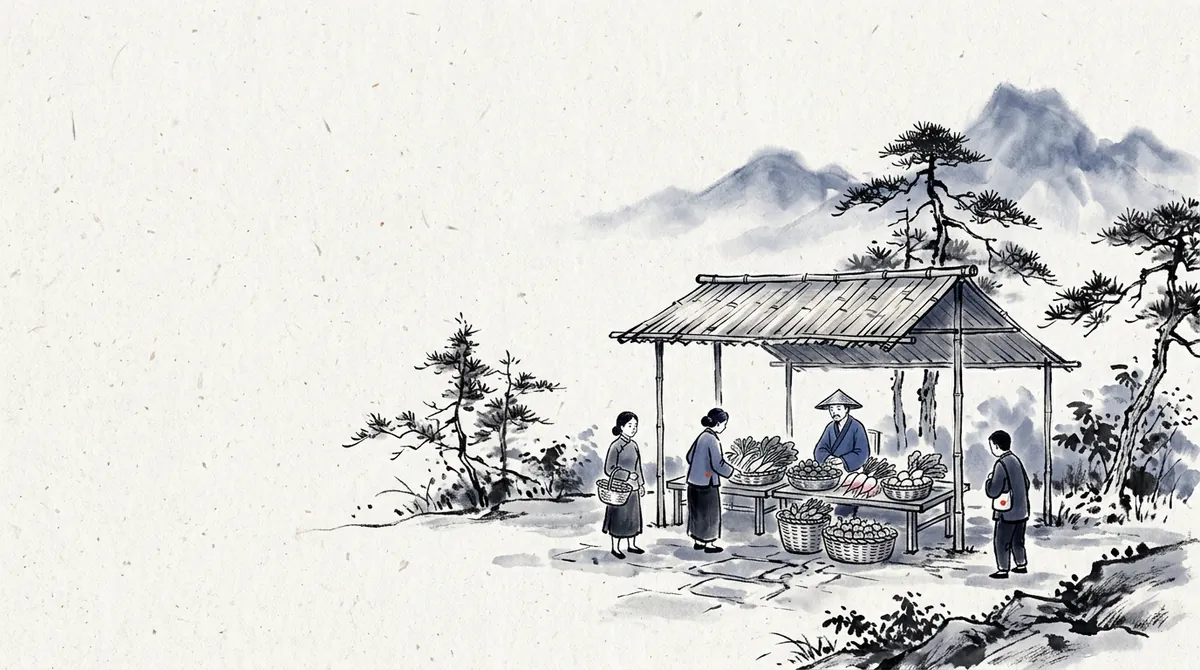
Strategic Breakdown
The structure of 多少钱 is straightforward: 多少 (duōshao), meaning "how much" or "how many," is combined with 钱 (qián), meaning "money." The tones are first tone (duō), neutral tone (shao), and second tone (qián), creating a distinct high-to-rising pitch contour. You can use it as a standalone question while pointing at an object or insert it into a more complete sentence.
While 多少钱 is universally understood, pay attention to the words used for currency units in the responses. The formal term is 元 (yuán), but in colloquial speech, you will almost always hear 块 (kuài). Similarly, 角 (jiǎo) is the formal term for one-tenth of a yuan, but 毛 (máo) is used in everyday conversation. Recognising these variations is crucial for understanding the prices you're given.
Actionable Takeaways & Examples
To make this phrase truly functional, practise it with specific items and listen carefully for the numbers in the answer. This turns every shopping interaction into a mini-lesson on numbers and currency.
Example 1: 这个多少钱? (zhège duōshao qián?) - How much is this?
- Tactic: This is the simplest and most common usage. Point to an object and ask the question. It’s a perfect, low-stakes way to practise pronunciation and get immediate, practical feedback in a real-world setting.
Example 2: 一杯咖啡多少钱? (yì bēi kāfēi duōshao qián?) - How much is a cup of coffee?
- Tactic: Build a more complex sentence by adding the item and its measure word before 多少钱. This helps you practise measure words and expands your vocabulary beyond the core phrase. It's particularly useful in cafés and restaurants: see our guide on how to order food in Chinese.
Key Insight: When sentence mining, don't just collect the question; collect the sentences that give the answers too. This builds your comprehension of numbers and colloquial currency terms like 块 (kuài) and 毛 (máo), which is the part learners usually find hardest in a real transaction.
9. 你好吗 (nǐ hǎo ma) - How are you
你好吗 (nǐ hǎo ma) turns a simple "hello" into a question about someone's well-being. By adding the particle 吗 (ma) to the end of 你好 (nǐ hǎo), you convert a statement ("you are good") into a yes-no question. It's a useful first step in understanding Chinese questions, which often rely on particles rather than changing word order.
In practice, native speakers don't say 你好吗 as often as textbooks suggest. It's mostly used when you genuinely want to know how someone is, typically someone you haven't seen for a while. Our post on what 你好吗 means covers the greetings people use instead, and how to reply.
Strategic Breakdown
The key element here is the neutral-toned particle 吗 (ma). This particle turns declarative statements into yes-no questions and is always pronounced with a light, short tone. Notice how it follows 你好 (ní hǎo), which already features the tone sandhi rule (third tone + third tone becomes second tone + third tone). So, the full pronunciation is ní hǎo ma.
While 你好吗 is the textbook way to ask "How are you?", native speakers more often use casual variations like 最近怎么样?(zuìjìn zěnmeyàng?) meaning "How have you been lately?", or 你最近好吗?(nǐ zuìjìn hǎo ma?). Understanding the function of 吗 also lets you recognise and form countless other yes-no questions.
Actionable Takeaways & Examples
Practise this phrase within a complete dialogue sequence to master both the question and common responses. This helps you prepare for real-world interactions and internalise conversational flow.
Example 1: 你好吗?我很好,谢谢。(nǐ hǎo ma? wǒ hěn hǎo, xièxie.) - How are you? I'm very well, thanks.
- Tactic: Drill this classic call-and-response. It solidifies the question-answer pattern and introduces common responses like 很好 (hěn hǎo), 还好 (hái hǎo - okay), or 不太好 (bú tài hǎo - not so good).
Example 2: 你好吗?一切都好吗?(nǐ hǎo ma? yíqiè dōu hǎo ma?) - How are you? Is everything okay?
- Tactic: Pair 你好吗 with a follow-up question to show deeper concern. This models a more natural and caring way to check in with someone, moving beyond surface-level politeness.
Key Insight: When sentence mining, look out for what follows 你好吗 and similar questions. This reveals the different ways people respond, from simple answers to more detailed explanations, and gives you replies you can reuse yourself.
10. 再见 (zàijiàn) - Goodbye / See you again
再见 (zàijiàn) is the standard way to say goodbye in Mandarin. Its literal translation, “again see,” captures a built-in expectation of meeting again.
Strategic Breakdown
Both 再 (zài) and 见 (jiàn) are fourth tones, with a sharp, falling pitch: zàijiàn. When two fourth tones come together, the first usually falls a little less than the second, so the stress lands on 见. This is simpler than the tone change in 你好 (nǐ hǎo) and is good practice for the fourth tone, the most common tone in Mandarin.
Unlike the English "goodbye", which has roots in "God be with ye," the Chinese phrase focuses on seeing each other again. It is appropriate in almost any situation, from leaving a shop to ending a business meeting. Among friends, you'll also hear 拜拜 (bàibài), borrowed from English "bye-bye", a lot.
Actionable Takeaways & Examples
To use 再见 naturally, practise it as the concluding part of a complete conversational arc. This helps you master the flow of ending a discussion politely and moving on.
Example 1: 很高兴认识你。再见!(hěn gāoxìng rènshi nǐ. zàijiàn!) - It was nice to meet you. Goodbye!
- Tactic: Pair 再见 with a pleasantry. This is the standard, polite way to end a first-time meeting. It reinforces the positive nature of the interaction and makes your departure feel smooth and courteous.
Example 2: 再见,路上小心!(zàijiàn, lùshang xiǎoxīn!) - Goodbye, take care on the way home!
- Tactic: Combine the farewell with a well-wish. 路上小心 is what Chinese speakers naturally say to someone setting off, where English speakers might say "get home safe". (Word-for-word translations of "have a nice day" exist, but sound like a translation.)
Key Insight: Don't just memorise 再见 in isolation. Notice how dialogues wind down before it, with phrases like 那我先走了 (nà wǒ xiān zǒu le, I'll be off then). This shows you how to move from the main topic to a polite closing.
The 10 Phrases at a Glance
| Phrase | Pinyin | Meaning | When to use it |
|---|---|---|---|
| 你好 | nǐ hǎo (said ní hǎo) | Hello | Greeting strangers, shop staff, on the phone |
| 谢谢 | xièxie | Thank you | Everyday thanks; reply 不客气 (bú kèqi) |
| 我不知道 | wǒ bù zhīdào | I don't know | Answering a question you can't answer |
| 对不起 | duìbuqǐ | Sorry | Real apologies; use 不好意思 for "excuse me" |
| 请问 | qǐngwèn | May I ask… | Before a question, especially to a stranger |
| 没关系 | méiguānxi | It's okay / No problem | Replying to an apology; reassuring someone |
| 我叫… | wǒ jiào… | My name is… | Introducing yourself |
| 多少钱 | duōshao qián | How much (money)? | Asking prices in shops, markets, cafés |
| 你好吗 | nǐ hǎo ma | How are you? | Checking in with someone you haven't seen for a while |
| 再见 | zàijiàn | Goodbye | Leaving in almost any situation |
From Phrases to Fluency
You've now seen ten foundational phrases, from the simple greeting 你好 (nǐ hǎo) to the practical question 多少钱 (duōshao qián). Memorising them as isolated units only gets you so far; they become useful when you can produce them, in context, without thinking.
Context matters. A phrase like 对不起 (duìbuqǐ) isn't just a translation of "sorry"; it carries more weight than 不好意思 and fits particular situations. Similarly, knowing that 你好吗 (nǐ hǎo ma) is a real question, not a greeting, stops you sounding like a textbook.
Shifting from Memorisation to Acquisition
The goal is to develop a feel for the language, where using the right phrase becomes second nature. Here’s the core strategy:
- Use Sentence Mining: Don't just learn "谢谢 (xièxie)". Instead, find and learn complete sentences where it's used naturally. This gives you grammatical and situational context, making your knowledge far more flexible.
- Focus on One New Idea: Each sentence you study should ideally contain only one new element, whether it's a new word, a grammatical structure or a cultural nuance. This "one new thing per sentence" principle (often called i+1) prevents overload and helps retention.
- Use Spaced Repetition (SRS): Use tools like Anki or dedicated apps to schedule reviews of the sentences you've collected, just before you're likely to forget them.
- Say Them Out Loud: Recognising a phrase is not the same as saying it. Practise speaking each phrase as a whole chunk, with the right tones, until it comes out automatically. If you'd like feedback while you do this, the Chunking Chinese fluency trainer teaches reusable sentence chunks like these and marks the tone and pronunciation of each character as you speak.
Your Next Steps
Here are three concrete steps you can take today:
- Select Your First Phrase: Choose just one phrase from the list that you find most useful. Don't try to tackle all ten at once. Let's say you choose 我不知道 (wǒ bù zhīdào).
- Find Three Contextual Sentences: Look for three distinct, real-world examples of the phrase in use, in graded readers, podcasts or ready-made sentence packs. Your goal is to see how it functions in different situations.
- Review Daily: Add these three sentences to your study system and spend five minutes a day reviewing them, out loud. Small, consistent daily practice beats occasional long sessions.
Each new sentence you learn reinforces grammar, expands your vocabulary and sharpens your intuition. That's how you bridge the gap between knowing words and actually speaking, one sentence at a time.
Want this without the setup? Mandarin Mosaic is a sentence-mining app: its HSK-levelled lessons and graded articles introduce one new word per sentence, and spaced repetition brings each word back just before you'd forget it. Try Mandarin Mosaic and make sentence mining a daily habit.