Black Friday: 30% off your first Premium payment until 30 November with code BLACKFRIDAY See the offer
 Mandarin Mosaic
Free on iPhone, iPad and Android.
Download on theApp Store Get it onGoogle PlayYour first month of Premium is free.
Chinese Pronunciation: A Beginner's Guide to Mandarin Sounds

Mandarin pronunciation comes down to about 400 syllables, each built from an initial (the consonant at the start) and a final (the rest), plus four tones and a light neutral tone. For English speakers, the hard parts are the tones, three sets of consonants English doesn't separate (j q x, zh ch sh r and z c s), the vowel ü, and the difference between -n and -ng. Learn the sounds with pinyin and audio, copy a native voice, and practise them in words and sentences rather than single syllables.
This page is the overview: what each part is, what goes wrong, and where to practise it with audio on this site. Each part links to a full guide if you want the detail.
Mandarin Pronunciation at a Glance
Every Mandarin syllable has the same structure: an optional initial, a final and a tone. 妈 (mā, mum) is the initial m, the final a and the first tone. Change the tone and you get a different word: 麻 (má, hemp), 马 (mǎ, horse), 骂 (mà, to scold). Mandarin uses only about 400 different syllables without tones and about 1,300 with them (Wikipedia, Standard Chinese phonology), so the set of sounds is small. The challenge is getting each one exactly right.
| Part | What it is | The hard bit | Where to practise |
|---|---|---|---|
| Initials | The consonant at the start: 21 of them, such as b, zh and x | Air (b vs p), and the j q x, zh ch sh r and z c s sets | Pinyin chart with audio |
| Finals | Everything after the initial: a vowel, sometimes with a glide before it or -n/-ng after it | ü, e, the -i in shi and si, -n vs -ng | Pinyin chart, pinyin guide |
| Tones | A pitch shape on every syllable: four tones and a neutral tone | Hearing the second from the third, and keeping tones in sentences | Mandarin tone trainer |
| Tone changes | Tones that change next to other tones (tone sandhi) | Two third tones in a row, 不 and 一 | Tone sandhi guide (audio and a quiz) |
| Rhythm | Stress, light syllables and speed in real speech | Giving every syllable full weight | Shadowing drill |
Initials: The Consonants English Doesn't Have
Most Mandarin initials are close to English: m, f, n, l and s cause little trouble. The problems come from letters that pinyin uses differently from English, and from three groups of sounds made in different parts of the mouth. English approximations get you started, but they're only approximations, so check each sound against audio.
| Initials | Roughly like | Where the English comparison fails | Examples |
|---|---|---|---|
| b / p, d / t, g / k | b like the p in "spin"; p like the p in "pin" | The difference is a puff of air, not voicing. p, t and k need a strong puff | 爸 bà (dad) / 怕 pà (to be afraid); 读 dú (to read) / 图 tú (picture); 怪 guài (strange) / 快 kuài (fast) |
| j, q, x | j like "jeep", q like "cheese", x between s and sh | The tongue tip stays down behind your lower teeth, and the front of the tongue does the work. q isn't "kw" and x isn't "ks" | 鸡 jī (chicken), 七 qī (seven), 西 xī (west) |
| zh, ch, sh, r | zh like the j in "judge", ch like "church", sh like "shirt" | The tongue tip curls up and back towards the roof of your mouth. r is between an English r and the s in "pleasure" | 中 zhōng (middle), 吃 chī (to eat), 山 shān (mountain), 热 rè (hot) |
| z, c, s | z like the ds in "kids", c like the ts in "cats", s like s | c is never a k sound, and it has a puff of air | 在 zài (at), 菜 cài (dish), 三 sān (three) |
| h | A rougher h, a little like the ch in Scottish "loch" | It's made further back, with some friction | 好 hǎo (good) |
The three groups are the ones to drill side by side, because swapping them changes the word: 三 (sān, three) and 山 (shān, mountain), 七 (qī, seven) and 吃 (chī, to eat), 西 (xī, west) and 诗 (shī, poem). Our pinyin chart puts these syllables next to each other, so you can play one after the other with a female or a male voice.
Finals: ü, e, the Buzzing -i and -n vs -ng
Finals are the vowel part of the syllable. Most are easy, but four catch nearly every English speaker:
- ü. Say "ee", then round your lips as if to whistle without moving your tongue. 绿 (lǜ, green) and 路 (lù, road) differ only in this vowel. After j, q, x and y the dots are dropped, but the sound is still ü: 去 (qù, to go), 鱼 (yú, fish).
- e. On its own it's not the e in "bed" but a sound from the back of the mouth, like "uh" with your lips spread: 饿 (è, hungry), 喝 (hē, to drink). In -ie and -üe it changes to something close to the e in "yes", as in 谢谢 (xièxie, thank you).
- The -i after zh, ch, sh, r, z, c and s. It isn't "ee". In 是 (shì, to be), 吃 (chī) and 日 (rì, day) it's a buzzing vowel that carries on the consonant, and in 字 (zì, character) and 四 (sì, four) it's a buzz like a held "zz". Compare 西 (xī), which really does end in "ee".
- -n vs -ng. -n ends with the tongue tip behind your top teeth; -ng ends at the back of the mouth, as in "sing". 心 (xīn, heart) and 星 (xīng, star), and 饭 (fàn, meal) and 放 (fàng, to put), are different words.
Pinyin also shortens a few finals, which hides a vowel: -ui sounds close to "way" (贵 guì, expensive), -iu like "yo" (六 liù, six), and -ian rhymes with "yen", not "yan" (天 tiān, sky). Our guide to learning Chinese pinyin goes through every initial and final with audio and the spelling rules behind them.
The Four Tones and the Neutral Tone
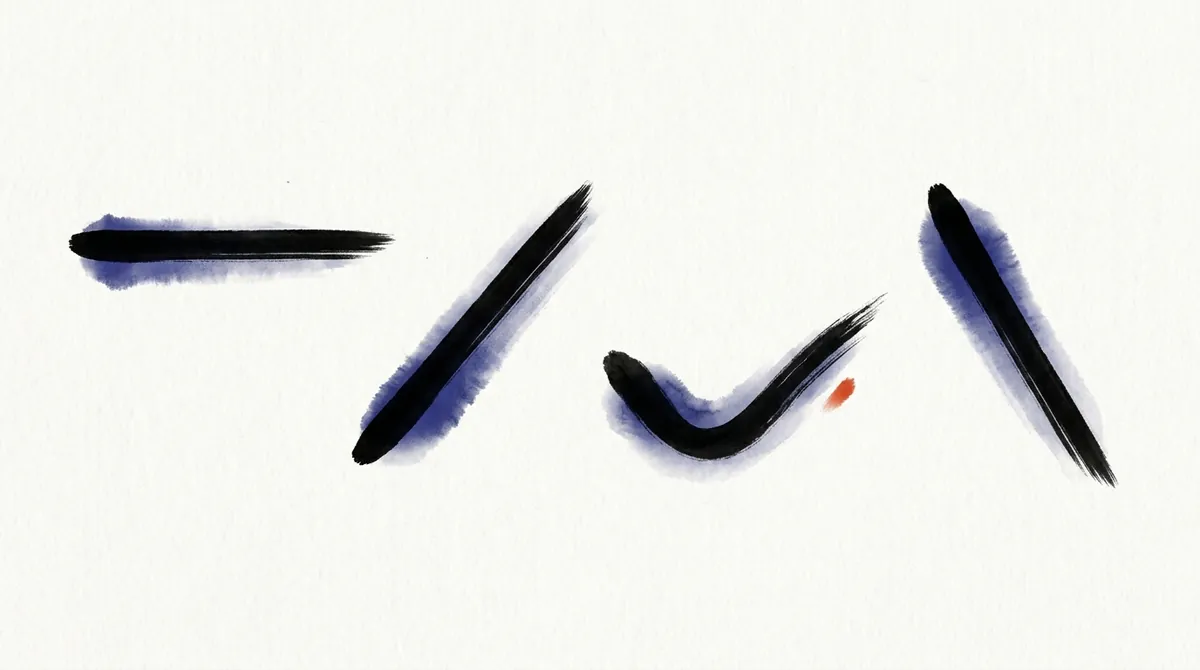
Every syllable carries a tone, a pitch shape that is part of the word. Linguists describe them on a five-level scale, from 1 at the bottom of your speaking range to 5 at the top:
- First tone (55): high and level, held steady. 妈 (mā, mum).
- Second tone (35): rises from the middle to the top, like a surprised "what?". 麻 (má, hemp).
- Third tone (214): dips low, then rises, when said on its own or at the end of a phrase. Before another tone it usually just stays low (about 21), with no rise. 马 (mǎ, horse).
- Fourth tone (51): falls sharply from the top to the bottom, like a firm "No!". 骂 (mà, to scold).
- Neutral tone: short and light, with its pitch set by the tone before it. The second syllable of 妈妈 (māma, mum) and the question word 吗 (ma).
The scale is relative to your own voice, so a deep voice and a high one use the same shapes. Most learners find the first and fourth tones easy to tell apart within a few sessions; the second and third take longer, because both start low. Our guide to the four Mandarin tones has a tone chart and five drills. To train your ear, the free Mandarin tone trainer plays a syllable or a two-syllable word, asks you for its tones, and draws the pitch of the recording next to the textbook shape. It also has a 20-question test that shows which tones you mix up.
Tone Changes: 3 + 3, 不 and 一
In real speech, a few tones change because of the tone that follows them. This is called tone sandhi, and three rules cover what a beginner needs:
- Two third tones in a row: the first one is said as a second tone. 你好 (nǐ hǎo, hello) is said ní hǎo, and 很好 (hěn hǎo, very good) is said hén hǎo. Pinyin still writes the original tones.
- 不 (bù, not): becomes bú before a fourth tone, as in 不是 (bú shì, is not). Before other tones it stays bù: 不好 (bù hǎo, not good).
- 一 (yī, one): becomes yí before a fourth tone, as in 一个 (yí ge, one), and yì before the other tones, as in 一天 (yì tiān, one day). It stays yī on its own, when counting and as an ordinal: 第一 (dì-yī, first).
Our guide to Mandarin tone sandhi has audio for every rule, the less obvious cases (three third tones in a row, third tones before a neutral tone), all 20 tone pairs and a listening quiz.
The Mistakes English Speakers Make Most
- English intonation on top of the tones. In English, a question rises at the end. In Mandarin, the last syllable keeps its own tone, so a rising question voice can turn a fourth tone into a second.
- A second tone that doesn't rise far enough, so it sounds like a first tone, and a third tone that doesn't go low enough.
- The full third-tone dip everywhere. Charts show 214, but before another tone the third tone is just low. Adding the rise every time makes 很忙 (hěn máng, very busy) sound odd.
- Reading pinyin as English. q, x, c, z, the -i in shi and si, e, and -ian all have their own values.
- Too little air on p, t, k, q, ch and c, which makes them sound like b, d, g, j, zh and z.
- Merging -n and -ng, and u and ü, which turns one word into another.
- Full weight on every syllable. Neutral-tone syllables, like the second half of 东西 (dōngxi, thing), are short and light. Saying them fully sounds robotic.
How to Practise Chinese Pronunciation

Pronunciation improves through short, regular practice that trains your ear and your mouth together. Ten or fifteen minutes a day does more than an hour once a week. In rough order:
- Learn the sounds by ear, not by letter. Go through the pinyin chart one column at a time, repeating each syllable straight after the audio. It has all 402 standard syllables, each playable in all four tones, with a common character for each tone.
- Drill minimal pairs. Pairs that differ in one sound make you listen for that sound alone: 三 sān and 山 shān, 四 sì and 是 shì, 绿 lǜ and 路 lù, 心 xīn and 星 xīng, and for tones 买 (mǎi, to buy) and 卖 (mài, to sell). Play one without looking, say which it was, then check.
- Train your ear for tones. A few minutes a day in the tone trainer, starting with first against fourth, then second against third, then two-syllable words.
- Record yourself and compare. You can't hear your own tones well while you speak. Play the native audio, then your recording straight after, and pick one thing to fix. The tone trainer lets you record yourself after each answer and play the model and your voice one after the other.
- Shadow short sentences. Play native audio and repeat it a split second behind the speaker, copying the pitch and rhythm. Our guide to Chinese shadowing has a beginner drill with audio on the page.
- Move to words and sentences early. Tones sound different next to other tones, and that's where they slip. 我很好 (wǒ hěn hǎo, I'm very well) is three third tones in a row on paper, but at normal speed it's usually said wó hén hǎo: every third tone except the last rises. You learn that by hearing and copying the whole phrase, not from single syllables.
- Get feedback on your speaking. Recordings only help if you can hear what's wrong. The Chunking Chinese fluency trainer, our sister app run with the Chinese teacher and YouTuber Will Hart, gives you an English prompt, you say the Mandarin out loud, and it scores the sound and tone of each character, naming the tone you said where one went wrong. It runs in the browser and covers HSK 1 to 5. Try the fluency trainer, or read our Chunking Chinese review first.
When the single sounds feel comfortable, our Chinese tongue twisters put the hard contrasts (s and sh, -n and -ng, the four tones) into quick, memorable lines. For the wider plan of going from understanding to talking, see how to speak Mandarin.
Frequently Asked Questions
Is Chinese Pronunciation Hard?
Some of it is. The set of sounds is small, and many initials and finals are close to English. The tones are the genuinely new part for English speakers, along with a handful of consonants and vowels English doesn't have. Because pinyin spells every syllable consistently, once you know its rules you can say any word you can read in pinyin.
How Long Does It Take to Get Mandarin Pronunciation Right?
Most learners can hear and say the sounds and tones of single syllables after a few weeks of short daily practice. Saying them without thinking, at speed and in sentences, takes months of listening and speaking, which is why it pays to practise with words and sentences early rather than perfecting syllables first.
Do I Need the Tones to Be Understood?
Yes. Context helps native speakers guess what you meant when one tone slips, but tones are part of each word, so wrong tones across a sentence make it hard to follow. 买 (mǎi, to buy) and 卖 (mài, to sell) differ only in tone. Learn every word with its tone from the start; it's much harder to fix later.
Should I Learn Pinyin or Zhuyin?
Pinyin, unless you're learning for Taiwan, where Zhuyin (bopomofo) is printed beside the characters in children's books and used on most phone keyboards. Both describe the same Mandarin sounds. Our page on Taiwanese Mandarin has a Zhuyin chart.
What Are the Best Free Tools for Chinese Pronunciation?
A pinyin chart with audio for the sounds, a tone trainer for your ear, and your phone's voice recorder for comparing yourself with a native speaker. Ours are free and need no account: the pinyin chart plays every syllable in all four tones, and the Mandarin tone trainer drills single tones and two-syllable words and tests which tones you confuse.