 Mandarin Mosaic
Free on iPhone, iPad and Android.
Download on theApp Store Get it onGoogle PlayYour first month of Premium is free.
Chinese New Year in Chinese: 春节, Greetings and the 2027 Date
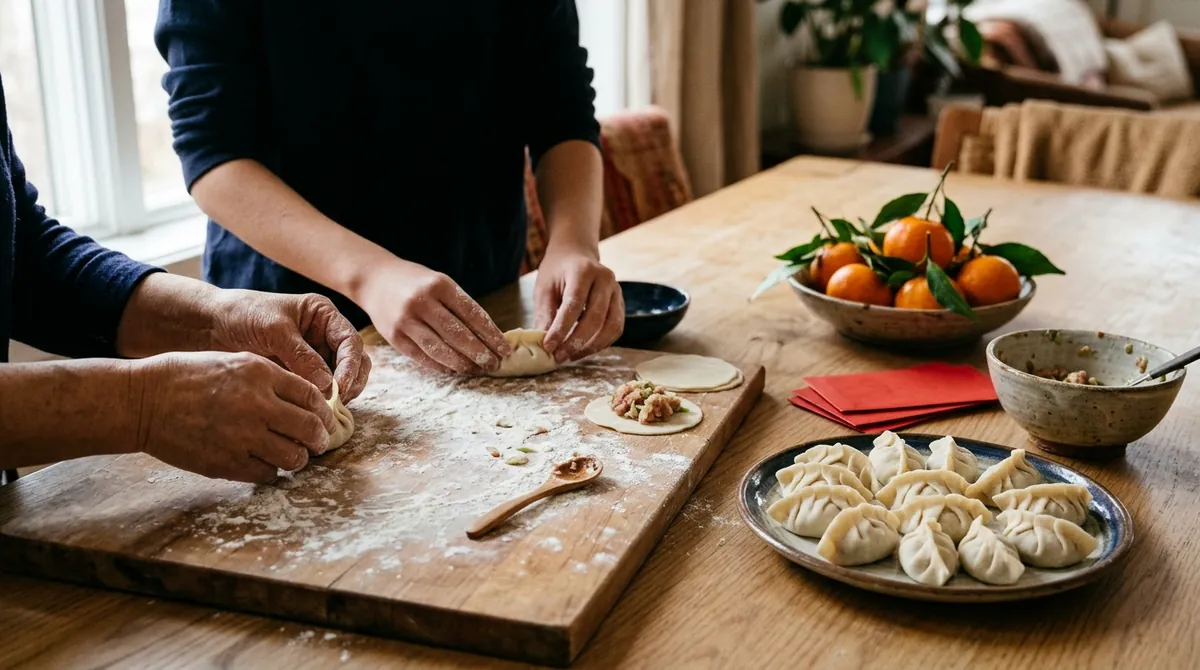
Chinese New Year is 春节 (chūnjié), "the Spring Festival". People also call it 农历新年 (nónglì xīnnián, Lunar New Year) or just 过年 (guònián, "passing the year"). The next one is on Saturday 6 February 2027, and it starts the Year of the Goat. The big night is New Year's Eve, Friday 5 February.
The quickest way to say "Happy New Year" is 新年快乐 (xīnnián kuàilè). Below are the greetings people really use, each with audio, plus the words for red envelopes, the reunion dinner and the zodiac animals.
When Is Chinese New Year? Dates for 2027 to 2030
Chinese New Year falls on the first day of the first month of the traditional lunar calendar, so its date in the Western calendar moves every year, always between 21 January and 20 February. The celebrations run to the Lantern Festival, on the 15th day of the new year.
| Year | New Year's Eve (除夕) | New Year's Day (春节) | Lantern Festival (元宵节) | Animal |
|---|---|---|---|---|
| 2027 | Fri 5 February | Sat 6 February | Sat 20 February | Goat 羊 (yáng) |
| 2028 | Tue 25 January | Wed 26 January | Wed 9 February | Monkey 猴 (hóu) |
| 2029 | Mon 12 February | Tue 13 February | Tue 27 February | Rooster 鸡 (jī) |
| 2030 | Sat 2 February | Sun 3 February | Sun 17 February | Dog 狗 (gǒu) |
In mainland China, the official Spring Festival holiday has been four days, New Year's Eve included, since 2025 (Shanghai government announcement). Weekends are swapped around it, so most people get a break of about a week, then work a Saturday or Sunday to make up for it (调休, tiáoxiū). The State Council publishes each year's exact dates, usually in November. Hundreds of millions of people travel home in the weeks around it, the world's biggest annual migration, called 春运 (chūnyùn).
How to Say Happy New Year in Chinese
Tap the play button to hear each one. Pinyin is shown with dictionary tones.
| Chinese | Pinyin | Meaning | When to use it |
|---|---|---|---|
| 新年快乐 | xīnnián kuàilè | Happy New Year | The all-purpose greeting, said and written. It works for 1 January too |
| 春节快乐 | chūnjié kuàilè | Happy Spring Festival | Only for Chinese New Year, so it can't be mistaken for 1 January |
| 过年好 | guònián hǎo | Happy New Year (literally "good New Year") | Spoken, when you meet people over the holiday. Common in the north |
| 新春快乐 | xīnchūn kuàilè | Happy New Year (literally "happy new spring") | A little more formal; common on cards, posters and in work messages |
| 给您拜年了 | gěi nín bàinián le | Happy New Year (to you, respectfully) | To elders and on New Year visits. 您 is the polite "you" |
| 恭喜发财 | gōngxǐ fācái | Wishing you wealth | Hugely popular, especially in the south and Hong Kong (Cantonese gung hei fat choi) |
| 红包拿来 | hóngbāo nálái | Red envelope, hand it over! | What children cheekily add after their own 恭喜发财: 恭喜发财,红包拿来! Only among family and close friends |
| 万事如意 | wànshì rúyì | May everything go as you wish | A classic wish to add after 新年快乐 |
| 身体健康 | shēntǐ jiànkāng | Good health | Especially for older relatives |
| 心想事成 | xīnxiǎng shìchéng | May your wishes come true | Friends, colleagues, anyone |
| 年年有余 | niánnián yǒu yú | May you have more than enough every year | 余 (surplus) sounds like 鱼 (fish), which is why fish is served at the New Year meal |
| 大吉大利 | dàjí dàlì | Great luck and great profit | Cheerful and a little traditional |
Greetings are usually stacked: one "happy New Year" phrase, then a wish or two. Put 祝你 (zhù nǐ, "I wish you") or the politer 祝您 (zhù nín) in front to make a full sentence:
- 祝您新年快乐,身体健康! (zhù nín xīnnián kuàilè, shēntǐ jiànkāng!) Happy New Year, and good health to you!
- 祝你春节快乐,万事如意! (zhù nǐ chūnjié kuàilè, wànshì rúyì!) Happy Spring Festival, and may everything go your way!
To reply, say the greeting back: 新年快乐! or 你也是! (nǐ yě shì, "you too"). In 你也是, 你 changes to a rising tone before the third-tone 也, as our guide to tone sandhi explains.
Greetings are something you'll say out loud, to people, in a hurry. The Chunking Chinese fluency trainer has you say short chunks like these aloud and marks the tone of each character, so 恭喜发财 comes out right on the day.
Greetings for the Year of the Goat
Each year adds greetings that use its animal. For 2027, the Year of the Goat, you'll see:
| Chinese | Pinyin | Meaning |
|---|---|---|
| 羊年大吉 | yángnián dàjí | Good luck in the Year of the Goat |
| 三羊开泰 | sānyáng kāitài | A pun on the old saying 三阳开泰 (sānyáng kāitài), about spring returning and good fortune with it. 羊 (goat) sounds just like 阳 (yáng, the sun's warmth), so goat years swap it in |
羊 covers goats, sheep and rams alike, which is why English sources call 2027 the Year of the Goat, the Sheep or the Ram. They all mean the same year.
Red Envelopes: 红包 and 压岁钱
A 红包 (hóngbāo) is a red envelope with money inside. At New Year, parents, grandparents and other married relatives give them to children and to younger relatives who aren't married yet. The money is called 压岁钱 (yāsuìqián), roughly "money to hold down the year", from an old belief that it kept away 祟 (suì), a demon said to prey on children on New Year's Eve. 岁 and 祟 sound the same. Some employers give 红包 to staff too.
- New notes are best, so many people queue at the bank before the holiday.
- Amounts are usually even, and people avoid anything with a 4, because 四 (sì) sounds like 死 (sǐ, death). 8 is the favourite (see lucky and unlucky numbers in Chinese).
- Taking one: use both hands, say 谢谢 (xièxie), and don't open it in front of the giver.
- Digital 红包 sent in group chats on WeChat (微信红包, wēixìn hóngbāo) are now part of the fun: whoever taps fastest gets a share.
New Year's Eve and the Days After: Key Words
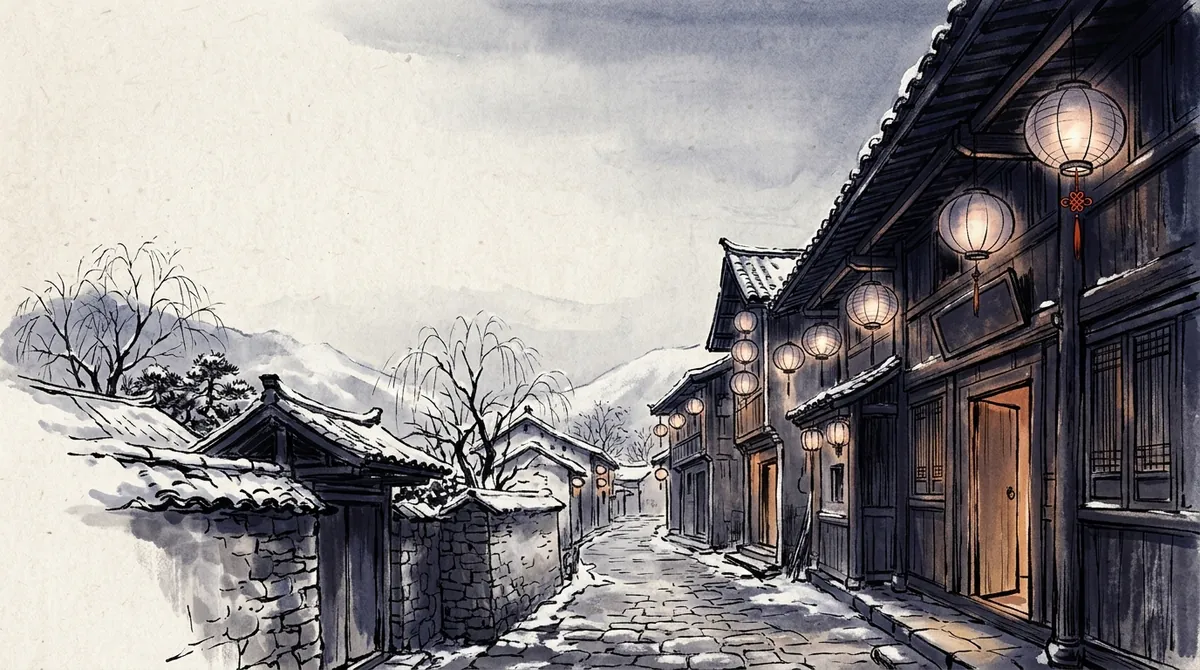
The heart of the festival is 除夕 (chúxī), New Year's Eve, when families gather for the 年夜饭 (niányèfàn), the reunion dinner. Many then watch the Spring Festival Gala (春晚) on television and stay up past midnight (守岁). The next days are for 拜年 (bàinián), visiting relatives and friends with greetings. If you're visiting a Chinese family, you'll need the words for who's who: the Chinese relatives calculator works out what to call each of them.
| Chinese | Pinyin | Meaning |
|---|---|---|
| 春节 | chūnjié | Spring Festival, the usual name for Chinese New Year |
| 农历新年 | nónglì xīnnián | Lunar New Year (农历 is the traditional calendar) |
| 除夕 | chúxī | New Year's Eve, the most important night |
| 年夜饭 | niányèfàn | the New Year's Eve reunion dinner |
| 团圆 | tuányuán | reunion, the family together |
| 守岁 | shǒusuì | staying up to see the New Year in |
| 春晚 | chūnwǎn | the Spring Festival Gala on CCTV, watched on New Year's Eve |
| 拜年 | bàinián | to pay a New Year visit and give greetings |
| 红包 | hóngbāo | red envelope (with money in it) |
| 压岁钱 | yāsuìqián | the New Year money given to children |
| 春联 | chūnlián | spring couplets, the red paper lines pasted beside the door |
| 福到了 | fú dào le | good fortune has arrived (said of the upside-down 福) |
| 鞭炮 | biānpào | firecrackers |
| 烟花 | yānhuā | fireworks |
| 饺子 | jiǎozi | dumplings, the New Year food in the north |
| 年糕 | niángāo | New Year rice cake |
| 鱼 | yú | fish |
| 春运 | chūnyùn | the Spring Festival travel rush |
| 庙会 | miàohuì | temple fair |
| 舞狮 | wǔshī | lion dance |
| 元宵节 | yuánxiāo jié | the Lantern Festival, on the 15th day |
| 汤圆 | tāngyuán | sweet rice balls, eaten at the Lantern Festival |
A few of these come with word play:
- The upside-down 福. Many homes hang the character 福 (fú, good fortune) upside down. "Upside down" is 倒 (dào), which sounds like 到 (dào, to arrive), so it says 福到了: good fortune has arrived.
- Fish is served because 鱼 (yú) sounds like 余 (yú, surplus), as in 年年有余. Families often leave some uneaten, so there's "surplus" into the new year.
- 年糕 (niángāo) sounds like 年高 (nián gāo, "higher every year").
- Dumplings are shaped like old silver ingots, so they stand for wealth. In the south, 年糕 and other dishes take their place.
Firecrackers (鞭炮) and fireworks (烟花) were once meant to scare off a monster called 年 (nián). Many big cities now restrict them for safety and clean air, so check local rules if you're in China.
The Chinese Zodiac: 12 Animals in Chinese
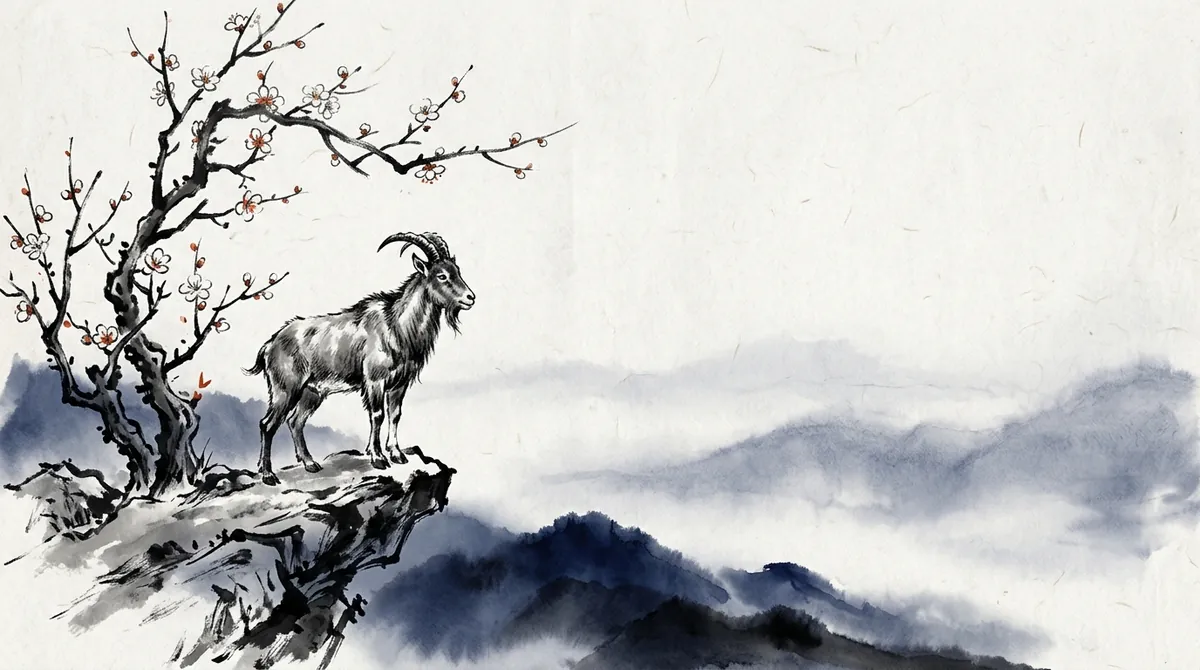
Each year belongs to one of twelve animals, in a fixed order. The new animal starts at Chinese New Year, not on 1 January, so someone born in January 2027, before 6 February, is a Horse, not a Goat.
| Chinese | Pinyin | Animal | Years |
|---|---|---|---|
| 鼠 | shǔ | rat | 2020, 2032 |
| 牛 | niú | ox | 2021, 2033 |
| 虎 | hǔ | tiger | 2022, 2034 |
| 兔 | tù | rabbit | 2023, 2035 |
| 龙 | lóng | dragon | 2024, 2036 |
| 蛇 | shé | snake | 2025, 2037 |
| 马 | mǎ | horse | 2026, 2038 |
| 羊 | yáng | goat, sheep or ram | 2027, 2039 |
| 猴 | hóu | monkey | 2028, 2040 |
| 鸡 | jī | rooster | 2029, 2041 |
| 狗 | gǒu | dog | 2030, 2042 |
| 猪 | zhū | pig | 2031, 2043 |
Asking someone's animal is a polite way to ask their age in China:
- 你属什么? (nǐ shǔ shénme?) What's your zodiac animal? (literally "You belong to what?")
- 我属羊。 (wǒ shǔ yáng.) I'm a Goat.
Your own animal's year, every twelfth year, is your 本命年 (běnmìngnián). It's traditionally thought to be an unlucky year, so many people wear something red, often red socks or a red bracelet, for protection.
What Not to Do at Chinese New Year
A lot of New Year customs are about not inviting bad luck: no sweeping on New Year's Day, no breaking things, no talk of death. Many come from word play, like the 四 and 死 pair above. Our post on what not to do on Chinese New Year goes through eight of them, with the phrases that go with each.
Learn the Phrases Before the Day
The phrases on this page are short, but the greetings stack up fast, and you'll want to recognise them when someone says them to you. The best way to learn them is inside real sentences, so you see what goes with what. Mandarin Mosaic gives you sentences with one new word at a time, with audio for every sentence and spaced repetition to bring each word back before you forget it. The app is on iPhone and Android, and at the time of writing Premium's first month is free, with a limited free plan. Get it on iOS or Android.
New Year sits next to the other big festival, the Mid-Autumn Festival in September or October: our Mid-Autumn Festival in Chinese post has its greetings and dates.
Frequently Asked Questions
What Is Chinese New Year Called in Chinese?
春节 (chūnjié), the Spring Festival. You'll also hear 农历新年 (nónglì xīnnián, Lunar New Year) and, in everyday speech, 过年 (guònián): 你在哪儿过年? (nǐ zài nǎr guònián?) means "Where are you spending New Year?"
When Is Chinese New Year 2027?
Saturday 6 February 2027, with New Year's Eve on Friday 5 February. The Lantern Festival, which ends the celebrations, is on Saturday 20 February 2027.
What Animal Is 2027?
The Goat (羊, yáng), also translated as the Sheep or the Ram. The Year of the Goat runs from 6 February 2027 to 25 January 2028. 2026 was the Year of the Horse, and 2028 is the Year of the Monkey.
How Do You Reply to 新年快乐?
Say it back, 新年快乐!, or say 你也是! (nǐ yě shì, "you too"). With an older person, add a wish of your own, such as 祝您身体健康 (zhù nín shēntǐ jiànkāng, "I wish you good health").
Is It Chinese New Year or Lunar New Year?
Both are used. Lunar New Year is also celebrated in Korea (Seollal) and Vietnam (Tết), among others, so many people and organisations prefer "Lunar New Year" as the wider name. In Chinese, the everyday name is 春节.
Want the New Year phrases to stick? Mandarin Mosaic teaches Chinese through short sentences with one new word at a time, with audio and reviews built in. It's on iPhone and Android, and at the time of writing Premium's first month is free, with a limited free plan. Get it on iOS or Android.