 Mandarin Mosaic
Free on iPhone, iPad and Android.
Download on theApp Store Get it onGoogle PlayYour first month of Premium is free.
ChatGPT and AI Chat vs Chunk Practice for Speaking Chinese

There are now two very different ways to practise speaking Mandarin without a human partner. One is to talk to an AI: open ChatGPT's voice mode or a dedicated tutor app, say something in Chinese, and get a reply. The other is older and less glamorous: learn short, reusable phrases (chunks) and drill pulling them out of your head, out loud, from an English prompt.
They sound like competitors, but they train different things. An AI chat gives you a conversation. Chunk practice gives you the parts a conversation is made of. If you understand far more Chinese than you can say, which is where most self-taught learners get stuck, it matters which of the two you spend your minutes on. (For a full speaking method, with tones, shadowing and a weekly routine, see how to speak Mandarin.)
What AI chat apps do well
An AI conversation partner is genuinely useful, and in some ways better than any app that came before it.
- It is always there. Five minutes on the bus, at midnight, with no booking and no awkwardness about making mistakes in front of a person.
- It talks about anything. You can rehearse ordering food, a job interview or small talk with a neighbour, and change the scene whenever you like.
- It explains. Ask in English why a sentence uses 了 or what a word means, and you get an answer straight away.
- It is cheap. At the time of writing, ChatGPT's voice mode is available on the free plan, with a daily limit. Dedicated apps such as SuperChinese, with its CHAO AI tutor, build the same idea into a Chinese course.
It also gives you plenty of listening. Every reply is spoken Mandarin you have to follow in real time, which is good practice in its own right.
Where open conversation falls short

The trouble with an open conversation is that it goes wherever you steer it, and learners steer towards what they can already say. If you don't know how to say "could you say that again?", you simply won't say it. You'll nod, type something in English, or change the subject. The conversation flows, and the gap stays exactly where it was.
A few other things work against you:
- The AI is built to understand you. That is its job, so it will usually work out what a half-right sentence meant and carry on. A wrong word order or a wrong tone can pass without comment unless you explicitly ask to be corrected.
- Replies often run above your level. A long, fluent answer full of words you haven't met turns a speaking session into a listening test.
- Nothing comes back. A phrase you fumbled today won't come back on its own tomorrow, or next week when you're about to forget it. A chat app has no review schedule that turns a one-off success into something you can say without thinking.
None of this makes AI chat bad. It means a chat is a place to use what you can say, more than a place to build it.
What chunk practice trains instead
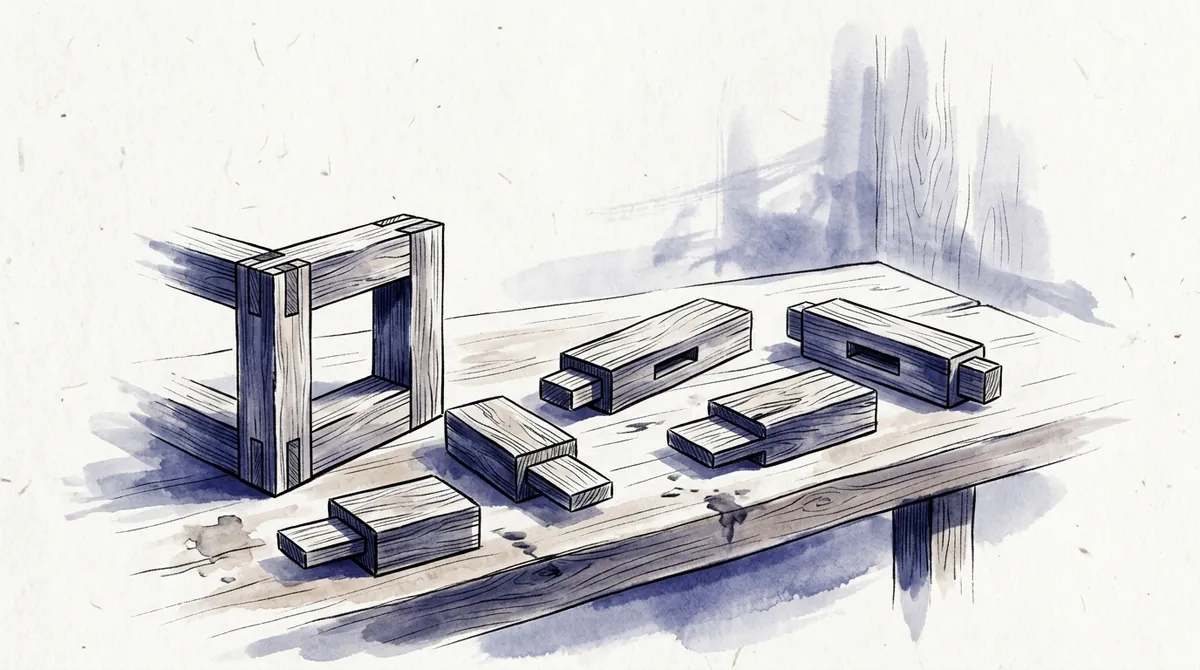
A chunk is a short piece of Mandarin that native speakers use as a single unit: not one word, and not a whole memorised sentence. Each one carries its own grammar and word order, so once it comes out automatically, you don't have to build that part of the sentence word by word.
| Chunk | Pinyin | Meaning |
|---|---|---|
| 不好意思 | bù hǎoyìsi | sorry, excuse me |
| 没听懂 | méi tīngdǒng | didn't catch it (heard, but didn't understand) |
| 能不能 | néng bu néng | could you…? (a polite request) |
| 再说一遍 | zài shuō yí biàn | say it again |
| 慢一点 | màn yìdiǎn | a bit more slowly |
| 我觉得 | wǒ juéde | I think |
| 有点儿 | yǒudiǎnr | a bit (usually of something unwelcome) |
Chunk practice works the other way round from a chat. You get an English prompt that needs two or more chunks, and you have to say the Mandarin aloud:
- "Sorry, I didn't catch that. Could you say it again?" becomes 不好意思,我没听懂。你能不能再说一遍? (bù hǎoyìsi, wǒ méi tīngdǒng. nǐ néng bu néng zài shuō yí biàn?)
- "Could you speak a bit more slowly?" becomes 你能不能说慢一点? (nǐ néng bu néng shuō màn yìdiǎn?)
- "I think this one is a bit expensive." becomes 我觉得这个有点儿贵。 (wǒ juéde zhège yǒudiǎnr guì.) In speech, 有点儿 is said yóudiǎnr, because two third tones in a row turn the first into a second tone. Our guide to tones in Chinese explains the rule.
Two things make this different from a chat. First, the prompt decides what you say, so you can't avoid the phrase you don't know: the gap shows up immediately. The linguist Merrill Swain called this the noticing function of comprehensible output: trying to say something is how you discover what you can't yet say. Second, the chunks come back on a spaced repetition schedule, so the phrase you fumbled today returns just before you'd forget it, until you can produce it without thinking.
The weakness is the mirror image of AI chat's strength. The prompts are set, so you never get an unexpected reply, a change of topic or a joke to follow. Chunk practice builds the pieces. It doesn't give you a conversation to use them in.
AI chat and chunk practice side by side
| AI chat app | Chunk practice | |
|---|---|---|
| Who leads | You do, so you stay in your comfort zone | The prompt does, so gaps show up |
| Main skill | Using what you know in a live exchange | Pulling set phrases out of memory, fast |
| Mistakes | Often understood and passed over, unless you ask for corrections | Checked against the sentence the prompt needs |
| Repetition | None built in; no review schedule | Spaced repetition brings phrases back |
| Listening | Plenty: every reply is new spoken Mandarin | Limited to example audio |
| Best for | Rehearsing real situations once you have the basics | The "I understand it but can't say it" stage |
Which should you use?
It depends on where you are, and for most learners the honest answer is both, in different amounts.
If you're a beginner
Open conversation is hard work with only a few hundred words, and the AI's replies will mostly be over your head. Start with chunk practice for the phrases you need first, and use an AI chat in English for explanations ("what's the difference between 不 and 没?"). Make sure you are also taking in plenty of Chinese you can understand: comprehensible input is what gives you something to say in the first place.
If you understand far more than you can say
This is the intermediate plateau, and it is where chunk practice earns its keep. Your problem isn't knowledge, it is retrieval speed, and drilling chunks from English prompts trains exactly that. Do a short chunk session most days, then use an AI chat once or twice a week to put those chunks to work in a role play.
If you can already hold a basic conversation
Now AI chat has more to offer, because you can follow the replies and keep a conversation going. Use it for variety and longer exchanges, and keep chunk practice for the phrases you notice yourself avoiding.
How to get more out of an AI chat partner
You can borrow some of chunk practice's discipline by giving the AI clear instructions at the start of each session. For example:
"Speak only Mandarin, at about HSK 3 level. Keep each reply to one or two short sentences. After each of my turns, correct my biggest mistake and show the corrected sentence in characters and pinyin. Try to make me use 能不能, 我觉得 and 有点儿."
- Ask for corrections. Without the instruction, the AI will usually just keep the conversation going.
- Name your chunks. Giving it the phrases you're learning turns a free chat into practice with a target.
- Repeat a scene. Do the same role play (a restaurant, a taxi, meeting a colleague) a week later and see whether it comes out faster.
- Don't take silence as approval. If the AI understood you, that tells you the meaning got through, not that your tones were right.
Using ChatGPT or DeepSeek to learn Chinese
ChatGPT and DeepSeek are the two chatbots learners ask about most. ChatGPT isn't Chinese: it's made by OpenAI, a US company, and isn't officially available in mainland China. DeepSeek is made by a company based in Hangzhou, China. Both read and write Mandarin well, and both will do far more for your Chinese if you tell them exactly what you want. These prompts work in either one; swap in your own level and words.
Prompts to copy
- A conversation partner at your level: "Be my Chinese conversation partner. Use only HSK 2 vocabulary and short sentences. Ask me one question at a time about my weekend, wait for my answer, then ask a follow-up. Don't translate unless I write 'English?'."
- Correcting your sentences: "Here are five sentences I wrote in Chinese. Correct each one, show the corrected version in characters and pinyin with tone marks, and explain each change in one line of English. Leave correct sentences alone and say they're fine."
- Explaining grammar: "Explain the difference between 了 (le) and 过 (guo) in simple English, with three short example sentences for each at HSK 2 level, in characters, pinyin and English."
- Sentences with one new word (i+1): "These are words I know: [paste your list]. Write five short sentences that use only these words plus one new word, 准备 (zhǔnbèi, to prepare). Give the pinyin and English after each one." This is the idea behind sentence mining: each sentence teaches one thing.
- Speaking practice in voice mode: In ChatGPT's voice mode, start with "Speak Mandarin slowly and clearly, in short sentences. If I hesitate, give me the first word of a possible answer." Then rehearse a real situation, such as ordering in a restaurant. DeepSeek has no generally available voice conversation mode (it began testing read-aloud replies in September 2026), so use ChatGPT (or another app with voice mode) for this.
Honest limits
- Pinyin and tone marks go wrong. Chatbots sometimes give a wrong tone mark, miss a tone change such as 一个 (yí gè), or pick the wrong reading of a character with two, such as 行 (xíng or háng) or 长 (cháng or zhǎng). Check new words in a dictionary such as Pleco before you learn them.
- The Chinese can sound stiff. Replies are often more formal or polite than a friend would be, with 您 (nín) where a friend would say 你 (nǐ), or textbook phrasing nobody uses in conversation. Ask "how would a friend say this casually?" when something sounds odd.
- The level creeps up. Even with a level in the prompt, replies drift towards harder words after a few turns. Remind it of the level when that happens.
- DeepSeek avoids some topics. It refuses or deflects questions on subjects that are politically sensitive in China, such as Tiananmen Square or Taiwan, as TechCrunch reported. This rarely matters for everyday language practice, but don't use it to learn about those subjects.
Why is DeepSeek answering in Chinese?
DeepSeek usually replies in the language it thinks you're using, and a learner's prompts are often full of Chinese, so it switches. Its reasoning models can also drift between languages: DeepSeek's own R1 paper notes that the model is optimised for Chinese and English and can mix languages in its reasoning. The fix is to say what you want at the start of the chat: "Reply in English. Only use Chinese for the example sentences, with pinyin and English." If it slips back, regenerate the answer or start a new chat. Asking in Chinese for a reply in English (请用英文回答, qǐng yòng yīngwén huídá, please answer in English) works too.
How a learning app differs from a chatbot
A general chatbot doesn't know which words you know, and it forgets the session when you close it. Mandarin Mosaic's Sentence Generator writes an example sentence for any word using words you've already learned, and you can save it to a pack so it comes back in your spaced repetition reviews. For speaking, the Chunking Chinese fluency trainer scores the tone of each character you say, which a chatbot doesn't do. Use the chatbot for open conversation and explanations, and the apps for what has to stick.
Where Chunking Chinese fits
The Chunking Chinese fluency trainer is a speaking app built on the chunk-practice side of this comparison. It is co-owned by the team behind Mandarin Mosaic, so weigh that as you read. You learn chunks with a listen-and-repeat (shadowing) step, then get English prompts that need two or more chunks combined, and you say the Mandarin aloud. It checks which chunks you said and whether the order carries the right meaning, and spaced repetition brings each chunk back before you forget it. With pronunciation feedback switched on in Settings, sentences you get right also come back with a sound score and a tone score for each character, so a wrong tone is flagged rather than passed over. Content runs from HSK 1 to HSK 5. At the time of writing it costs $30 a month after a 7-day free trial, and places are released in small groups to people on a waiting list.
It is not a conversation partner. There is no open chat, it isn't meant for complete beginners, and its scores are automated estimates rather than a teacher's ear. Our full Chunking Chinese review covers its strengths and limits in detail. It pairs well with an AI chat: build the chunks in one, use them in the other.
Frequently asked questions
Is ChatGPT or DeepSeek better for learning Chinese?
For speaking, ChatGPT, because it has a voice mode and DeepSeek doesn't yet offer one to everyone. For written practice, both are good at explanations and example sentences, and both make the same kinds of pinyin mistakes, so check new words in a dictionary either way.
Can an AI chat app check my tones?
A general chatbot isn't designed to score each character's tone. Because it is built to understand you, it will often get your meaning from context even when a tone is off, and say nothing. Treat any comment it makes on your pronunciation as a rough impression, and use a tool built for tone feedback if tones are what you want to fix.
Should beginners use AI chat to practise speaking?
Yes, but in small doses and with clear instructions: short replies, simple vocabulary, corrections after each turn. Early on, most of your speaking gains will come from learning and drilling high-frequency chunks, so the AI has something to respond to.
Is chunk practice just memorising sentences?
No. A chunk is a piece of a sentence, and the point is to recombine it. Once 能不能 comes out automatically, it works in "could you speak more slowly?", "could you help me?" and dozens of other requests, including ones you have never practised.