 Mandarin Mosaic
Free on iPhone, iPad and Android.
Download on theApp Store Get it onGoogle PlayYour first month of Premium is free.
How Many Words Is 3,000 Chinese Characters?

Let's get straight to the point. In English, 3,000 characters (letters, spaces and punctuation) usually works out to roughly 500-600 words. That same count in Mandarin Chinese tells a completely different story.
So, what's the short answer? A text of 3,000 Chinese characters is roughly 1,900 to 2,100 words. If you mean knowing 3,000 characters, that's a different question with a much bigger answer: it's enough to read almost any everyday text, and it supports a vocabulary of many thousands of words. Both answers come from how Mandarin is structured.
The Straight Answer for 3000 Characters
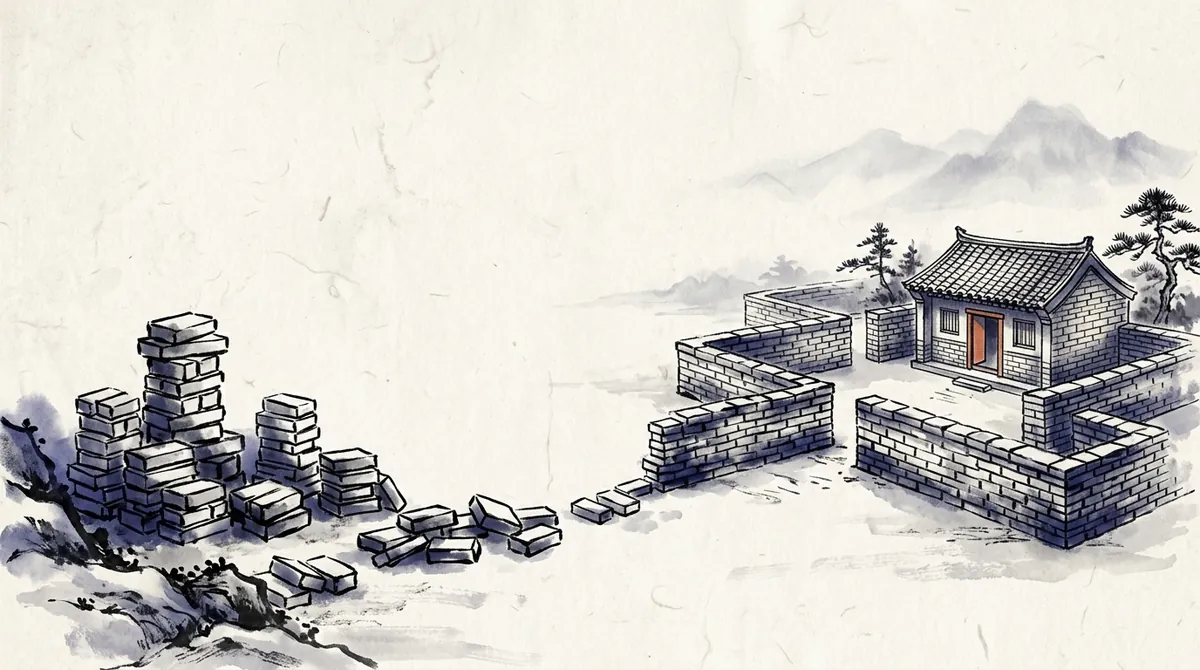
When you see a text with 3000 characters, it's natural to wonder how long it really is. In Chinese, a simple character-to-word conversion just doesn't work. But why is there such a gap?
It all comes down to how words are built. Think of letters in an alphabet as individual bricks, while Chinese characters (字, zì) are more like complete LEGO blocks. Some of these blocks can stand alone as a finished piece, but most only reveal their true purpose when they snap together to build something bigger.
Similarly, a single Chinese character can sometimes be a word on its own. However, the vast majority of modern vocabulary is made up of two or more characters combined to form new words (词, cí). This is why a raw character count can be so misleading when you're trying to gauge a text's length or difficulty.
Realising this changes how you should measure both a text and your own progress.
The core idea to grasp is that in Chinese, you aren't just memorising individual characters. You're learning how these characters combine to form a much, much larger vocabulary. Knowing 3000 characters gives you the building blocks for thousands upon thousands of words.
This guide breaks down the 'why' behind these numbers, helping you make better sense of Mandarin texts and track your progress more accurately.
Why Character Count Is a Misleading Metric for Mandarin
When you're learning Mandarin, it's easy to get fixated on character count. But focusing only on characters is like judging a chef by how many ingredients they own, not by the dishes they can cook. Knowing the number of characters in a text is a start, but tracking words is a much better measure of your progress.
After all, real-world proficiency goals, from HSK levels to app-based milestones, are built around word vocabulary (词汇, cíhuì), not just a list of isolated characters. Grasping this difference is key to setting realistic goals and seeing how far you’ve actually come.
Knowing 3000 characters doesn't just mean you know 3000 separate things. It means you have the building blocks for a massive vocabulary, since most Chinese words are formed by combining two or more characters.
The Shift from Characters to Words
Once you shift your focus from characters to words, you start measuring what really matters: your ability to read articles, follow conversations, and actually use the language. Think of it like this: learning a character is like getting a single LEGO brick. You also need to learn how those bricks snap together to build something real.
This is the same principle behind understanding how Chinese radicals act as foundational components for more complex characters.
For a reader, a text of 3000 characters isn't a list of 3000 items to know. It's roughly 2,000 words, built from a smaller set of characters, many of which you can decode through context.
For apps like Mandarin Mosaic, this idea is at the core of the learning method. Each sentence introduces one new word where possible, so you learn words in context rather than isolated characters, and the app keeps track of the words you know.
Understanding the Chinese Character-to-Word Ratio
To figure out how many words 3,000 characters really is in Chinese, you first need to understand the relationship between individual characters (字, zì) and actual words (词, cí). This is where you get to see the building-block nature of the language.
Some characters are words all by themselves. A great example is ‘我’ (wǒ), which means ‘I’ and stands on its own as a complete word. Many of the most common words work like this, but most of the words in a dictionary have two or more characters.
Most of the time, words are formed by combining two or more characters. If you take that same character ‘我’ (wǒ) and add ‘们’ (men), you get ‘我们’ (wǒmen), which means ‘we’. This compounding effect is the key to building a big vocabulary from a smaller set of characters.
From Characters to Words
Let's look at a few more examples to make this crystal clear:
- Single Character Word: ‘好’ (hǎo) means 'good'.
- Two-Character Word: ‘你好’ (nǐ hǎo) combines 'you' and 'good' to create 'hello'.
- Two-Character Word: ‘电脑’ (diànnǎo) combines 'electric' and 'brain' to mean 'computer'.
This pattern is exactly why just counting characters doesn't give you the full story. You're not just memorising individual symbols; you're learning how they fit together to create meaning.
The real insight here is that the path to communicating effectively is paved with words, which are built from a more manageable number of characters.
In everyday modern Chinese, the average word is about 1.4 to 1.6 characters long.
That figure comes from word-segmented corpora. In SUBTLEX-CH, a corpus of Chinese film and TV subtitles, 46.8 million characters make up 33.5 million words, or about 1.4 characters per word. Written text such as news uses more compound words, so it tends to run a little longer, closer to 1.6.
This ratio is a useful tool for any serious learner. It also shows why a foundation of 3,000 characters gives you the building blocks for a much larger vocabulary. Knowing this is vital as you figure out how many words you need to become fluent. Next up, we'll turn this ratio into a simple formula you can use anytime.
With a simple formula, you can quickly get a feel for the word count of any Chinese text, giving you a much clearer picture than a raw character count ever could.
The Go-To Estimation Formula
To get a word count estimate, all you need is one simple bit of maths:
Total Characters ÷ 1.4 to 1.6 = Estimated Word Count
Let's apply this directly to our main question. For a text with 3000 characters:
3000 characters ÷ 1.6 = 1,875 words
3000 characters ÷ 1.4 ≈ 2,140 words
So a 3000-character article isn't some short and snappy piece; it's a substantial text of around 2,000 words. If your character count includes punctuation, knock a little off, because punctuation marks aren't words.
Of course, this ratio isn't set in stone. The type of content you're reading can make it shift. Classical Chinese uses far more single-character words, so its ratio is closer to one character per word. Technical and academic writing, on the other hand, uses longer compound words, which pushes the ratio up.
Seeing the Ratio in Action
Let’s break down a real-world example to see how this works on a smaller scale. Take a look at this simple sentence:
我很高兴认识你 (wǒ hěn gāoxìng rènshi nǐ), "Nice to meet you" (literally "I'm very happy to know you")
At first glance, it has 7 characters. Simple enough.
But when we break it down into actual words (词, cí), the picture changes:
- 我 (wǒ) - "I" (1 word)
- 很 (hěn) - "very" (1 word)
- 高兴 (gāoxìng) - "happy" (1 word)
- 认识 (rènshi) - "to know" (1 word)
- 你 (nǐ) - "you" (1 word)
So, those 7 characters actually form a sentence of 5 words. If we do the maths, 7 ÷ 5 gives us a ratio of 1.4, right in the typical range. Character count and word count are two different, but deeply connected, ways of measuring a text.
Tools to Accurately Count Chinese Words and Characters
You don't have to rely on guesswork. Getting an exact character count is easy; getting a true word count takes one extra step, because Chinese is written without spaces between words.
The word processors you already use will count characters for you, but be careful with their "word" counts. Neither Microsoft Word nor Google Docs splits Chinese into real words. Word, for example, counts each Chinese character as a word (and lists East Asian characters separately), so its word count for a Chinese text is really a character count.
Using Built-in Word Processor Tools
For a quick character count, the tools you already have are fine. Google Docs, for instance, has a live count.
To get this working in Google Docs, just head to Tools > Word count and tick the box for "Display word count while typing". For Chinese text, treat the figures as a character count rather than a true word count.
For a true word count, the text has to be split into words first. Free segmentation tools such as jieba (a Python library) do this automatically. Their word boundaries won't always match a dictionary's, but the total is a good estimate.
By getting comfortable with these tools, you can accurately figure out how many words 3000 characters really represents in any given piece of writing.
What Knowing 3000 Characters Really Means for You
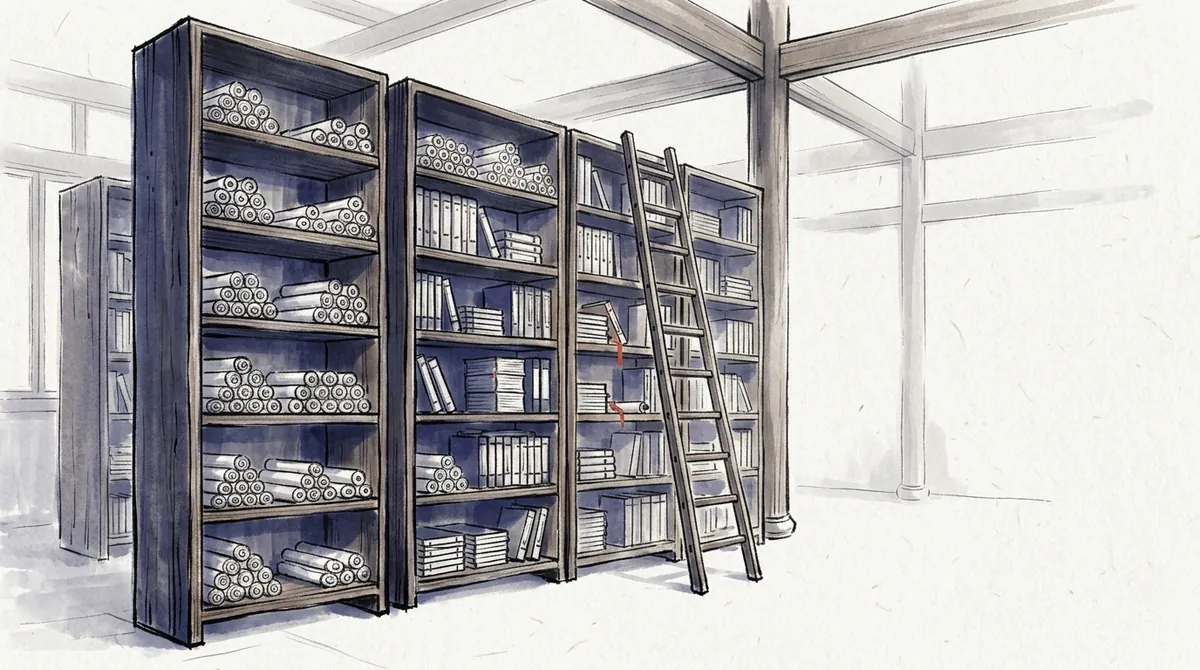
Knowing 3,000 characters is a different thing from reading a 3,000-character text. The ratio above tells you how long a text is; it doesn't tell you how many words you know. As a learner, 3,000 characters puts you at an advanced level:
- The List of Frequently Used Characters in Modern Chinese (现代汉语常用字表, xiàndài hànyǔ chángyòng zì biǎo) puts its 2,500 common characters at 97.97% of everyday text, and all 3,500 characters at 99.48%.
- The current HSK standard (HSK 3.0) requires 3,000 characters across levels 1-9, alongside 11,092 words. Level 6 alone needs 1,800 characters and 5,456 words. Our guide to the HSK tests explains the levels.
- Under the older six-level HSK 2.0, the top level (HSK 6) required 5,000 words, which use about 2,600 different characters.
So knowing 3,000 characters doesn't mean knowing about 2,000 words: it's the character base for 10,000 words or more. Knowing the characters in a word isn't quite the same as knowing the word, though. 电脑 is easy to guess from its parts, but many compounds aren't, so you still have to learn words as words.
A New Stage of Learning
Once you get past the raw grind of counting individual characters, you can start setting smarter, more meaningful goals. Instead of just ticking another character off your list, your focus can shift to how that character teams up with others to form words you can actually use.
With a strong base of characters and the words built from them, you'll be able to:
- Read native material such as news articles and novels, looking up only the occasional word.
- Watch Chinese TV shows with Chinese subtitles and follow most of what's on screen.
- Build context faster, because you have a strong enough foundation to start guessing the meaning of new compound words.
If you're curious about how to pace your study, take a look at our guide on how many Chinese characters to learn per day.
Every character you learn feeds into many words, so your vocabulary grows much faster than your character count. That's why tracking the words you know is the better way to measure your progress.
Frequently Asked Questions About Chinese Word Counts
Do Punctuation Marks Count as Characters in Chinese?
Yes, they almost always do. When you run a piece of text through any software or writing platform, it will count punctuation marks as characters. This applies to both the full-width Chinese punctuation, like the comma (,) and the full stop (。), and standard punctuation used in other languages.
It's important to remember, though, that these symbols are not words. When you see a "character count," you can usually assume it's counting everything: hanzi (Chinese characters), all punctuation, and any spaces. This is exactly why the word count is a much more useful metric for understanding the actual substance of a text.
Is Knowing 3000 Characters the Same as Knowing 3000 Words?
No, and if there's one thing you take away from this guide, let it be this. Knowing 3000 individual characters is a fantastic achievement and gives you a powerful base to work from, but it's not the same as knowing 3000 words.
Since most modern Chinese words (词, cí) are built by combining two or more characters, your vocabulary of actual words will grow much faster than your list of known characters. Because of this, tracking the words you know is a far better measure of your real-world ability to communicate.
The HSK 3.0 lists show the gap clearly: their 3,000 characters go with 11,092 words, nearly four words for every character.
How Many Characters Do I Need for Fluency?
For general fluency (enough to read newspapers, browse websites, and handle most daily situations) you're typically looking at knowing 2,500 to 3,500 of the most common characters.
Those characters sit underneath a much larger vocabulary. Our guide to how many words you need to become fluent suggests 4,000 to 6,000 words for strong conversational fluency; for comparison, HSK 3.0 level 6 requires 5,456 words. At the end of the day, fluency is much more about the number of words you can understand and use in context than how many isolated characters you can recite from memory.
Ready to stop counting and start learning words in context? Mandarin Mosaic teaches you words in real sentences, with one new word per sentence where possible, instead of isolated flashcards. Find out more about Mandarin Mosaic.